The “Inverted Pyramid” Shock
When the USDA released the 2026 Dietary Guidelines for Americans last week, my feed exploded. Everyone was talking about the “Inverted Pyramid” visuals or the new debates over seed oils versus beef tallow.
But I noticed something else buried in the 800-page report: The Math.
The new guidelines suggest a massive protein target of 1.6g per kilogram of body weight to support muscle health and metabolism (hello, GLP-1 friendly diets!). For a 175lb adult like me, that is roughly 130-140g of protein daily nearly double the old “recommended daily allowance.”
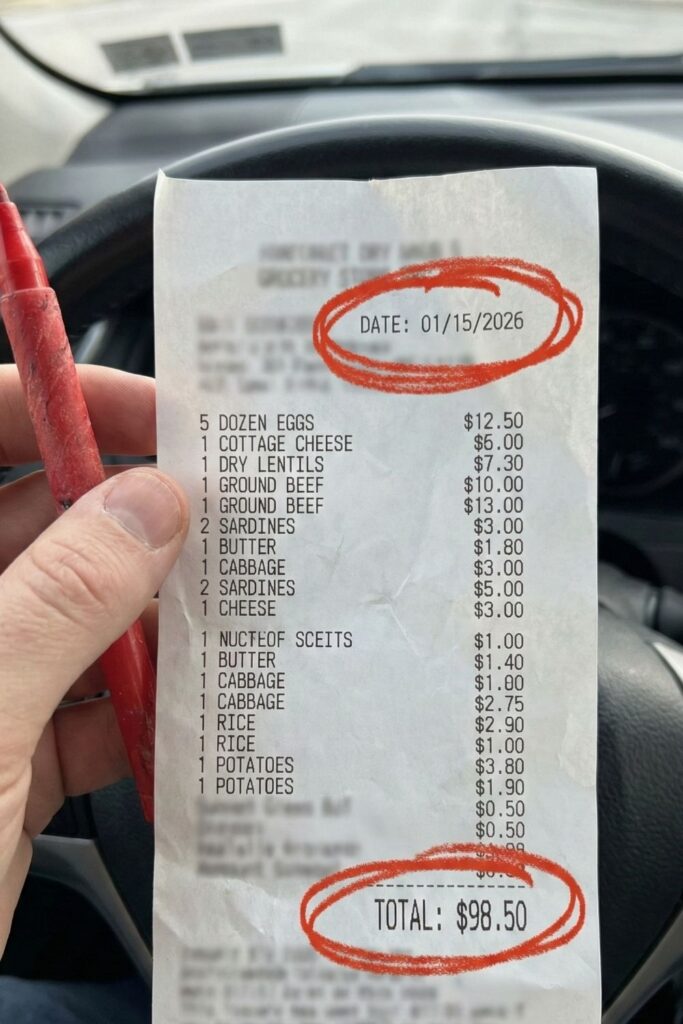
Then I looked at my grocery receipt.
With food inflation up 47% since 2020, ground beef is hitting record highs, and “healthy” staples feel like a luxury tax. It begs the question: Are these new guidelines only for the rich?
I decided to find out.
The Challenge:
- The Goal: Hit 140g of protein daily (The 2026 Standard).
- The Budget: $100 for 7 Days (The “Reality” Standard).
- The Rule: 0% Ultra-Processed Food (No protein powders, no bars, no “fortified” junk).
Spoiler alert: It is possible, but I had to rethink everything I knew about grocery shopping. Here is the strategy that worked.
Part 1: The “Protein Density” Strategy
To survive this challenge, I had to ignore the “Superfood” aisle. I couldn’t rely on steak or trendy collagen waters. I had to buy based on a new metric I call Protein Density per Dollar (PDD).
Most people look at the price tag. I looked at the price per gram of protein.
My “Cheap Champions” Haul
Here is the exact grocery list that made the math work for under $100:
1. The “Inflation-Proof” MVP: Eggs (5 Dozen)
- Cost: $15.00
- Why: At roughly $3/dozen (if you hunt for deals), eggs remain the cheapest high-quality protein on earth. I ate them boiled, scrambled, and even shaved over savory oats.
2. The “Cheat Code”: Cottage Cheese (2 Tubs)
- Cost: $6.00
- Why: This is the secret weapon. It has 25g of protein per cup, beating Greek Yogurt on price per gram in many stores. Plus, it melts. I used it to make creamy pasta sauces without buying expensive heavy cream.
3. The “Stretcher”: Dry Lentils (3 lbs)
- Cost: $5.00
- Why: Beef is expensive. Lentils are dirt cheap. By mixing cooked lentils into my ground beef (a 50/50 ratio), I doubled the volume of my “meat” sauce while adding the fiber that the 2026 guidelines also demand.
4. The “Controversial” Swap: Butter vs. Tallow
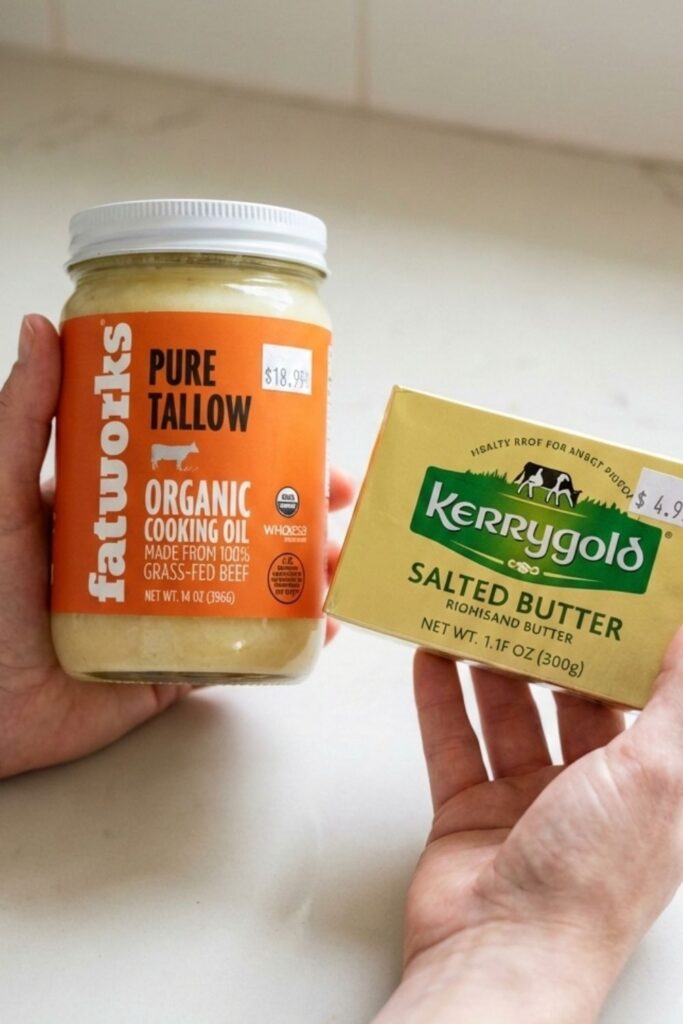
- The Dilemma: The 2026 guidelines (and TikTok) are obsessed with Beef Tallow right now, calling it the “Ancestral Superfat.”
- My Reality: A jar of high-quality grass-fed tallow costs $15-$20. On a strict budget, that kills your protein allocation.
- The Swap: I stuck to standard Salted Butter ($5). It fits the new “animal fat” criteria but leaves money for actual food.
Part 2: The Tool – Can Your Budget Handle the 2026 Guidelines?
Before you rush to the store, you need to know your number. Most people fail because they guess.
I created this simple “Protein Budget Calculator” to help you see if your current grocery budget matches your new protein goals.
🥩 Protein Budget Calculator
Estimate your grocery costs based on your goals.
$0.03/g
$0.05/g
$0.09/g
Daily Protein
Daily Cost
Weekly Cost
The Paper Napkin Calculator
Step 1: Find Your Daily Target
- Take your body weight in pounds.
- Multiply by 0.7 (This roughly converts to the new 1.6g/kg guideline).
- Example: 150 lbs x 0.7 = 105g Protein Daily.
Step 2: Calculate Your "Cost Per Gram"
Look at your primary protein source (e.g., Chicken Breast).
- Price per pound: $5.99
- Protein per pound: ~100g
- Cost per gram = $0.06
Step 3: The Daily Cost Reality
- Multiply your Target (105g) x Cost ($0.06) = $6.30 per day just for protein.
The Verdict: If you only eat chicken breast, you are spending $44/week just on meat. This is why you need the eggs and lentils (which average $0.02 - $0.03 per gram) to bring that average down and fit the $100 budget.
Part 3: The Meal Plan (Eating 140g Protein for $14/Day)
Here is what a full day of eating looked like during my challenge.
Breakfast: The "Power Scramble" (42g Protein)
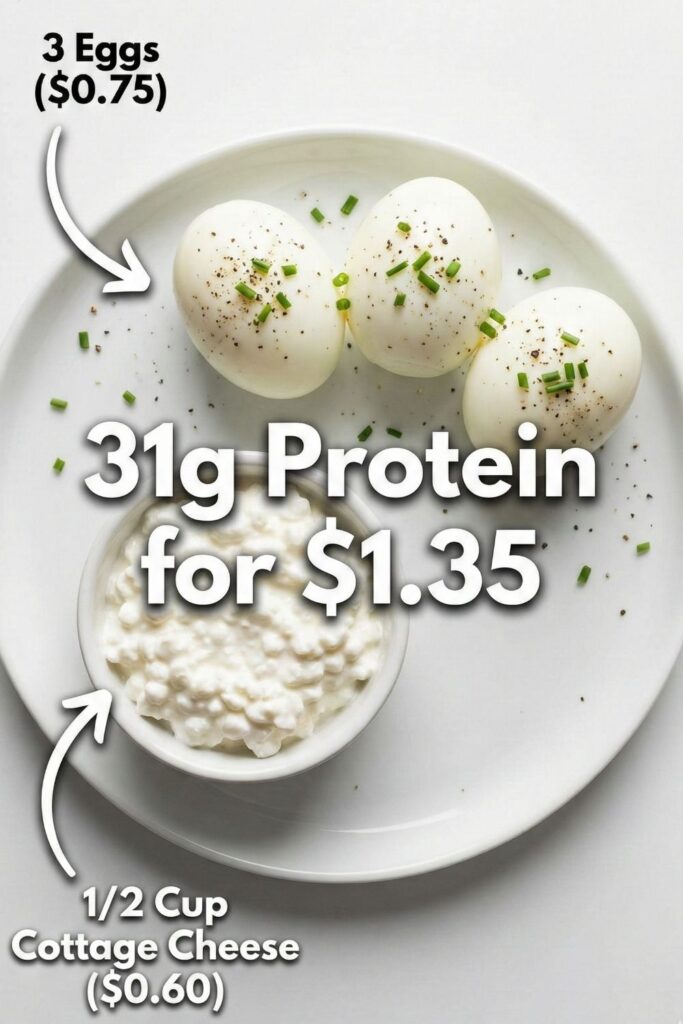
- Menu: 3 whole eggs + 1/2 cup Cottage Cheese scrambled together.
- The Trick: Mixing cottage cheese into eggs sounds weird, but it melts into a creamy richness (like a French omelet) and adds 12g of "invisible" protein. Served with a side of sautéed cabbage (the "Cabbage Crush" trend is real, guys it’s cheaper than kale and sweeter when cooked!).
Lunch: The "Beef-Stretcher" Bowl (45g Protein)
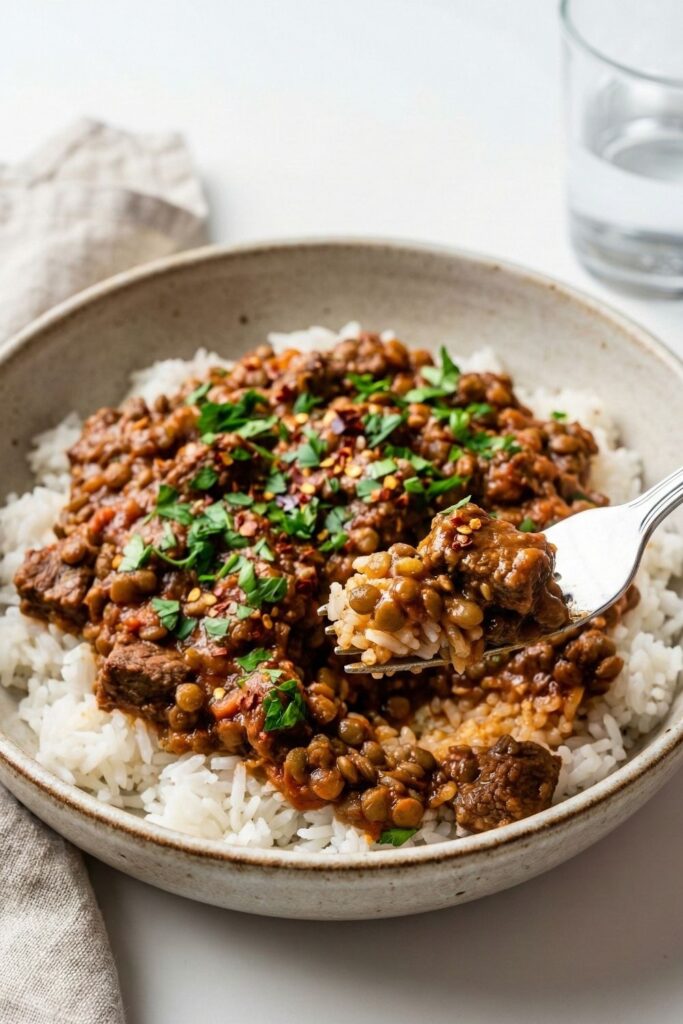
- Menu: 6oz Ground Beef mix (50% beef / 50% lentils) over rice.
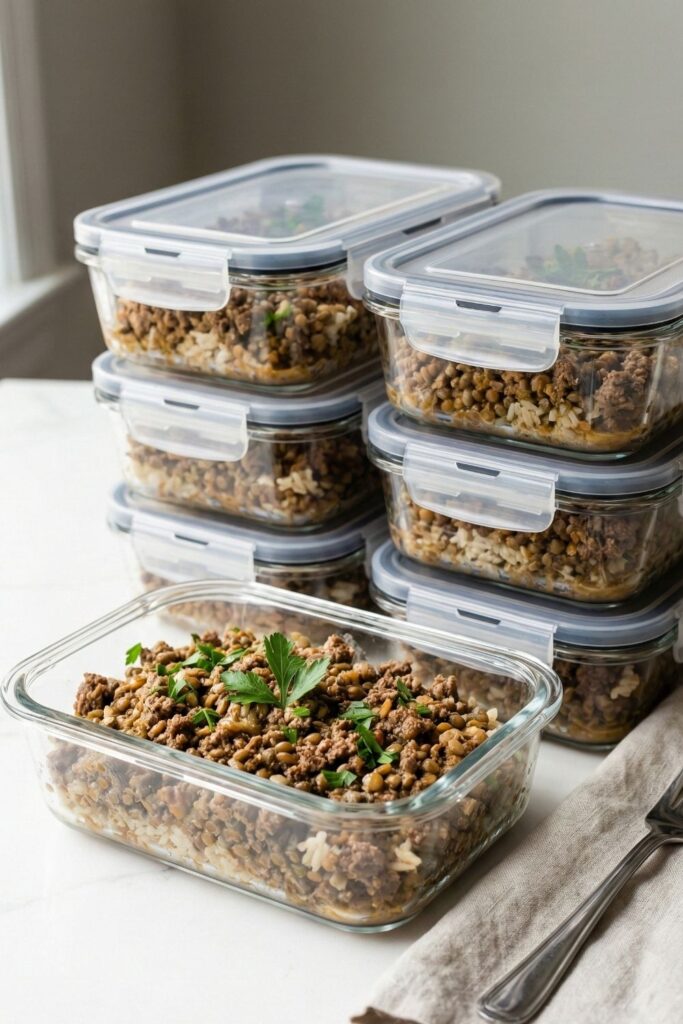
- The Trick: I meal-prepped a huge batch of "Bolognese" using the beef/lentil mix. The lentils absorb the beef flavor and add fiber, letting you eat a huge bowl for half the price of pure beef.
Dinner: Fisherman's Pasta (No Pasta) (48g Protein)
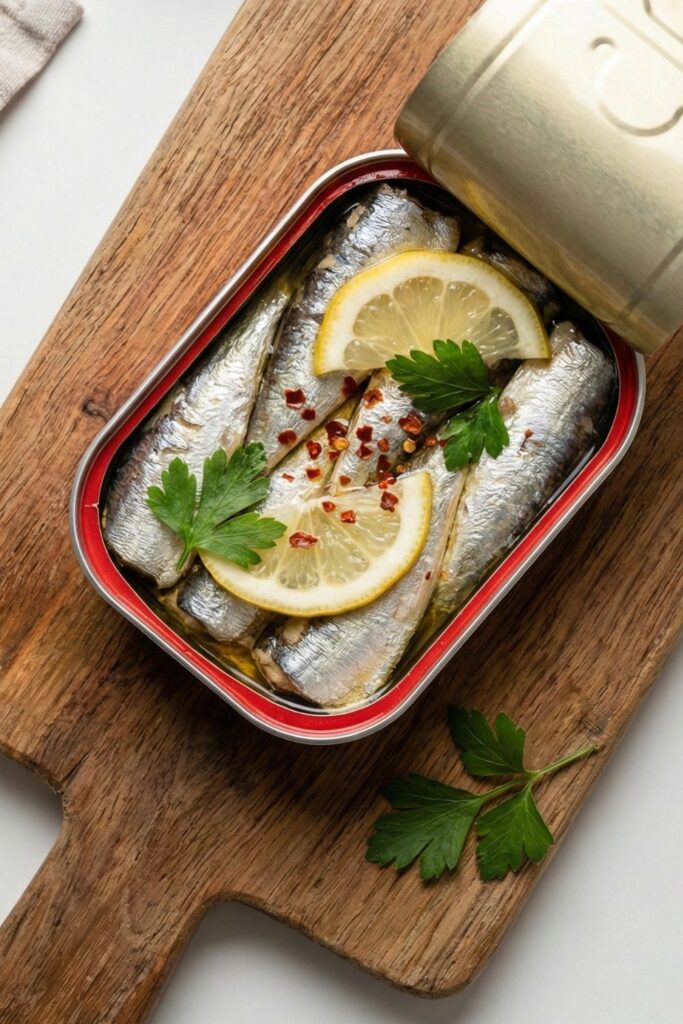
- Menu: 2 cans of Sardines pan-fried with garlic, chili flakes, and lemon, served over roasted potatoes.
- The Trick: Hear me out sardines are the cheapest wild-caught protein available. Frying them in butter kills the "fishy" taste and turns them into crispy, salty umami bombs. If you can't do sardines, canned tuna works too, but you lose the omega-3 benefits.
The Verdict: Is It Sustainable?
After 7 days, here is the honest truth: Yes, but there is a 'Time Tax'.
Eating this way on a budget is physically possible, but it requires cooking everything from scratch. You cannot afford convenience. The processed foods I cut out (frozen pizzas, bread, snacks) were not just expensive in dollars, but cheap in time.
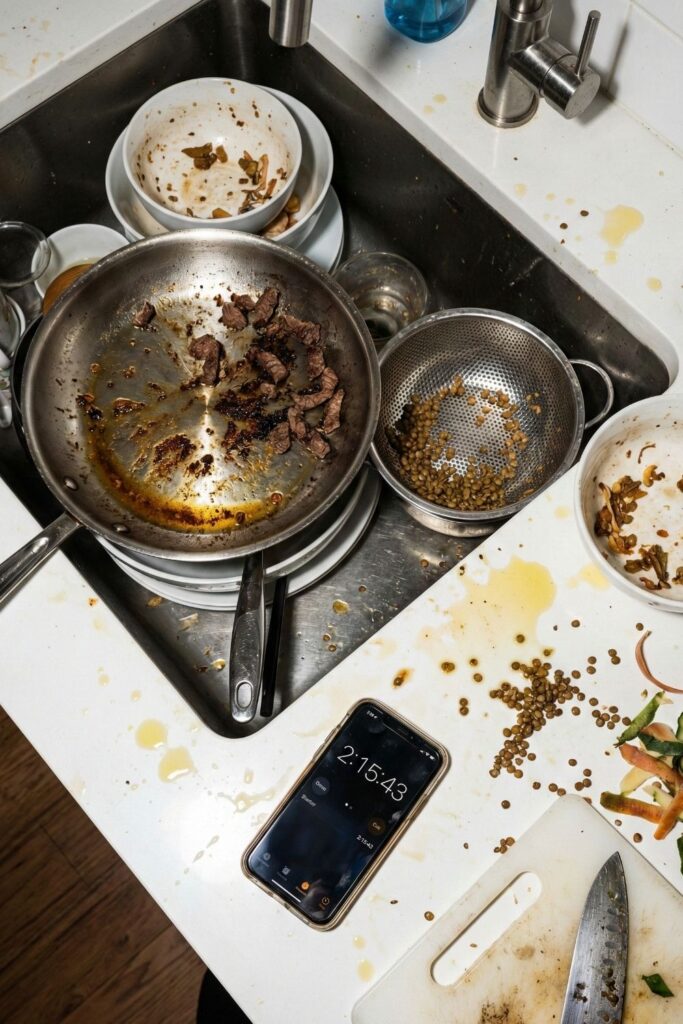
To save money, I had to spend 4 extra hours in the kitchen this week washing cabbage, soaking lentils, and meal-prepping beef.
In 2026, health is affordable if you pay with your time.
Want to try it yourself?
I’ve compiled my full 7-Day "Inflation-Buster" Meal Plan including the exact grocery list and the Beef-Lentil ratio recipe.
[Download the Free PDF Guide Here] (Link to your email signup)
Frequently Asked Questions (FAQ)
Yes, but the math is harder. To hit 1.6g/kg of protein without dairy or meat, you cannot rely solely on beans (too many carbs per gram of protein). You would need to lean heavily on Tempeh and Seitan (Wheat Gluten). Tofu is great, but you need to eat a lot of it.
Technically, yes. You can get whey protein for about $0.04 per gram. However, the 2026 Guidelines took a very hard stance against Ultra-Processed Foods (UPF). Most protein powders contain artificial sweeteners, gums, and anti-caking agents that fall into the "limit" category. For this challenge, I wanted to see if I could do it with whole foods only. If you aren't a purist, adding one scoop of unflavored whey isolate would make this challenge much, much easier.
For healthy adults with functioning kidneys, current research supports higher protein intakes (up to 2.2g/kg) for muscle retention and satiety. However, if you have pre-existing kidney issues, always consult your doctor before jumping on the high-protein bandwagon. The "Inverted Pyramid" isn't a prescription; it's a guideline.
The "sulfur smell" comes from overcooking.
Do this: Slice it thin (angel hair style) and flash-sauté it in butter with garlic for just 3-4 minutes until it's wilted but still has a crunch.
Don't do this: Boil it. Boiled cabbage is what gives the vegetable a bad reputation!