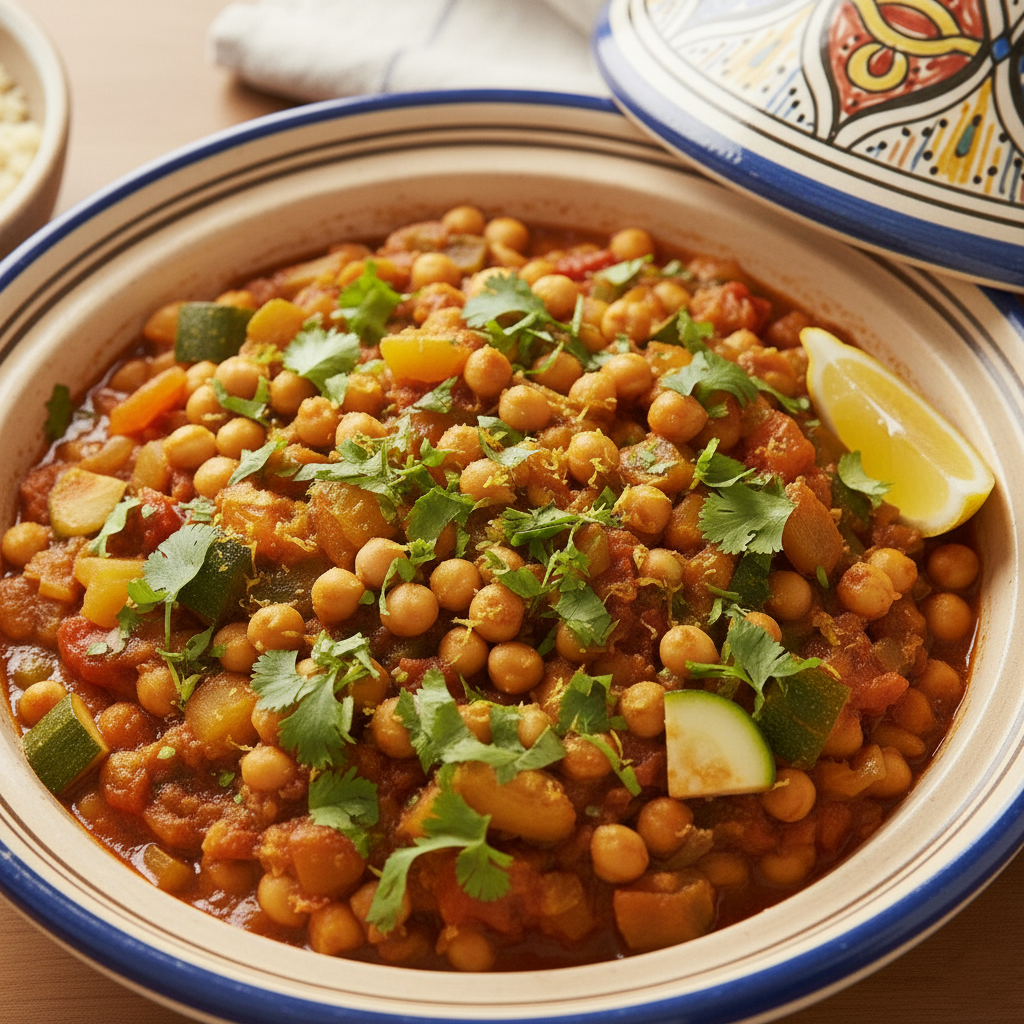
If there is one meal that perfectly bridges the gap between “comfort food” and “food as medicine,” it is this Moroccan Chickpea & Vegetable Tagine.
In the fast-paced world of blogging and digital entrepreneurship, we often view food as mere fuel something to grab quickly between scheduling pins and drafting emails. But at Abby’s Health Series, I believe that what we put on our plates dictates how we perform in our business and our lives. True health doesn’t come from restriction or punishment; it comes from addition. It’s about abundance. It’s about flooding your body with as many vibrant colors, complex textures, and anti-inflammatory compounds as you can fit into a single bowl.
This recipe isn’t just dinner; it’s a reset button for your digestion and a warm, grounding hug for your immune system. Whether you are strictly vegan, gluten-free, or just looking to reduce inflammation after a stressful, coffee-fueled week, this stew is your new culinary best friend.
Below, we are going to dive deep into the science of the spices, the “why” behind the ingredients, and the precise method for making the best vegetable tagine you will ever taste.
Why This Recipe Will Go Viral in Your Kitchen
Before we even light the stove, you need to understand why this specific combination of ingredients is a metabolic powerhouse. In the wellness world today, we talk endlessly about “chronic inflammation” being the root of many modern health issues, from brain fog to digestive distress. The antidote isn’t a pill; it is dietary diversity.
This tagine delivers on three major viral health trends that are dominating the wellness conversation right now:
1. Bioavailable Turmeric: We don’t just sprinkle turmeric for color; we activate it chemically for maximum absorption.
2. Microbiome Diversity: We use root vegetables, legumes, and aromatics to feed different strains of beneficial bacteria in your gut, promoting better mental clarity.
3. The “Meal Prep” Effect: This dish tastes significantly better the next day, making it the ultimate hack for busy professionals who want to eat well without cooking every night.
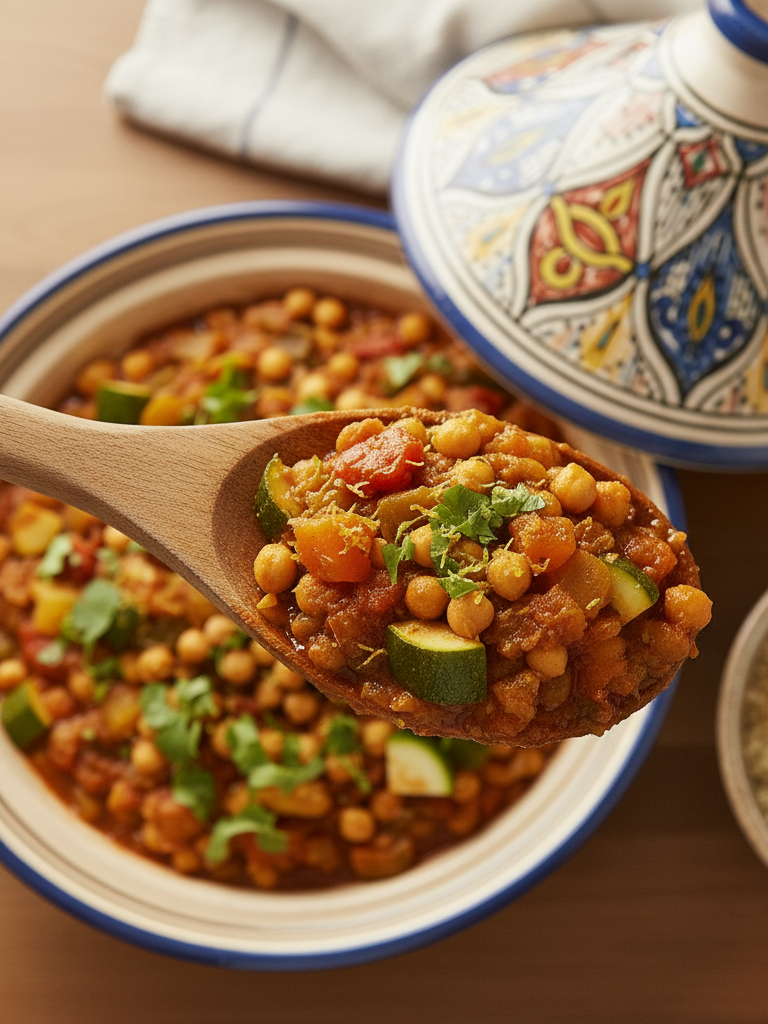
The Anti-Inflammatory Pharmacy: Spices 101
The soul of Moroccan cuisine lies in its spice blend. For this recipe, we aren’t just flavoring the water; we are creating a medicinal broth that rivals any bone broth in its healing properties. Let’s break down the specific compounds you are putting into your body.
1. Turmeric & Black Pepper (The Golden Synergy)
You will notice the recipe calls for a significant amount of turmeric. Turmeric contains curcumin, a lipophilic (fat-loving) compound with potent anti-inflammatory and antioxidant effects. However, curcumin is notoriously hard for the human body to absorb on its own it often passes right through digestion. That is why the black pepper in this recipe is non-negotiable. Black pepper contains piperine, a compound that inhibits the metabolic breakdown of turmeric compounds in the gut and liver. This pairing enhances curcumin absorption by up to 2,000%.
2. Ginger: The Digestive Aid
Fresh ginger adds a spicy kick, but its role here is medicinal. It contains gingerol, a bioactive substance that can help lower the risk of infections and inhibit the growth of bacteria like E. coli and Shigella. Furthermore, ginger speeds up the emptying of the stomach, which can be incredibly helpful for those suffering from indigestion or bloating after meals.
3. Cinnamon: The Blood Sugar Stabilizer
We use Ceylon cinnamon (often called “true cinnamon”) in this tagine. Unlike sugar, which spikes your insulin, cinnamon helps regulate blood sugar levels. It improves insulin sensitivity, meaning your body is better at moving glucose from your bloodstream into your cells. This prevents that heavy, sleepy “post-meal crash” often associated with starchy stews.
4. Cumin and Coriander: The Detox Duo
These two often go hand-in-hand. Cumin increases the activity of digestive proteins, which may speed up digestion and relieve IBS symptoms. Coriander (the seed of the cilantro plant) is rich in immune-boosting antioxidants like terpinene, quercetin, and tocopherols, which have been shown to fight inflammation and have neuroprotective effects.
5. Ras el Hanout: The Complexity
This is the “secret weapon.” Ras el Hanout translates to “top of the shop,” implying the best spices the merchant has to offer. It’s a complex blend that often includes cardamom, nutmeg, anise, and mace. It adds a depth, warmth, and earthiness that you simply can’t get from single spices alone, elevating your home cooking to restaurant quality.
Ingredients Breakdown: Selecting the Best Produce
Quality matters here. Since this is a vegetable-forward dish, the freshness of your produce will dictate the final flavor profile.
- Butternut Squash: This provides a creamy texture without the need for dairy or heavy creams. It is packed with Vitamin A (beta-carotene) and soluble fiber. Soluble fiber absorbs water and turns into a gel during digestion, which slows digestion and helps manage cholesterol levels.
- Chickpeas (Garbanzo Beans): The king of legumes. They hold their shape during a long simmer and provide protein and insoluble fiber. Insoluble fiber adds bulk to the stool and helps food pass more quickly through the stomach and intestines. Combining the soluble fiber from the squash with the insoluble fiber from the chickpeas creates the perfect “gut sweep.”
- The Aromatics (Onion, Garlic, Ginger): The holy trinity of flavor building. These are prebiotics non-digestible food ingredients that promote the growth of beneficial microorganisms in the intestines.
- Dried Apricots or Dates: A traditional Moroccan element. The subtle sweetness balances the high acidity of the tomatoes and the heat of the ginger.
- Extra Virgin Olive Oil: We use this not just for cooking, but for health. The monounsaturated fats in olive oil are crucial because many of the vitamins in this dish (like Vitamin A and K) are “fat-soluble,” meaning your body cannot absorb them without a fat source present.
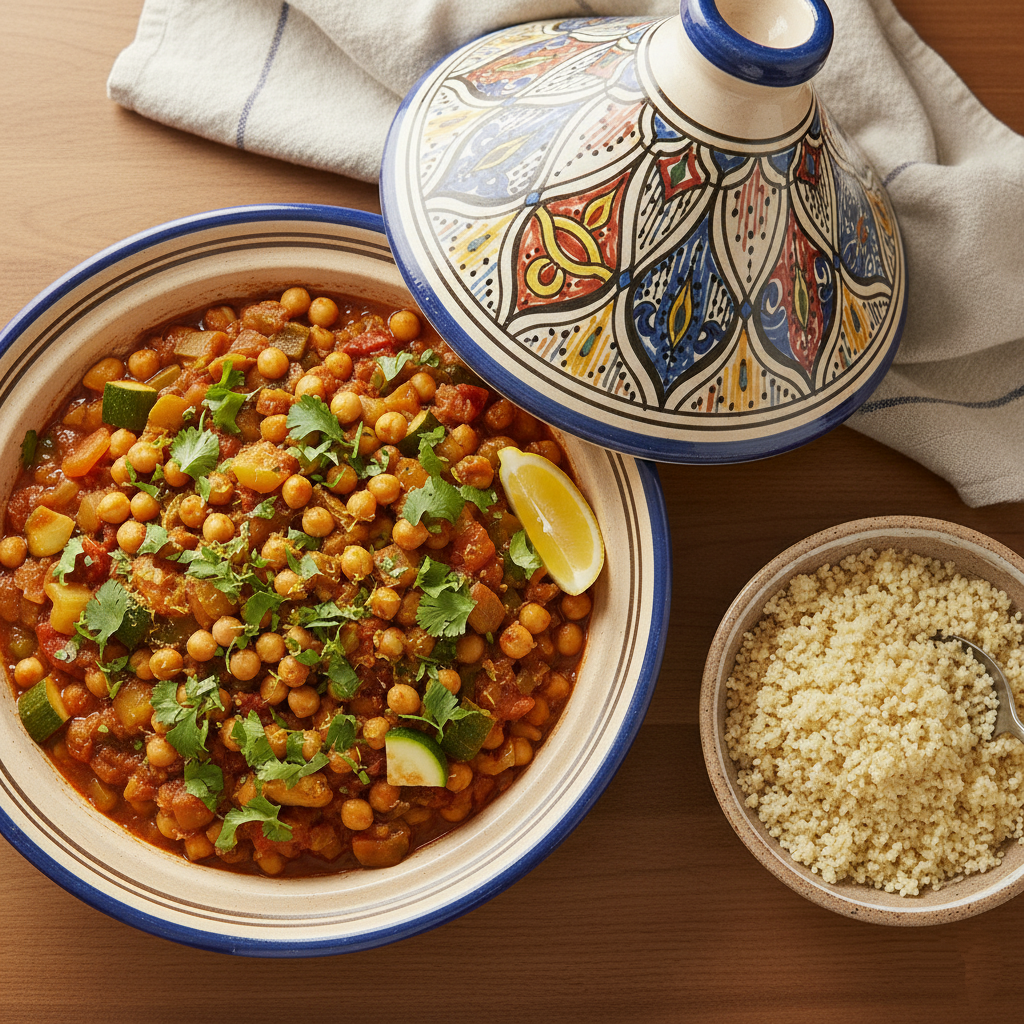
Step-by-Step: How to Master the Tagine Method
You do not need a clay tagine pot to make this (though if you have one, absolutely use it!). A heavy-bottomed Dutch oven works perfectly to distribute heat evenly and retain moisture.
Step 1: Building the Flavor Foundation (The Aromatics)
The biggest mistake home cooks make with stews is dumping everything in at once. Great flavor is built in layers. We start by sweating the onions in olive oil. You want them soft and translucent, not browned or burnt. This releases their natural sulfur compounds and sugars.
- Pro Tip: Don’t rush this. Let the onions cook for a full 5 minutes until they look glassy. Then add the garlic and ginger for just 60 seconds so they don’t burn and turn bitter.
Step 2: Blooming the Spices (The Critical Step)
This is the most important moment in the recipe, and the one that separates a “soup” from a “tagine.” Once your aromatics are soft, you add your spice blend before adding any liquid.
- The Science: Many flavor compounds in spices are fat-soluble, not water-soluble. By frying the spices in the hot oil and onion mixture for just 30 to 60 seconds, you release the essential oils. This process, called “blooming,” makes the turmeric more vibrant and the cumin more aromatic. If you skip this and add spices to the liquid later, your stew will taste powdery and flat.
Step 3: The Simmer Setup
Now, deglaze the pot with your liquids the crushed tomatoes and the vegetable broth. Scrape the bottom of the pot with a wooden spoon to release any “fond” (the browned bits stuck to the bottom), as that is pure flavor.
- Timing: Add the butternut squash and carrots now. We add these harder root vegetables first because they have a dense cellular structure that takes longer to break down. The chickpeas and softer veggies will come later. Bring it to a boil, then immediately drop that heat down to low. We want a gentle, lazy bubble, not a rolling boil.
Step 4: Patience is a Virtue
Cover the pot. Let the magic happen. As the squash breaks down, some of its starches will release into the liquid, naturally thickening the sauce and creating a silky, luxurious consistency. This eliminates the need for flour or cornstarch thickeners, keeping the recipe naturally gluten-free.
Step 5: Texture Management
Once the squash is tender (test it with a fork), we add the chickpeas, zucchini, and dried fruit.
- Why wait? If you added the zucchini at the beginning, it would dissolve into mush by the time the carrots were cooked. We want the zucchini to retain a slight bite and its bright green color. This is also when the apricots plump up, absorbing the spicy broth and becoming little jewels of sweetness that burst in your mouth.
Step 6: The Fresh Finish
Never underestimate the power of fresh herbs and acid. Right before serving, stir in fresh lemon juice and zest.
- The Why: The acid cuts through the richness of the root vegetables and brightens the earthy spices. It “wakes up” the cooked flavors. Top generously with cilantro (or parsley if you have the soap-gene!) and toasted almonds for a necessary crunch.
Customizing Your Tagine: Make It Your Own
One of the best things about this recipe is its flexibility. While the base recipe is vegan and optimized for inflammation, you can easily adapt it to fit your pantry or macronutrient needs.
- For the Protein Lovers: While chickpeas are a great source of plant protein, sometimes you need more. You can easily brown cubes of chicken thigh or lamb shoulder in Step 1 before removing them and proceeding with the onions. Add the meat back in during the simmer stage.
- Low-Carb Variation: If you are watching your carbohydrate intake, swap the butternut squash for cauliflower florets and turnips. They provide a similar texture profile with a lower glycemic load.
- The “Greens” Boost: For an extra shot of magnesium and iron, stir in a few handfuls of baby spinach or chopped kale in the final 2 minutes of cooking. They will wilt down instantly in the residual heat.
Serving Suggestions: Complete the Meal
To keep this meal strictly Gluten-Free and high-fiber, serve your tagine over:
- Quinoa: For a complete protein profile containing all nine essential amino acids
- Brown Rice: For a nutty, hearty texture that stands up to the sauce.
- Millet: A highly alkaline, prebiotic grain that pairs authentically with Moroccan flavors.
If you aren’t gluten-free, whole-wheat couscous is the traditional pairing. It cooks in 5 minutes and acts like a tiny sponge, soaking up that incredible turmeric-ginger broth.
Frequently Asked Questions (FAQ)
Final Thoughts
Cooking this Moroccan Chickpea & Vegetable Tagine is an act of self-care. It smells incredible, filling your home with the aroma of warming spices; it looks beautiful, with vibrant oranges and greens; and it fuels your body with exactly what it needs to fight inflammation and thrive.
I hope this recipe becomes a staple in your weekly rotation just as it has in mine. If you make this, please snap a photo and tag me on Instagram or Pinterest I’d love to see your creation and hear how you made it your own!