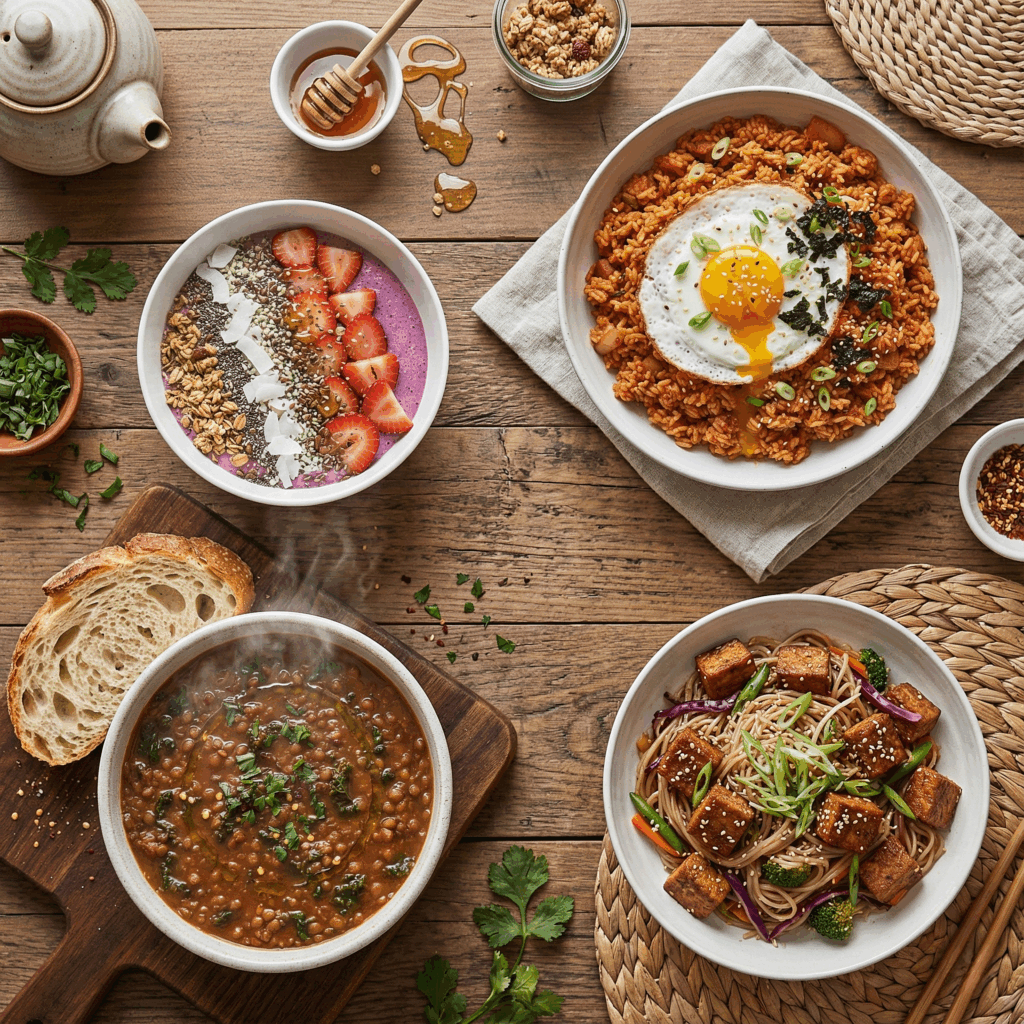
Are you feeling heavy, sluggish, and dealing with that nagging sense of “bloat” that just won’t seem to go away after the holidays? You’re not alone. January often arrives with a digestive system that has taken a serious hit from rich foods, sugary treats, and a lack of routine during the festive season.
When you feel weighed down, the temptation to jump into an extreme, restrictive “detox” or juice cleanse is high. But here is the professional truth: deprivation rarely works long-term, and it can sometimes stress your body even more.
The good news? You don’t need hunger pangs to feel like yourself again. This is not a crash diet. This is a gentle, delicious 7-day Gut Reset based on nutritional science. We are focusing on adding abundance to your plate specifically the prebiotics, probiotics, and fiber your gut needs to re-balance, calm inflammation, and boost your natural energy levels.
As a health blogger, I designed this plan to be realistic, satisfying, and highly effective. You’ll be cycling through simple, comforting meals that do powerful work behind the scenes. Ready to hit the reset button and feel lighter in just one week? Let’s get started.
The Gut Health Power Trio: Why This “Reset” Works
Unlike fad diets that focus on cutting out entire food groups, a true gut reset focuses on nourishing the complex ecosystem living in your digestive tract. To do that without deprivation, we need to strategically combine three key elements in our meals over the next seven days.
Understanding these three components is key to your success on this plan.
1. Prebiotics: The Fertilizer Think of your gut microbiome as a garden. The good bacteria are the flowers you want to grow. Prebiotics are the fertilizer that feeds those flowers.
Prebiotics are specific types of non-digestible fiber that pass through your system to your colon, where they become fuel for beneficial bacteria. When good bacteria ferment these fibers, they produce short-chain fatty acids (SCFAs). SCFAs are crucial because they help strengthen the gut lining, reduce inflammation, and even aid immunity.
- Key Sources in this Plan: We are loading up on oats in your breakfasts, using plenty of garlic and onions in soups, and utilizing prebiotic-rich vegetables like asparagus or Brussels sprouts at dinner.
2. Probiotics: The New Seeds If prebiotics are the fertilizer, probiotics are the fresh seeds you are planting in the garden. Probiotics are live, beneficial bacteria and yeasts found in fermented foods.
By introducing these into your diet daily, you help replenish and diversify your gut microbiome. A diverse microbiome is a resilient one, better equipped to handle digestion and fight off the “bad” bacteria that cause bloating and discomfort.
- Key Sources in this Plan: Your daily dose will come from kefir or Greek yogurt at breakfast or snack time, fermented vegetables like kimchi and sauerkraut at lunch, and fermented soy products like miso or tempeh at dinner.
3. Fiber: The Essential Cleanup Crew Fiber is the unsung hero of a gut reset. Most people don’t get nearly enough. Fiber adds bulk to your stool, absorbs toxins, and acts like a gentle scrub brush moving through your digestive tract, promoting regularity. We want to ensure things are moving efficiently so you aren’t reabsorbing waste products.
- Key Strategy: This plan uses diverse sources of fiber from legumes and whole grains to leafy greens and fruits to ensure you feel full and satisfied while your system cleans house.
Your Easy 7-Day Gut Reset Meal Plan
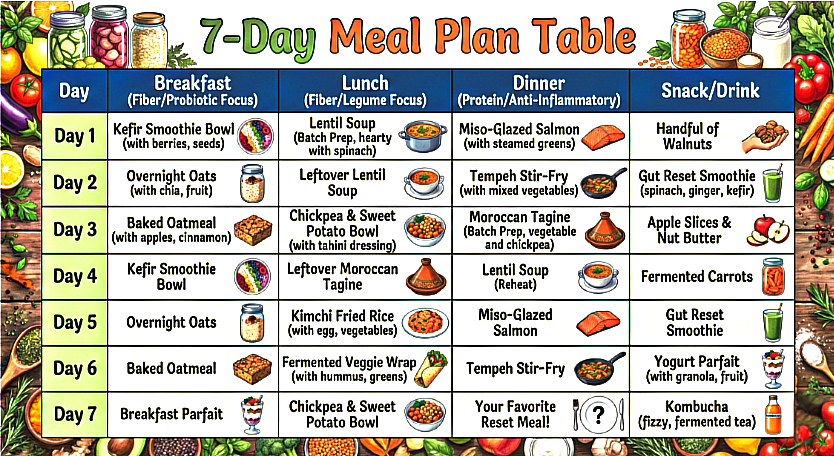
We know you are busy, so this plan is designed for real life. We utilize batch prepping and strategic leftovers so you aren’t spending hours in the kitchen every single day.
The strategy is simple: Cook a larger dinner, and pack it for lunch the next day. Make a big batch of soup to cover multiple meals. The schedule below shows you exactly how to structure your week.
The Recipes for Your Reset
Here are the 12 core recipes you need for the week. They are grouped by category so you can easily find what you need. Remember, you can print individual recipe cards by clicking the “Print” button on the card itself!
Part 1: Gut-Nourishing Morning Meals
Breakfast is the perfect time to set the tone for the day with a high dose of fiber and probiotics. These recipes are designed to be quick during busy mornings, using oats (prebiotic) and cultured dairy (probiotic) as the foundation.
Creamy Kefir Smoothie Bowl This isn’t just any smoothie. By using Kefir instead of regular milk, you get a massive dose of diverse probiotics. The berries provide antioxidants, while chia and flax seeds add essential Omega-3s and fiber to keep you full until lunch.
Warming Apple-Cinnamon Baked Oatmeal Baked Oatmeal feels like eating dessert for breakfast, making it perfect for a cold January morning. We use grated apple with the skin on to maximize insoluble fiber, and cinnamon, which helps regulate blood sugar. Make a batch on Sunday and reheat slices all week.
Gut-Friendly Breakfast Parfait This is the ultimate quick assembly breakfast. It combines the prebiotic power of oats soaked overnight with thick, protein-rich Greek yogurt. We top it with a quick stewed ginger-pear compote ginger is fantastic for soothing digestive upset.
Part 2: Energizing & Packable Lunches
Lunch needs to be hearty enough to power you through the afternoon without making you need a nap. We focus heavily on legumes here for their high fiber content, which provides slow-burning energy.
Hearty Lentil Soup with Kale & Garlic This soup is the cornerstone of this meal plan. Lentils are incredibly affordable and one of the best sources of prebiotic fiber available. We load this soup with garlic and onions (more prebiotics!) and finish it with kale for vital micronutrients. It freezes wonderfully.
Mediterranean Chickpea & Sweet Potato Bowl Roasted sweet potatoes offer soothing soluble fiber, while chickpeas pack a protein punch. Served over quinoa with a bright lemon-tahini dressing, this bowl is anti-inflammatory and incredibly satisfying.
Kimchi Fried Rice (or Quinoa) Bowl If you want to spice things up, this is the recipe. Kimchi is a traditional Korean fermented cabbage that is loaded with probiotics. Heating it gently preserves many of its benefits while creating a savory, comforting, and quick lunch.
Fermented Veggie Wraps A wrap is an easy lunch staple, but we upgrade it for gut health. Use a high-fiber whole-wheat tortilla, lean turkey for protein, and the secret weapon: a generous layer of raw sauerkraut or fermented carrots for a probiotic crunch that aids digestion.
Part 3: Satisfying Dinners
End your day with meals rich in anti-inflammatory ingredients and healthy fats to support the gut lining. These recipes are flavorful and comforting, proving that a “reset” doesn’t mean bland food.
Miso-Glazed Salmon with Roasted Brussels Sprouts Salmon provides essential Omega-3 fatty acids, which help reduce gut inflammation. The glaze uses Miso, a fermented soybean paste rich in probiotics. Paired with roasted Brussels sprouts (a top-tier prebiotic vegetable), this is a gut-health powerhouse meal.
Tempeh Stir-Fry with Kelp Noodles If you haven’t tried tempeh, now is the time. It’s a firm, fermented soy product that is easier to digest than tofu and rich in probiotics. We serve it over kelp noodles for a lighter option, or you can use brown rice for extra fiber.
Moroccan Chickpea & Vegetable Tagine This stew is warming, aromatic, and incredibly healthy. It relies on anti-inflammatory spices like turmeric, ginger, and cinnamon. Packed with diverse vegetables and chickpeas, it’s a fiber-rich meal that tastes even better the next day as leftovers.
Part 4: The Daily Gut Reset Snack
While there are several snack options listed in the plan (like walnuts or apples), this smoothie is your go-to “functional beverage” for the week whenever you need a boost.
The Signature Gut Reset Smoothie This is designed to be easy on digestion. We use bananas (prebiotic), frozen pineapple (which contains bromelain, an enzyme that aids protein digestion), fresh ginger to soothe the stomach, and flaxseed for fiber.
Meal Prep & Storage Tips for Success
To make this 7-day reset as stress-free as possible, lean into meal prepping. A little work on Sunday will set you up for the entire week.
- Freezer-Friendly Meals: The Hearty Lentil Soup and the Moroccan Chickpea Tagine are excellent candidates for freezing. I highly recommend making a double batch of one of these on Sunday. Portion the extras into individual, airtight containers and freeze them. This guarantees you have a healthy, gut-friendly meal ready to defrost in minutes on busy days later in the month.
- Breakfast Prep: The Warming Apple-Cinnamon Baked Oatmeal can be baked entirely on Sunday night. Once cooled, slice it into servings and store in the fridge for a quick “heat-and-eat” breakfast all week. The Overnight Oats should be prepped the night before you intend to eat them for the best texture.
- Produce Prep: Wash and chop sturdy vegetables like kale, Brussels sprouts, and sweet potatoes at the start of the week. Store them in airtight containers with a paper towel to absorb moisture. This cuts down dinner prep time significantly during the week.
Simple Substitutions & Dietary Modifications
This plan is designed to be flexible. Here is how to adapt it to your specific dietary needs without sacrificing the gut-health benefits.
- Make it Dairy-Free / Vegan: This plan is easily modified. In the breakfasts (smoothies, parfaits, overnight oats), swap the Greek yogurt or Kefir for a high-quality, unsweetened coconut yogurt or almond milk yogurt. Look for brands that explicitly state they contain “live active cultures” to ensure you still get the probiotic benefit. For dinners, replace the salmon or turkey with extra servings of tempeh, tofu, or more legumes for protein.
- Gluten-Free: Ensure you are using certified gluten-free oats for all breakfast recipes. For the Fermented Veggie Wraps, use your favorite gluten-free tortilla option or turn it into a large salad bowl instead.
- Nut-Free: Omit the walnuts as a snack and replace them with pumpkin seeds (pepitas) or sunflower seeds, which are also excellent sources of healthy fats and fiber.
What to Expect When Resetting Your Gut (Normal Symptoms!)
It is common to have questions when starting a new eating plan focused on fiber and fermented foods, especially if your current diet is low in them.
- The “Adjustment Period“: Why does my stomach feel a little gassy or rumbly on days 1 and 2? This is completely normal and actually a sign that the plan is working!
- Why it happens: If your body isn’t used to a high intake of diverse fibers (from beans, oats, and veggies) and new strains of probiotics, your existing gut bacteria go into overdrive processing it all. This fermentation process can create temporary gas or gentle bloating.
- What to do: Do not give up! Stay very well-hydrated with plain water and herbal teas (peppermint or ginger tea are great here). These symptoms usually settle down significantly by Day 3 or 4 as your system adjusts to the new, healthy inputs.
Gut Reset FAQs
It is common to have questions when starting a new eating plan. Here are answers to the most frequent queries about the 7-Day Reset.
You’ve Got This!
Remember, this 7-Day Gut Reset is not about perfection; it’s about progress and nourishing your body after a busy season. Listen to your hunger cues, enjoy the delicious meals, and pay attention to how much better you feel by the end of the week.
If you are trying this reset, let me know in the comments below! And don’t forget to Pin this post to your “Healthy Eating” board so you have it ready for January!