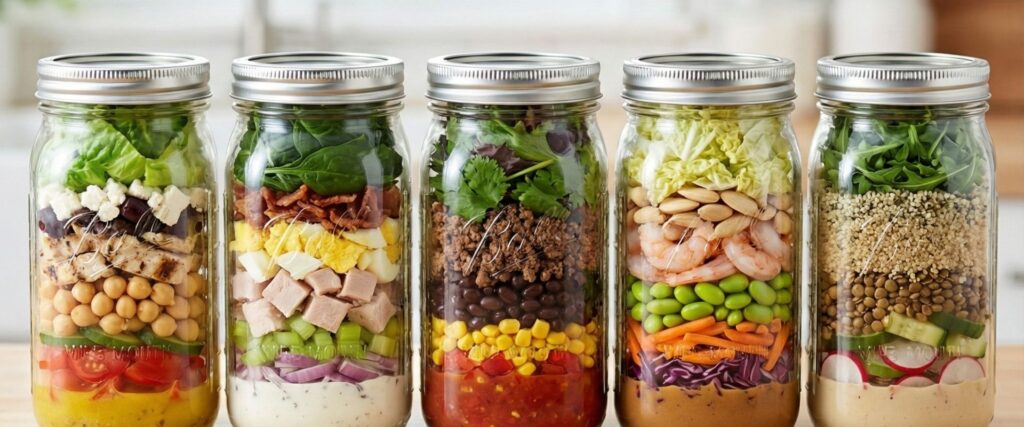
Let’s be honest: there is something incredibly satisfying about opening your fridge on a Tuesday morning and seeing a neat row of colorful, organized mason jars lined up. It’s not just lunch; it’s visual peace of mind. It says, “I have my life together.”
But as a professional blogger focused on gut health and high-protein living, I know that “pretty” isn’t enough. We need fuel. We need lunches that keep us full from noon until dinner without the 3 PM sugar crash. We’ve all been there you eat a sad, wilting desk salad at 12:30 PM, and by 2:00 PM, you’re raiding the office vending machine for anything with sugar in it.
If you’ve been struggling to hit your protein goals during the workday, or if you are tired of spending $15 on “fast casual” salads that aren’t actually that healthy, this guide is for you. I’ve tested these combinations to ensure they stay crisp, fresh, and packed with over 30 grams of protein each.
Why High-Protein Lunches Matter (The Science)
Before we get to the recipes, let’s talk about why we are prioritizing protein. It’s not just for bodybuilders it is the biological key to stopping cravings and managing weight.
1. The Satiety Factor (GLP-1)
You might have heard of GLP-1 (Glucagon-like peptide-1) in the news recently. It’s a hormone that tells your brain “I’m full.” According to research published in the National Institutes of Health (NIH) database, higher protein intake significantly stimulates the release of GLP-1 while simultaneously reducing “ghrelin” (the hunger hormone). When you eat a salad with 30g of protein, you aren’t just eating calories; you are sending a chemical signal to your brain to stop looking for food.
2. The Thermic Effect of Food (TEF)
Did you know your body burns calories just by digesting food? This is called the Thermic Effect of Food. Protein has a much higher TEF (20-30%) compared to carbohydrates (5-10%) or fats (0-3%). This means that for every 100 calories of protein you eat, your body burns about 25 of them just to process it. By swapping a bagel for a high-protein salad, you are literally boosting your metabolism during digestion.
3. Blood Sugar Stability
Unlike a carb-heavy sandwich or pasta dish that spikes your insulin and leads to a crash, a high-protein lunch helps regulate blood sugar. A study in the American Journal of Clinical Nutrition found that high-protein diets help lower post-meal blood sugar spikes, preventing that mid-afternoon brain fog that kills your productivity.
The “No-Soggy-Salad” Strategy
If you’ve tried mason jar salads before and ended up with a mushy mess, you didn’t fail your layering strategy did. The physics of a mason jar salad are simple: keep the wet things away from the dry things.
Through my own trial and error (and many soggy croutons), I’ve perfected the “Safety & Crunch” Order. Memorize this:
- Level 1: The Dressing Zone (Bottom). Always put your vinaigrette, ranch, or creamy dressing here. It touches nothing but the glass and the hard veggies.
- Level 2: The Shield (Hard Veggies). This is the most crucial layer. Use non-absorbent vegetables like carrots, cucumbers, bell peppers, radishes, or chickpeas. These act as a “shield,” protecting the delicate ingredients above from the dressing. In fact, these veggies often taste better after marinating in the dressing for a few days (think pickles!).
- Level 3: The Protein (The Powerhouse). Chicken, hard-boiled eggs, steak, tofu, or beans go here. They are heavy and press down on the hard veggies, keeping the seal tight.
- Level 4: The Soft Stuff. This is for ingredients that you want to stay relatively dry but aren’t leaves. Think corn, grains (quinoa, farro), seeds, cheese, or nuts.
- Level 5: The Greens (Top). Spinach, arugula, kale, or romaine go in last. Because they are at the very top, separated by 4 inches of food from the dressing, they stay crisp for 4–5 days.
The Hardware: Glass vs. Plastic
Does the jar really matter? Yes.
Why Glass is Superior:
I strictly recommend using glass mason jars over plastic Tupperware for this method. Plastic is porous; over time, it develops microscopic scratches that can hold bacteria and odors. Glass is non-porous and creates a colder thermal seal, which is essential for keeping lettuce crisp for almost a week.
The Best Size:
You need a 32oz (Quart) Wide-Mouth Mason Jar.
- Why 32oz? A 16oz (Pint) jar is too small for a main meal. 32oz allows for 2 cups of greens plus 4-6oz of protein.
- Why Wide-Mouth? Standard mouth jars narrow at the top, making it annoying to fork the food out. Wide-mouth jars are like bowls easy to fill, easy to eat from.
5 High-Protein Mason Jar Recipes
Note: These recipes fit standard 32oz Wide-Mouth Mason Jars.
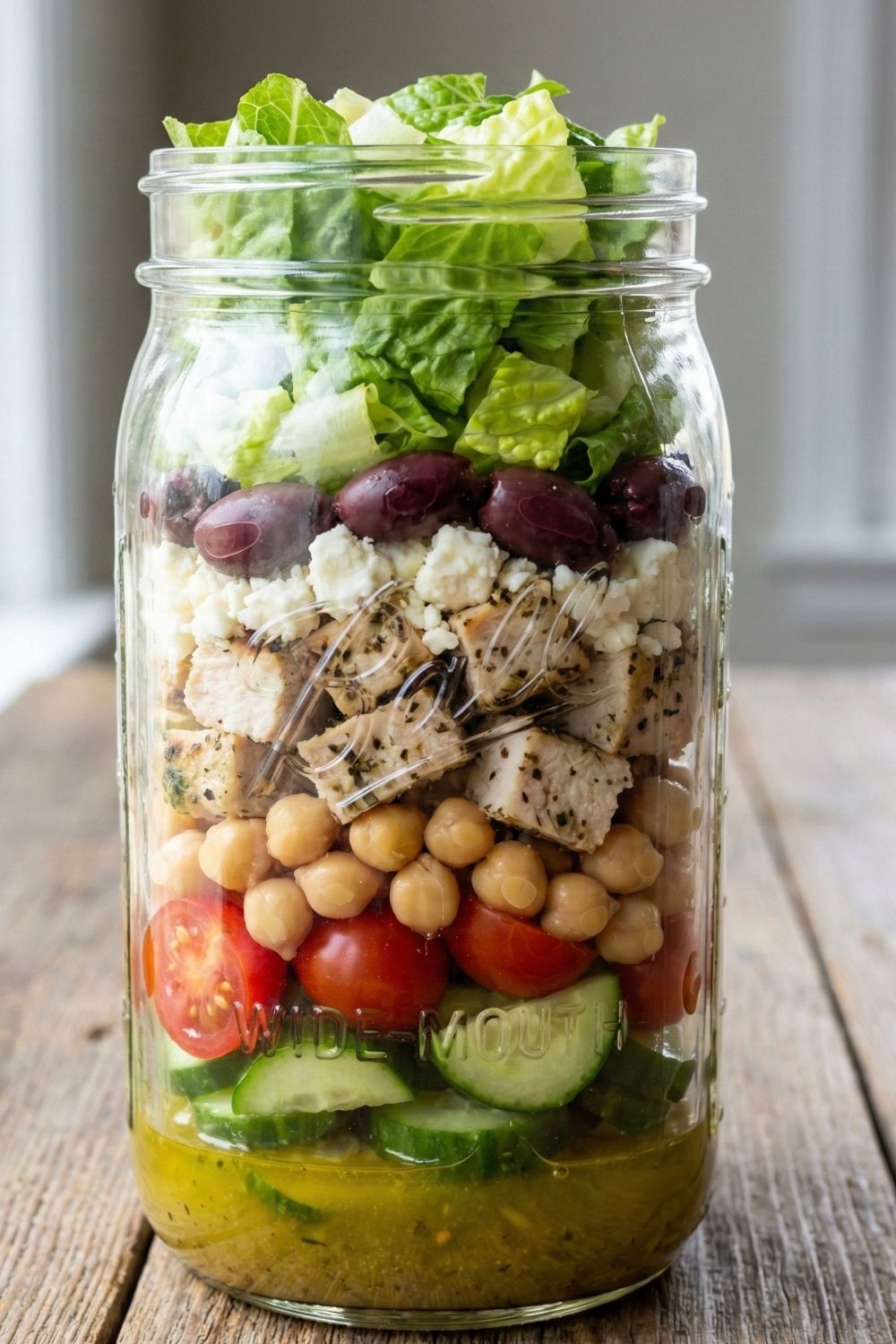
1. The “Greek Power” Chicken Jar
This is my go-to for aesthetic fridge organization the colors are stunning and the Mediterranean flavors get better as they sit.
- Protein: -38g
- Cooking Prep: Season 1 lb of chicken breast with oregano, lemon juice, dried dill, and salt. Pan-sear for 6-7 minutes per side until cooked. Let it rest for 10 minutes (to keep juices in) before cubing.
- Layering Order:
- 2 tbsp Greek Vinaigrette (Olive oil, lemon, oregano)
- 1/2 cup Cucumber slices & Cherry tomatoes (whole or halved)
- 1/2 cup Chickpeas (rinsed and dried)
- 4 oz Cooked Chicken Cubes
- 2 tbsp Crumbled Feta Cheese & Kalamata Olives
- Top with Chopped Romaine Lettuce (pack it in tight!)
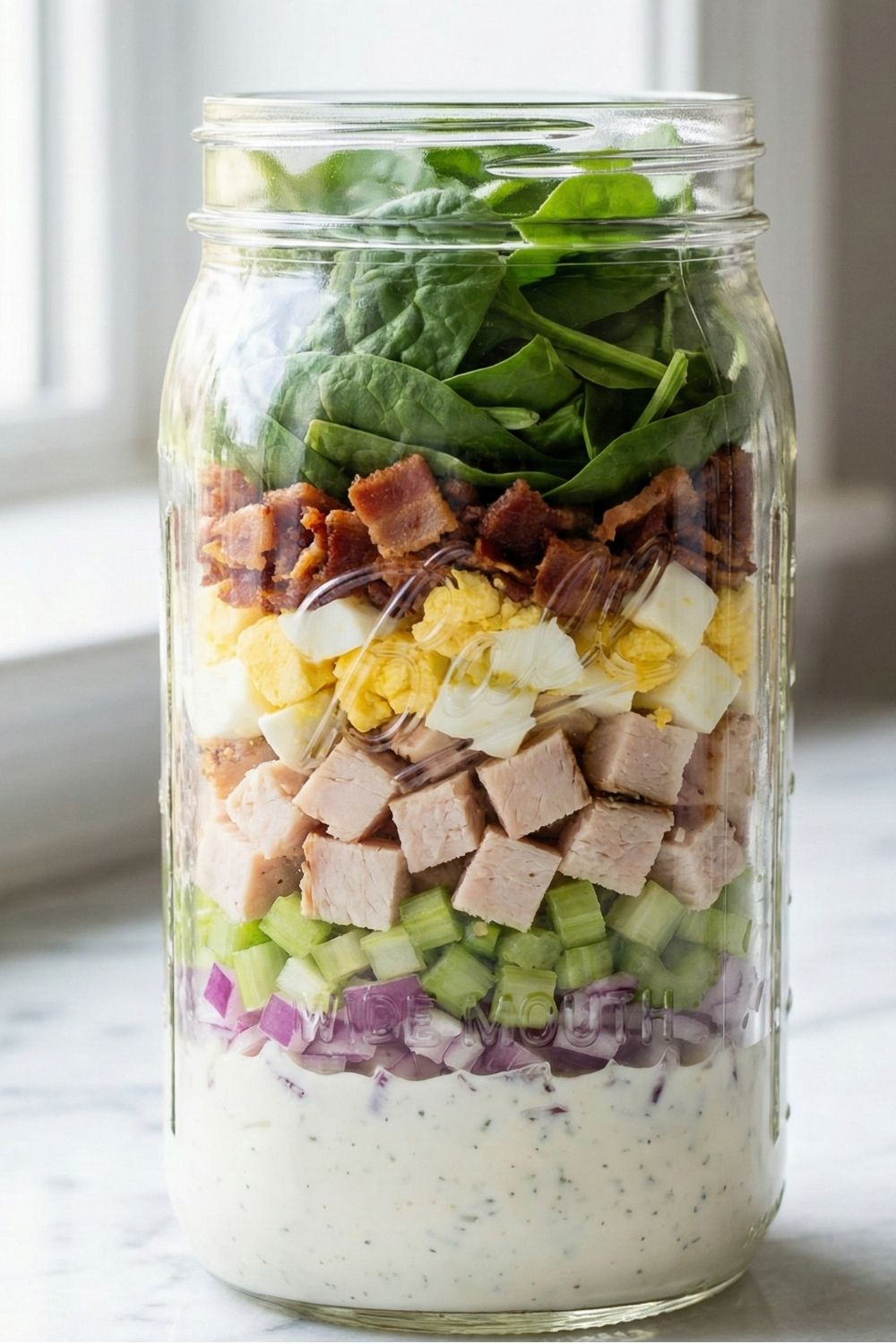
2. The Turkey “Cobb” Jar
A classic reinvented. High protein, healthy fats, and incredibly filling. It feels like an indulgence but fits perfectly into a weight loss plan.
- Protein: -42g
- Cooking Prep: Hard boil eggs (boil for 9 minutes, then immediately plunge into an ice bath for easy peeling). Buy a thick slab of roasted turkey breast from the deli counter and dice it yourself rather than using thin slices the texture is much better.
- Layering Order:
- 2 tbsp Yogurt-based Ranch (Mix Greek yogurt with dill, garlic powder, and onion powder for a high-protein dressing)
- 1/2 cup Red Onion & Celery (Essential for crunch)
- 4 oz Diced Turkey Breast
- 1 Hard-boiled Egg (chopped)
- 1 tbsp Bacon bits (optional)
- Top with Baby Spinach or Mixed Greens
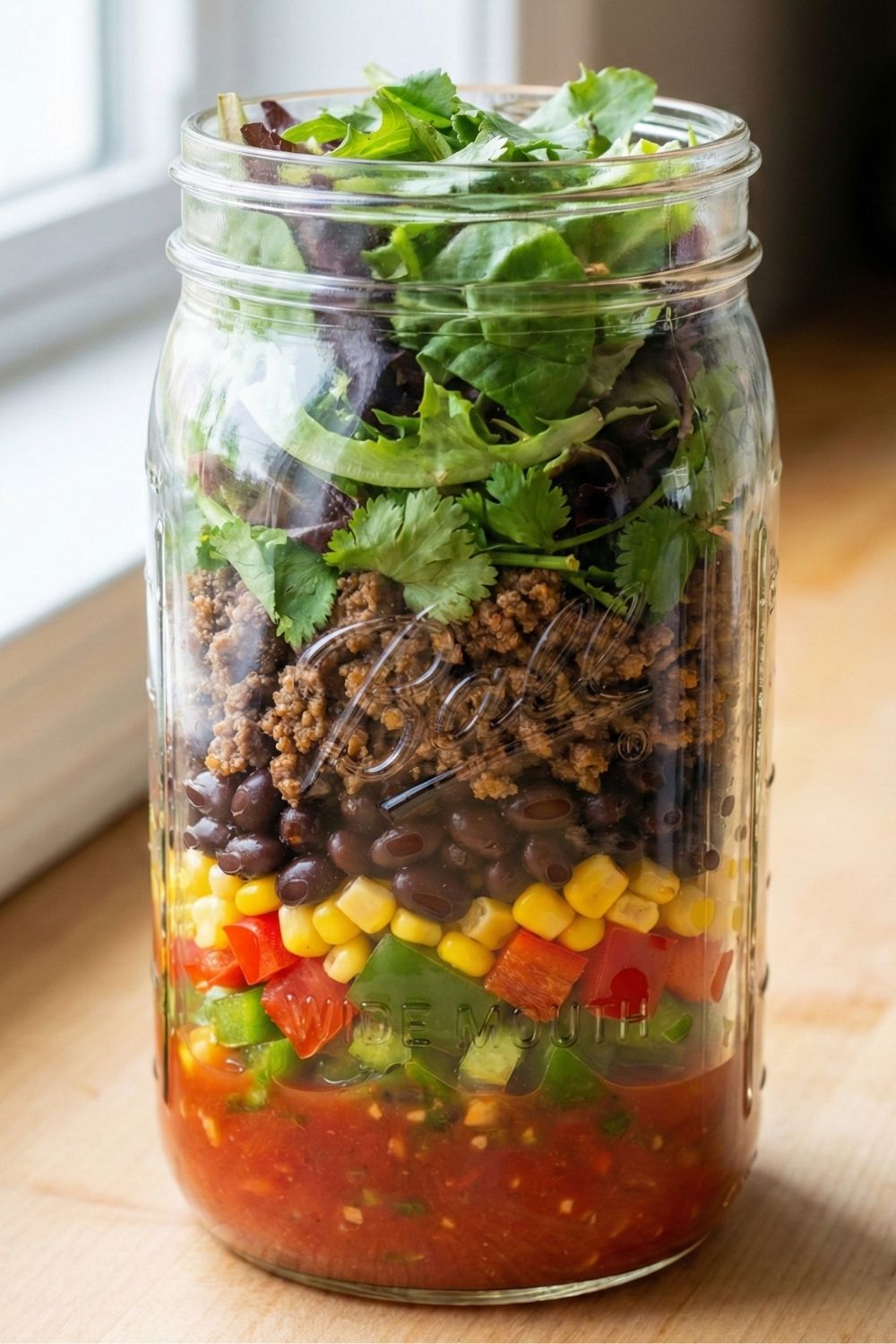
3. Spicy Southwest Black Bean & Beef
- Protein: -35g
- Cooking Prep: Brown lean ground beef (93/7) in a skillet with taco seasoning. Add a splash of water to make it saucy, then let the water evaporate. Crucial: Let the beef cool completely in the fridge before putting it in the jar, or the steam will wilt your salad instantly.
- Layering Order:
- 2 tbsp Salsa or Chipotle Lime Dressing
- 1/2 cup Bell Peppers & Corn
- 1/2 cup Black Beans (rinsed well)
- 4 oz Cooked Ground Beef
- Sprinkle of Cilantro & Cheddar Cheese
- Top with Crunchy Romaine or Iceberg Lettuce
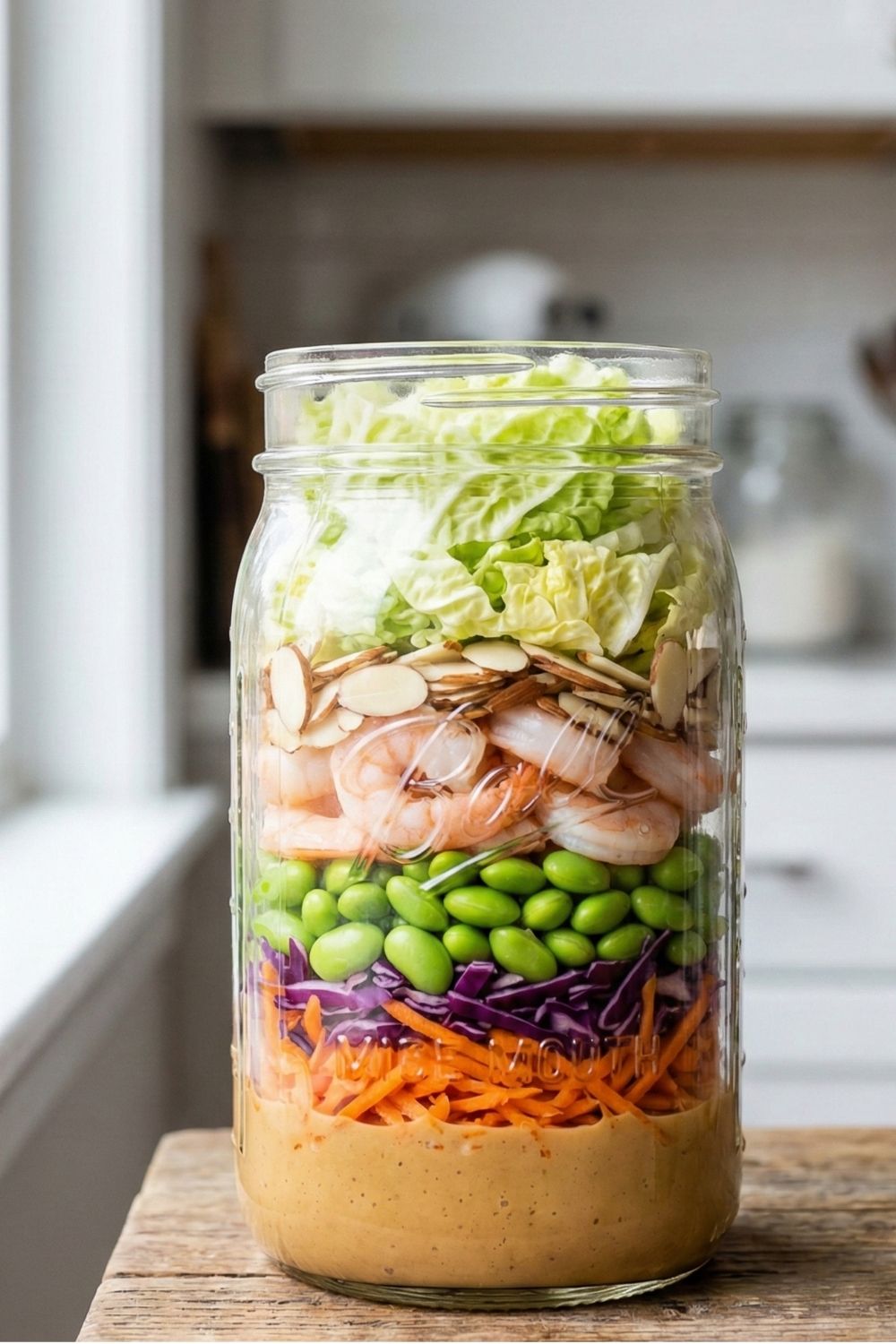
4. The “Crunchy Thai” Edamame & Shrimp
Lighter on the stomach but massive on protein. The edamame adds a plant-based protein boost alongside the shrimp.
- Protein: -32g
- Cooking Prep: Use pre-cooked frozen shrimp (thawed) for ease, or quickly sauté raw shrimp in sesame oil and soy sauce for 2-3 minutes.
- Layering Order:
- 2 tbsp Peanut or Sesame Ginger Dressing
- 1/2 cup Shredded Carrots & Purple Cabbage (The “Rainbow” look!)
- 1/2 cup Shelled Edamame
- 4 oz Shrimp (Tail off)
- 1 tbsp Slivered Almonds or Crushed Peanuts
- Top with Napa Cabbage or Spinach
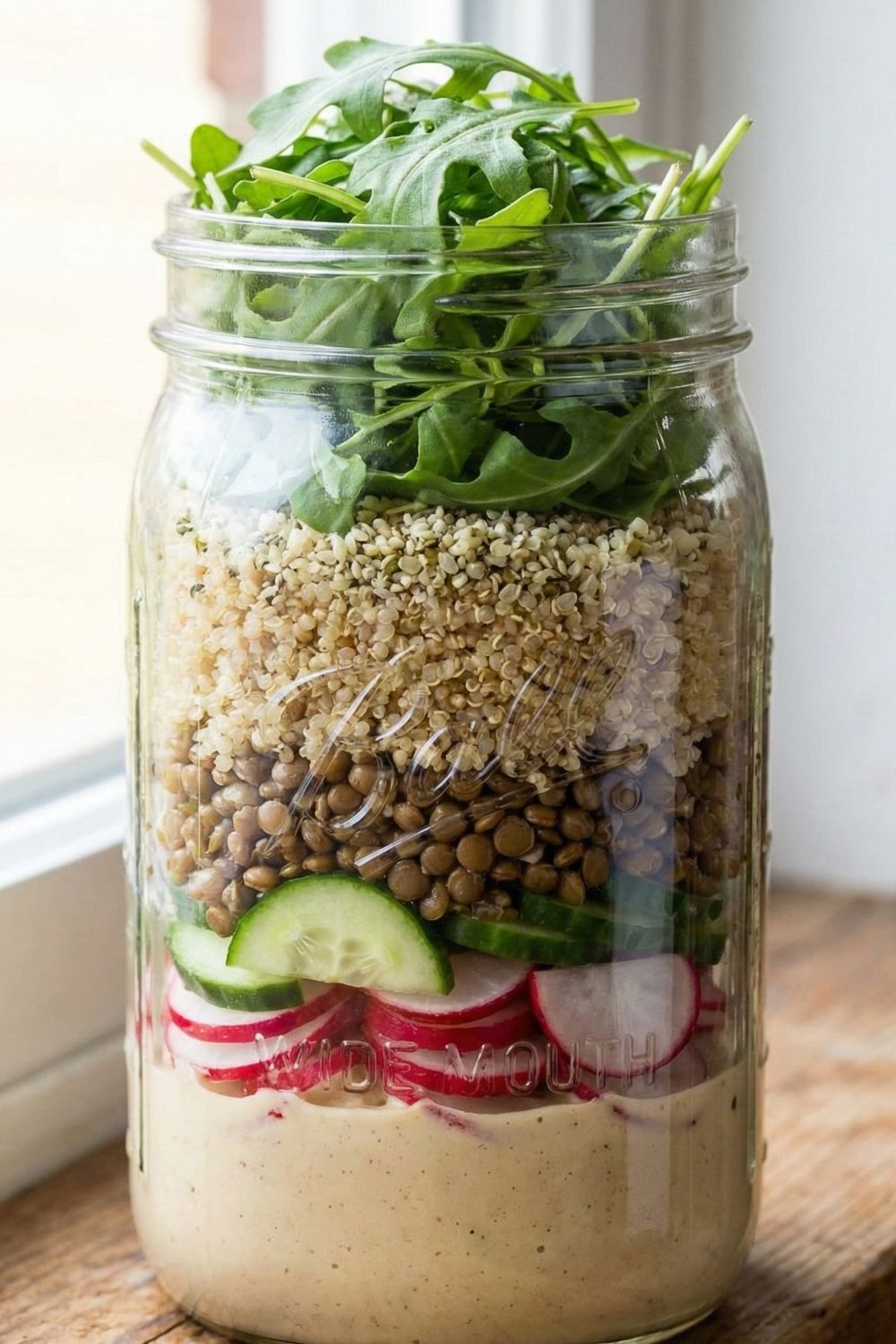
5. Vegetarian Quinoa & Lentil Bomb
- Protein: -28g (Plant-Based)
- Cooking Prep: Cook quinoa in vegetable broth instead of water for extra flavor. Cook lentils until tender but not mushy. Fluff both and cool.
- Layering Order:
- 2 tbsp Lemon Tahini Dressing
- 1/2 cup Radishes & sliced Cucumbers
- 1/2 cup Cooked Lentils
- 1/2 cup Quinoa
- 2 tbsp Hemp Seeds (These are 30% protein by weight don’t skip them!)
- Top with Peppery Arugula
3 Common Mistakes That Ruin Meal Prep
I have eaten my fair share of sad salads so you don’t have to. Avoid these three common pitfalls:
- The “Wet Green” Mistake: If you wash your lettuce and throw it straight into the jar, your salad will rot by Tuesday. Moisture promotes bacterial breakdown. You must use a salad spinner or pat your leaves dry with paper towels until they are bone dry.
- The “Warm Protein” Error: Never put hot chicken or beef into the jar. The heat gets trapped in the glass, steaming the ingredients above it and creating a bacterial breeding ground. Always cool your proteins to room temperature or fridge temperature first.
- Overpacking the Top: While you want to pack the jar, leave about 1 inch of headspace at the very top. If you pack the lettuce all the way to the metal lid, it can get pinched and bruise, leading to brown leaves.
The Economics: Is Meal Prepping Worth It?
As a blogger, I look at the ROI (Return on Investment) of everything. Let’s break down the cost.
- Average Fast-Casual Salad: $14.00 – $18.00
- Homemade Mason Jar Salad: -$3.50 – $4.50 (depending on organic ingredients)
By prepping 5 jars on Sunday, you are saving roughly $50 to $60 per week. That is over $2,500 a year enough for a nice vacation just by spending 45 minutes on a Sunday chopping vegetables.
Food Safety & Storage Tips
Since we are meal prepping for the week, safety is critical.
- Temperature Matters: The CDC recommends keeping your fridge at 40°F (4°C) or below. Cut leafy greens must be kept cold to prevent bacteria growth. Source: CDC Food Safety for Leafy Greens.
- The 5-Day Rule: These jars are best eaten within 4 to 5 days. If you are prepping on Sunday, eat your last jar by Thursday or Friday lunch.
5 High-Protein Mason Jar Salads for Busy Weekdays (FAQ)
When you’re ready to eat, shake the jar vigorously to coat everything in the dressing, then pour it out into a bowl. It mixes itself!
No. Fresh lettuce and cucumbers have high water content and will turn to mush when thawed. These are strictly fridge-only meals.
I always recommend the 32oz (Quart) Wide-Mouth Mason Jar. The standard mouth is too narrow to fill easily, and anything smaller than 32oz won’t hold enough volume for a satisfying adult lunch.
If you follow the layering guide and dry your greens, these are fresh for 5 days. I usually prep Sunday afternoon and eat the last one on Friday.
You can, but I don’t recommend it. Plastic retains odors and fats (grease) much more than glass. After a few weeks, your plastic jars might start smelling like vinaigrette even when clean. Stick to glass.
The CDC recommends keeping your fridge at 40°F (4°C) or below. I recommend buying a cheap fridge thermometer to check, especially since you are storing cut leafy greens.
Final Thoughts
Meal prepping isn’t about being perfect; it’s about making the healthy choice the easy choice. When you are stressed on a Wednesday at 1 PM, you will choose whatever is easiest. If there is a beautiful, high-protein jar sitting in your fridge, you will eat that. If there isn’t, you’ll order takeout.
Set yourself up for success. Grab your jars, crank up your favorite playlist, and spend 45 minutes this Sunday investing in your health for the week ahead.
Did you try these recipes? Tag me on Pinterest @[YourPinterestHandle] so I can see your layers!