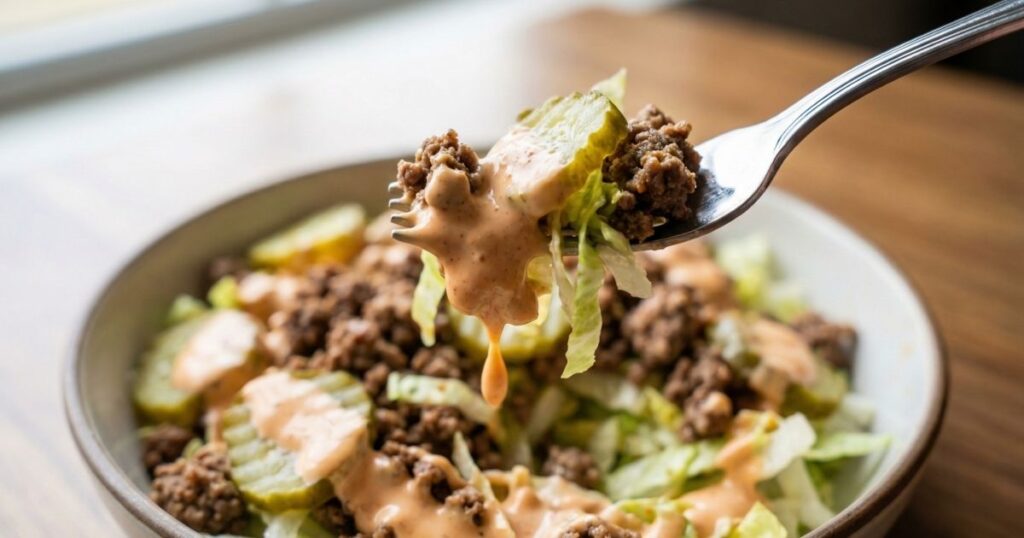
Let’s be honest for a second. Is there anything more disheartening than sitting down to a “healthy lunch” that consists of a handful of limp spinach, three cherry tomatoes, and a whisper of dressing, only to feel your stomach rumbling violently by 2:00 PM?
I call this the “Sad Salad” Syndrome.
For years, I thought this was just the price of admission for losing weight. I thought feeling hungry was a badge of honor, a sign that my diet was “working.” But I was wrong. Hunger isn’t a sign of success; it’s a sign that your biological needs aren’t being met. And when you ignore biology, biology eventually fights back usually in the form of a late-night indulge on everything in the pantry.
Welcome to the world of Volume Eating.
In this guide, I’m going to share the exact strategy I use to create massive, mixing-bowl-sized salads that are low in carbs but so physically filling that you won’t even think about food until dinner. We are going to cover the science of satiety, the tools that make prep effortless, and three specific recipes that will change your lunch game forever.
The Science: Why Your Brain Craves Volume
To understand why traditional diets fail, we have to look at how the human stomach works. We often count calories, but our stomachs don’t have calorie counters inside them. They have mechanoreceptors.
These are stretch receptors located in the stomach lining. When you eat a large volume of food, your stomach physically expands. This stretching sends a signal via the vagus nerve to your brain stem, effectively flipping a switch that says, “Okay, we are full now. You can stop eating.”
Heres a study on how gastric distension signals satiety. Gastric distension and gastric capacity in relation to food intake in humans
The Caloric Density Trap
Here is where most people get tripped up.
- High-Density Foods: A tablespoon of oil or a handful of nuts takes up almost zero space in your stomach but packs hundreds of calories. You can eat 1,000 calories of “dense” food and still feel empty.
- Low-Density (High-Volume) Foods: Vegetables like cucumbers, zucchini, cabbage, and leafy greens are full of water and fiber. You can eat pounds of them for very few calories.
By prioritizing high-volume foods, we trigger those stretch receptors and maximize satiety (the feeling of fullness) without blowing our carbohydrate or calorie budget. For a better understanding check out The CDC (Centers for Disease Control)
(For a deeper dive into the science of energy density and satiety, check out this research on the “Volumetrics” approach to eating.)
The Blueprint: How to Build a Satiety Salad
If you are a beginner, please do not just throw lettuce in a bowl and hope for the best. A “Satiety Salad” is engineered with four distinct layers. This is the formula I use every single day.
Layer 1: The “Crunchy” Base (Not Just Spinach!)
The biggest mistake beginners make is using only soft greens like baby spinach or spring mix. While nutritious, they wilt instantly and require almost no chewing.
Chewing is crucial. The act of mastication signals your body to prepare for digestion and increases satisfaction. I always use a mix of:
- Romaine Hearts: For water content and snap.
- Shredded Cabbage (Green or Red): This is the MVP of volume eating. It’s cheap, it bulks up the bowl, and it stays crunchy for days.
- Iceberg: Yes, it has nutrients! But mostly, it adds hydrating crunch.
Layer 2: The “High-Volume” Fillers
This is where we bulk up the meal. We want vegetables that are high in water and fiber.
- Cucumbers: I use English cucumbers because the skin is thinner.
- Zucchini: Raw zucchini is surprisingly sweet and crisp.
- Radishes: These add a peppery kick and a great crunch.
Beginner Tip: The texture matters. If you chop giant, uneven chunks of vegetables, the salad becomes a chore to eat. I personally aim for a “chopped salad” consistency where every bite is a perfect mix of flavors. To get this right without spending an hour in the kitchen, I highly recommend using a vegetable chopper. I use the [Fullstar Vegetable Chopper found here on Amazon] because it creates those perfect, uniform little squares that hold dressing beautifully. It cuts my prep time in half, and frankly, makes the salad taste 10x better because the texture is consistent.
Layer 3: The Protein Anchor
You cannot live on vegetables alone. To stop the hunger hormone (ghrelin) from spiking an hour later, you need a substantial serving of protein aim for 25-30g minimum. For more in-depth understanding read more.
- Grilled Chicken Thighs (more flavor than breast).
- Canned Tuna or Salmon (drained).
- Hard-Boiled Eggs.
- Edamame or Tofu (for plant-based options).
Layer 4: The Flavor & Fat Factor
Fat is not the enemy; it helps you absorb vitamins A, D, E, and K. However, fat is calorie-dense, so we measure it. instead of pouring oil, use fats that provide texture:
- Avocado: Creaminess + Fiber.
- Feta or Goat Cheese: A strong flavor means you need less of it.
- Seeds: Pumpkin or sunflower seeds for extra crunch.
3 High-Volume Salad Recipes (That Actually Taste Good)
These aren’t just lists of ingredients; these are fully fleshed-out meals. I want you to treat these like you would a main course dinner.
1. The “Big Mac” Craving Killer
Best for: When you want junk food but need to stay on track.
This is my absolute favorite salad. It mimics the flavor profile of a fast-food burger perfectly but leaves you feeling energized, not sluggish.
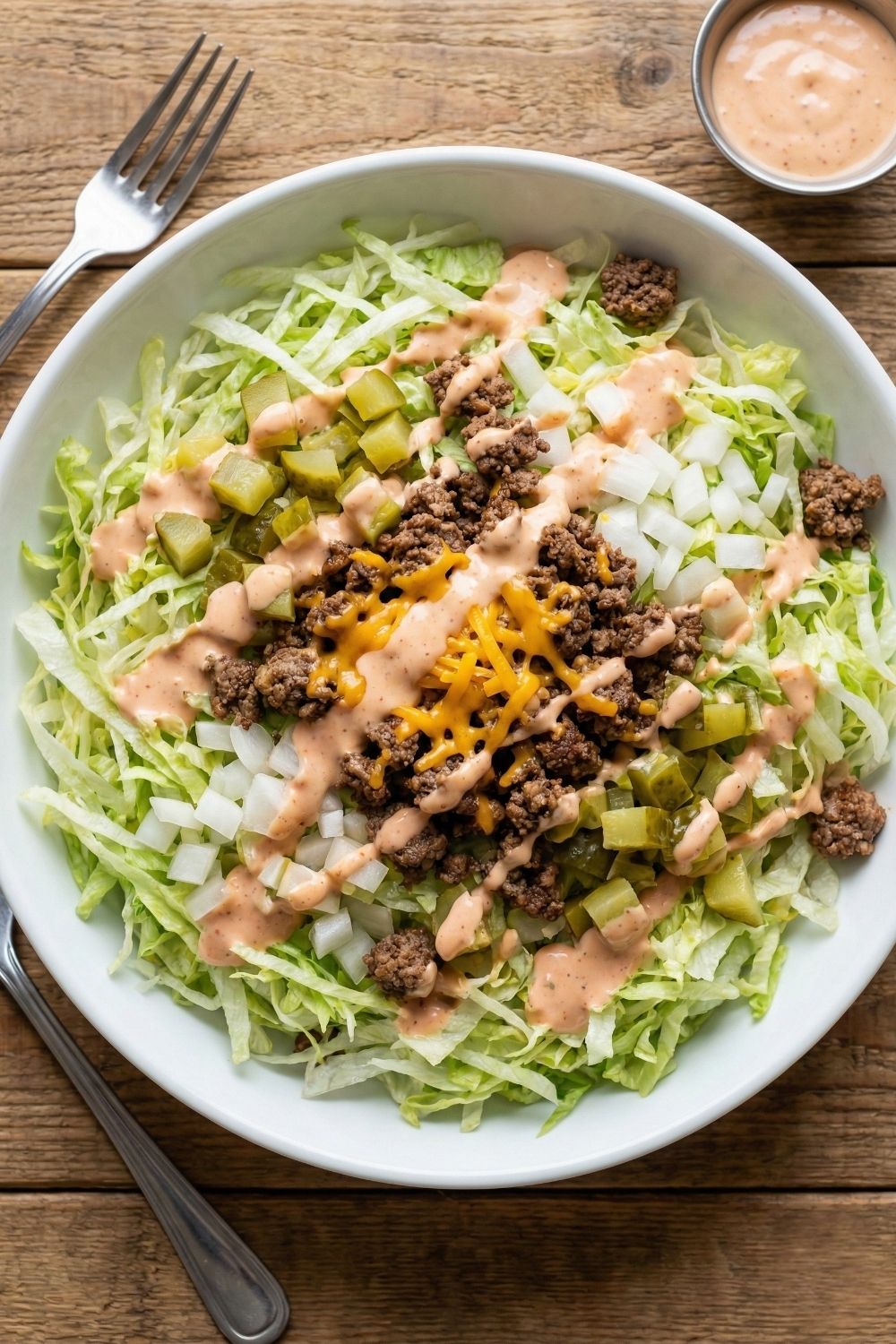
The Ingredients:
- Base: 4 cups Iceberg lettuce, finely shredded (shred it thin like they do at the deli!).
- Volume: 1/2 cup chopped pickles (check for no sugar added), 1/2 cup diced white onion.
- Protein: 4-5oz Lean Ground Beef (93/7 or 96/4), browned and seasoned with salt, pepper, and garlic powder.
- The “Cheese”: 1/4 cup reduced-fat shredded cheddar.
- The Sauce: This is key. Mix 1 tbsp light mayonnaise, 1 tbsp sugar-free ketchup, 1 tsp yellow mustard, and a splash of pickle juice.
Instructions:
- Brown your beef in a skillet until fully cooked. Let it cool slightly you don’t want it to wilt your lettuce immediately.
- While the beef cools, pile your iceberg lettuce into your largest bowl.
- Add the onions and pickles on top.
- Add the warm beef and cheese. The residual heat from the beef will slightly melt the cheese.
- Drizzle the sauce over the top and toss well.
Why this works: The combination of hot beef and cold, crisp lettuce tricks your brain into thinking you’re eating a hot meal, which is often more satisfying than a cold salad.
2. The Spicy Tuna “Sushi” Bowl
Best for: A quick lunch when you have zero time to cook.
If you love spicy tuna rolls, this gives you all that flavor without the heavy rice.
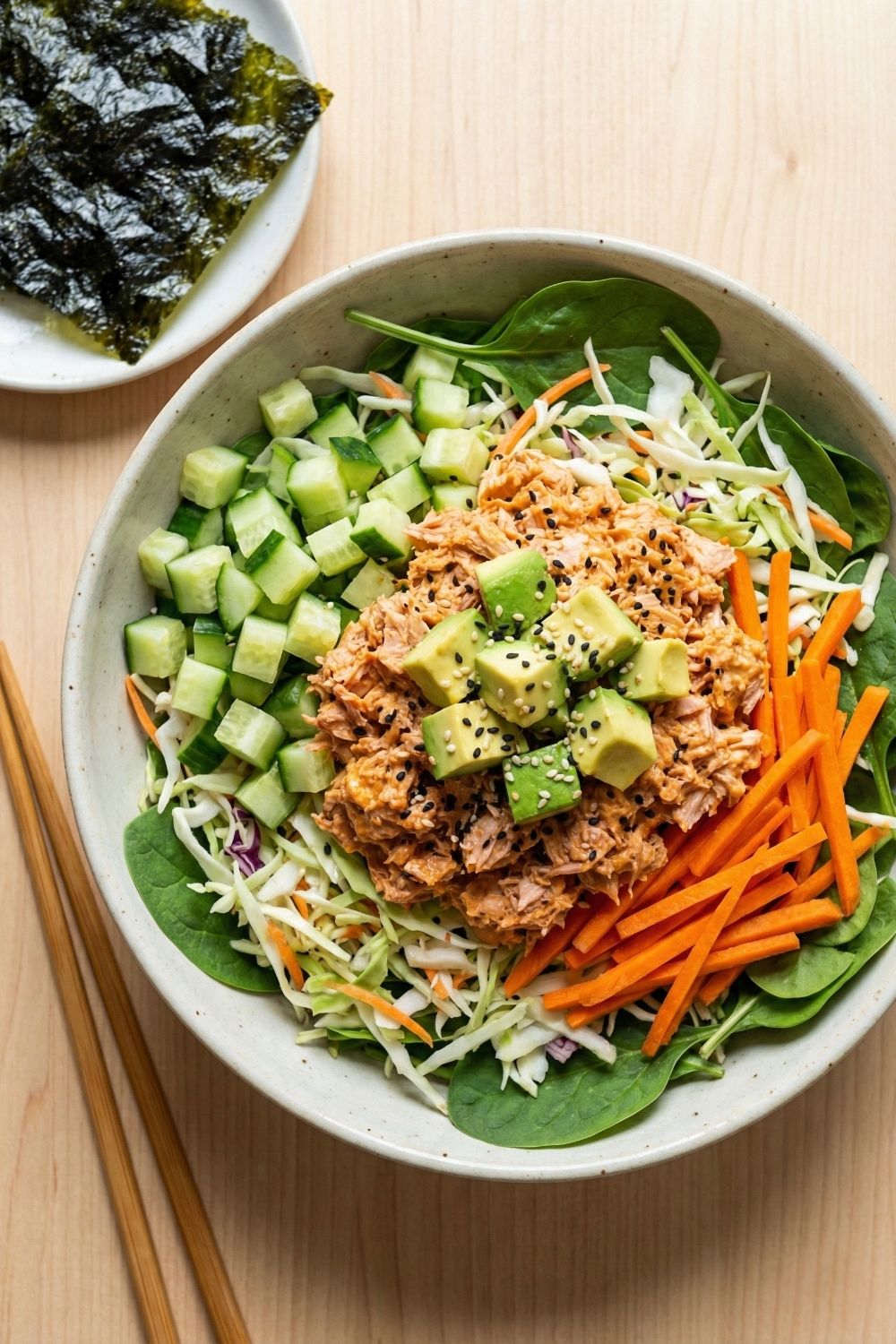
The Ingredients:
- Base: 2 cups Coleslaw Mix (pre-bagged cabbage is a lifesaver) + 2 cups Spinach.
- Volume: 1 whole Cucumber (diced), 1/2 cup Matchstick Carrots (careful with portion for strict low-carb, but the crunch is worth it).
- Protein: 1-2 cans of Tuna in water, drained well.
- The Fats: 1/2 Avocado (cubed), 1 tbsp Sesame Seeds.
- The Dressing: 1 tbsp Light Mayo mixed with Sriracha (to taste) and a dash of Soy Sauce or Coconut Aminos.
Instructions:
- Crucial Step: Drain your tuna very well. Nobody likes watery tuna salad.
- In a small bowl, mix the tuna with the spicy mayo dressing until fully coated.
- Place your cabbage and spinach mix in the bowl.
- Top with the cucumbers and carrots.
- Scoop the spicy tuna mixture into the center.
- Top with avocado and sesame seeds.
- Pro Tip: I eat this with seaweed snacks (Nori) on the side. I use the seaweed to scoop up the salad like a taco. It adds a salty, umami crunch that is addictive!
3. The Mediterranean “Everything” Salad
Best for: Meal prep. This salad holds up well in the fridge.
This is fresh, vibrant, and packed with distinct textures.
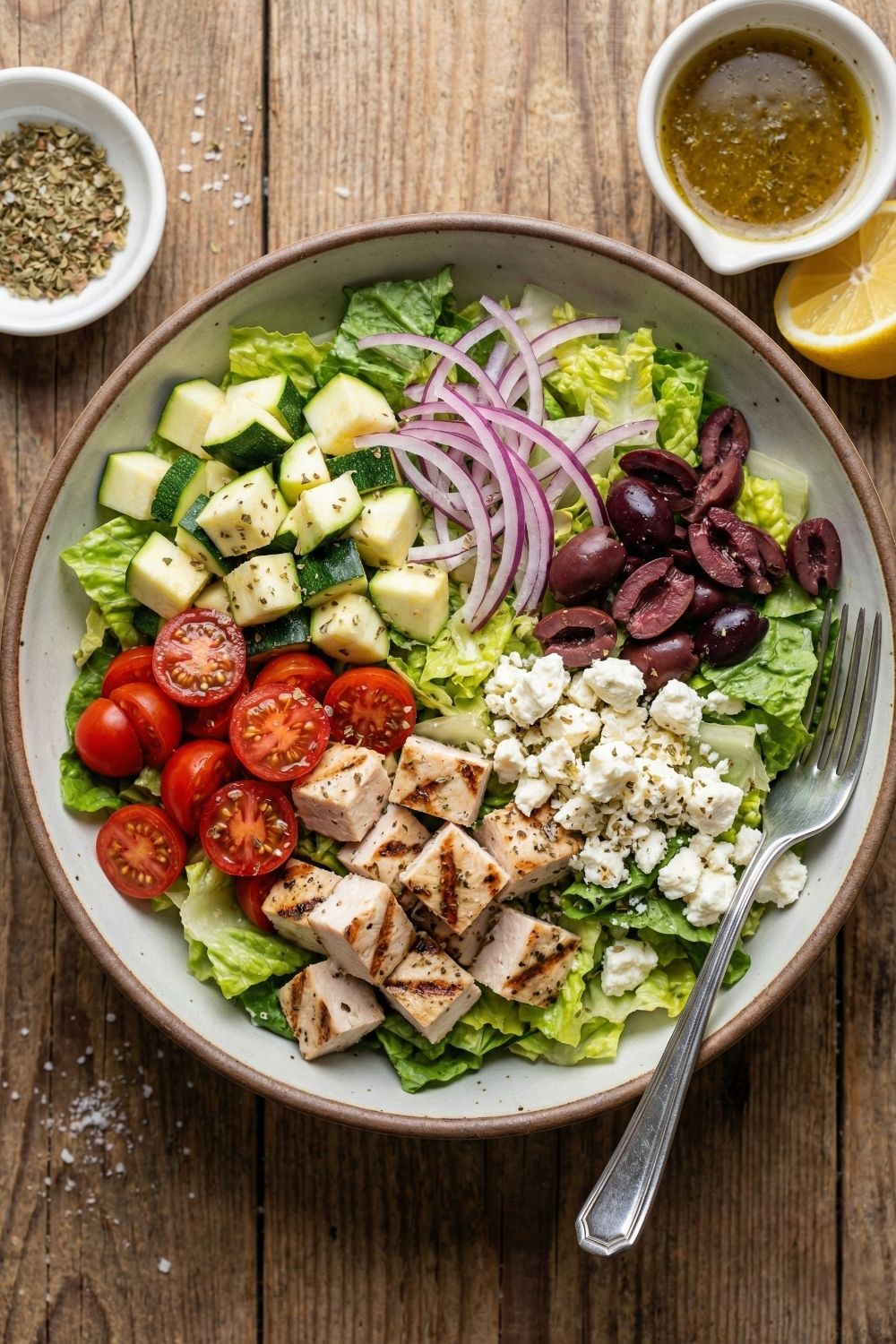
The Ingredients:
- Base: 3 cups Romaine Hearts (chopped).
- Volume: 1 cup chopped Zucchini, 1/2 cup Cherry Tomatoes (halved), 1/4 cup Red Onion (thinly sliced).
- Protein: Grilled Chicken Breast (cubed) I like them cubed it just gives this really clean cut OR canned Chickpeas (if you are higher carb/fiber focused).
- The Fats: 10 Black Olives (halved), 1 oz Feta Cheese crumbles.
- The Dressing: Olive oil (1 tsp), Red Wine Vinegar (2 tbsp), Dried Oregano, Lemon Juice, Salt.
Instructions:
- Combine all veggies in a bowl.
- Whisk the dressing ingredients together vigorously.
- Pour dressing over the veggies and chicken before adding the lettuce if you are prepping ahead.
- When ready to eat, toss everything together. The feta cheese will mix with the vinegar to create a creamy coating on the veggies.
My Essential Tools for Success
People ask me how I stick to this every day. The truth is, I remove the friction. If making a salad is messy or annoying, you won’t do it. Here are the three non-negotiables in my kitchen:
1. A Giant Mixing Bowl
You cannot mix a volume salad in a cereal bowl. You need space to toss the dressing so every leaf is coated. I use a Large Ceramic Bowl.
2. A Serious Salad Spinner
There is nothing and I mean nothing worse than wet lettuce. If your greens are wet, the dressing slides right off, and the texture is slimy. You need your greens bone-dry. I swear by the [OXO Good Grips Salad Spinner on Amazon]. It’s durable, easy to pump, and gets every drop of water off. I wash all my lettuce on Sunday, spin it dry, and store it, so it’s ready to grab all week.
3. Glass Meal Prep Containers
Plastic containers often hold onto smells and stain easily. I use [Glass Meal Prep Containers with locking lids (Amazon)] because they keep the produce crispier for longer. Plus, seeing your beautiful, colorful salads stacked in the fridge is a huge visual motivation to stay on track.
Troubleshooting: (FAQ) How to Make Salads That Actually Keep You Full
This is very common when you suddenly increase fiber intake. Your gut microbiome needs time to adjust to the new “workload.”
1. The Fix: Don’t go from 0 to 100. Start with smaller portions and cooked vegetables (which are easier to digest) before moving to raw.
2. Hydrate: You must drink more water. Fiber draws water into the gut; if you are dehydrated, it causes constipation and bloating.
It’s all about the architecture of your container.
Bottom Layer: Dressing.
Layer 2: Hard veggies (cucumbers, peppers, onions) – they can marinate in the dressing without getting gross.
Layer 3: Protein.
Top Layer: Leafy greens.
Action: When you’re ready to eat, shake the container violently to distribute the dressing.
You can, but read the label. Many “healthy” vinaigrettes list sugar as the second ingredient. Look for yogurt-based dressings (like Bolt house Farms) which are often lower in calories and higher in protein, or stick to simple olive oil and vinegar.
Final Thoughts
Volume eating isn’t a “diet hack”it’s a lifestyle change that respects your body’s hunger signals. By filling your plate with low-carb, nutrient-dense foods, you are telling your body that it is safe, nourished, and full.
Don’t be afraid of the big bowl. Embrace the volume. Eat until you are truly satisfied.
Now, I’d love to hear from you: Have you tried volume eating before? Which of these three recipes are you going to try for lunch this week? Let me know in the comments below!
(Medical Disclaimer: I am a blogger, not a doctor. Always consult with your healthcare provider before making drastic changes to your diet, especially if you have digestive issues).