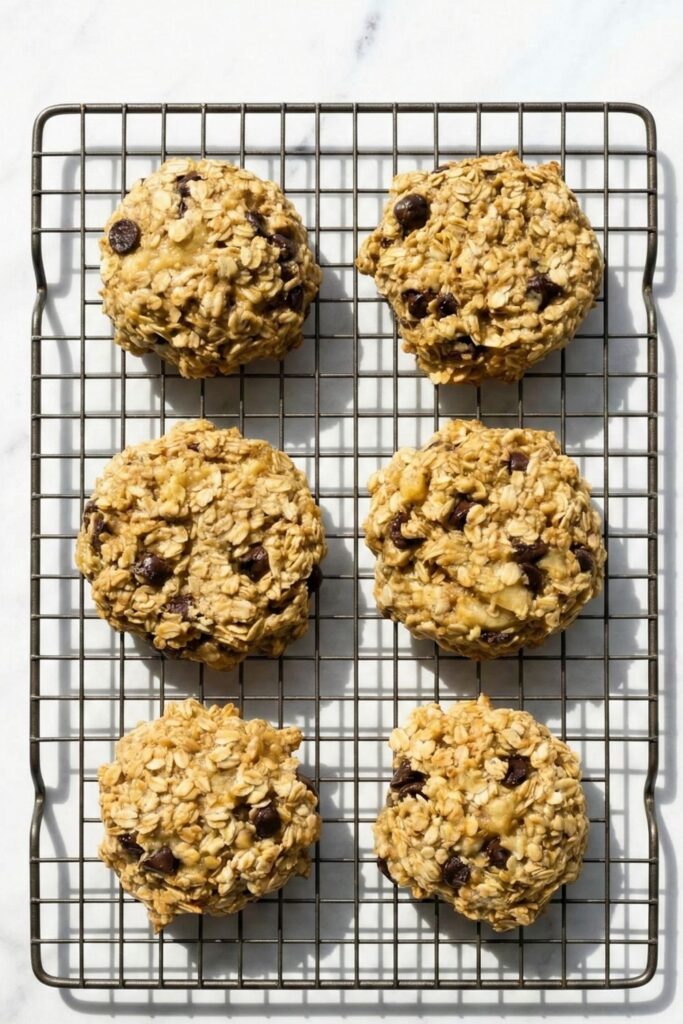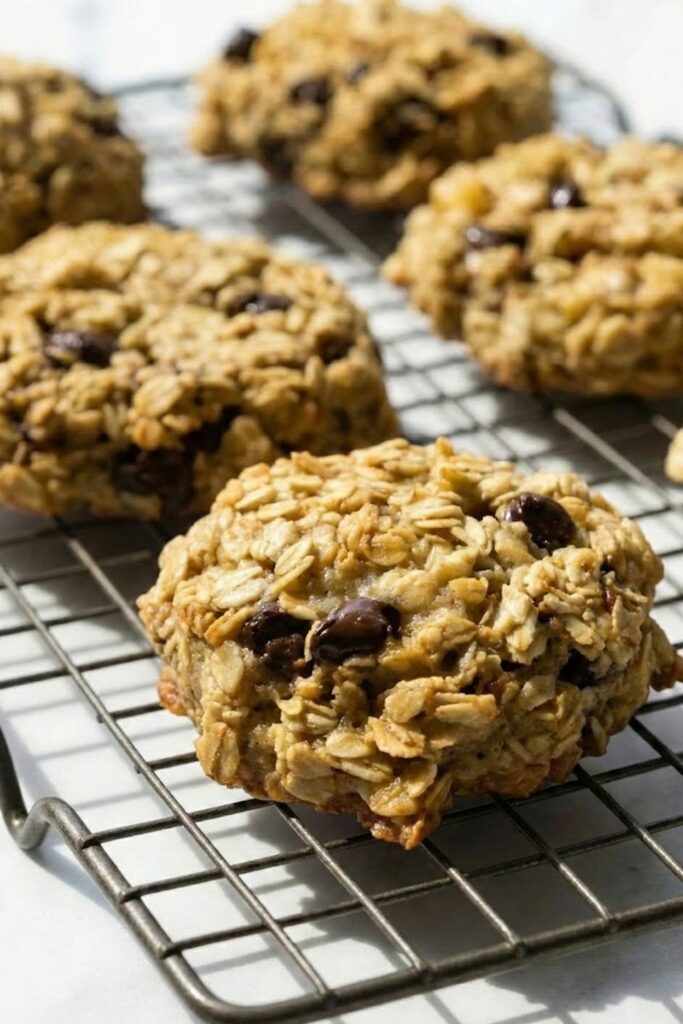
Cardiovascular health and cholesterol management require strict nutritional protocols, but therapeutic diets often fail due to palate fatigue. You need high-utility interventions that stabilize lipid profiles without sacrificing sensory satisfaction.
Here is the reality.
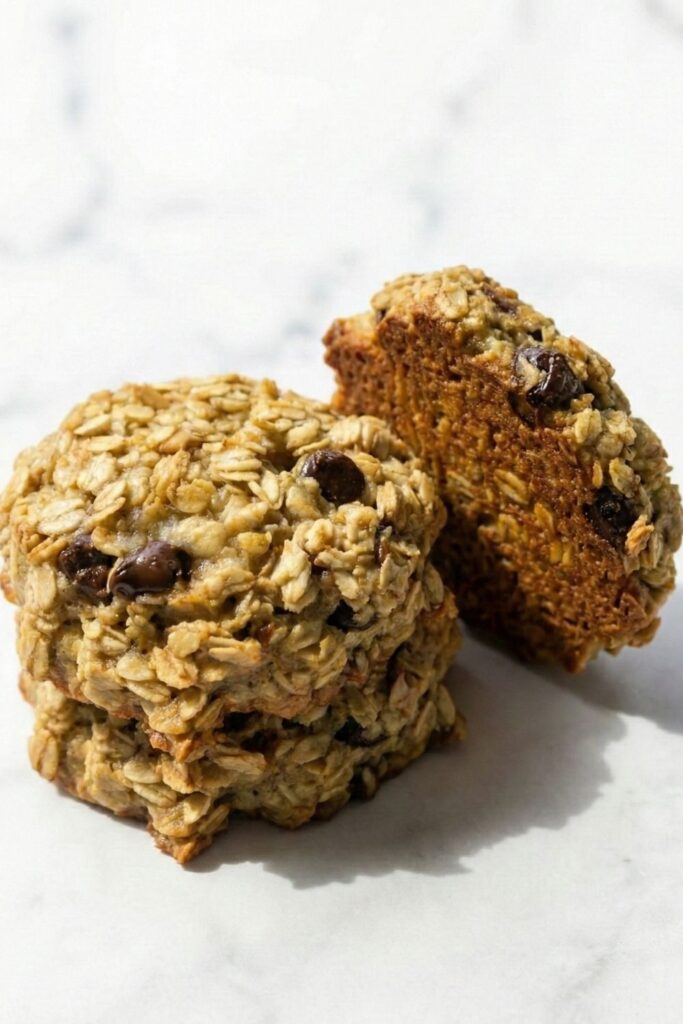
Most heart-healthy baked goods rely on complex flour blends, emulsifiers, and artificial binders that disrupt digestion. This formulation strips the cookie down to its absolute structural baseline: exactly three ingredients engineered to deliver a concentrated dose of beta-glucan, a highly viscous soluble fiber clinically proven to bind to cholesterol in the digestive tract. By utilizing the natural starch retrogradation of ripe fruit, we eliminate the need for exogenous fats, eggs, or refined sugars. This is not a casual baking experiment. This is a targeted cardiovascular asset.
Let’s break down the mechanics.
The Science and The Why
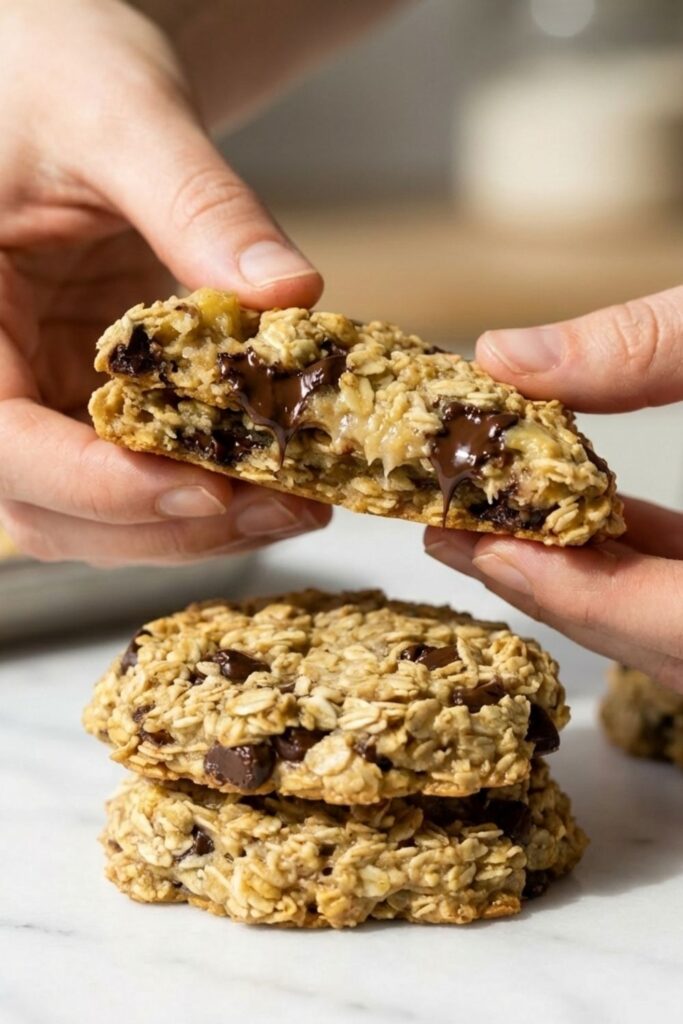
To understand why this three-ingredient matrix succeeds structurally and nutritionally, we must examine the chemistry of beta-glucan and starch hydration. When you consume the 1 ½ cups of old-fashioned rolled oats in this recipe, you are ingesting a specific polysaccharide that forms a thick, gel-like matrix in the human gut. This high-viscosity gel physically traps bile acids, forcing the liver to pull circulating LDL cholesterol from the bloodstream to synthesize more bile.
But how does it hold together without eggs?
The secret lies in the 1 ½ cups of mashed banana puree. As bananas ripen, their complex carbohydrates break down into simpler fructose and glucose, while their residual starches retain highly hygroscopic properties. When the dry rolled oats meet the wet banana mash, a rapid hydration sequence occurs. The oat starches absorb the moisture from the fruit, swelling and interlocking with the banana’s natural pectin.
This is crucial.
During the 350°F (175°C) thermal phase, the banana proteins and residual sugars undergo a localized Maillard reaction on the surface of the cookie. This creates a polymerized crust that locks the internal moisture in place. We are essentially using the mechanical force of your cookie scoop and the chemical binding power of hydrated fruit starch to simulate the gluten network of a standard bakery cookie, all while maintaining a zero-cholesterol, high-fiber profile.
Ingredient Deep Dive
Precision is non-negotiable here. Altering these specific ratios will result in structural failure.
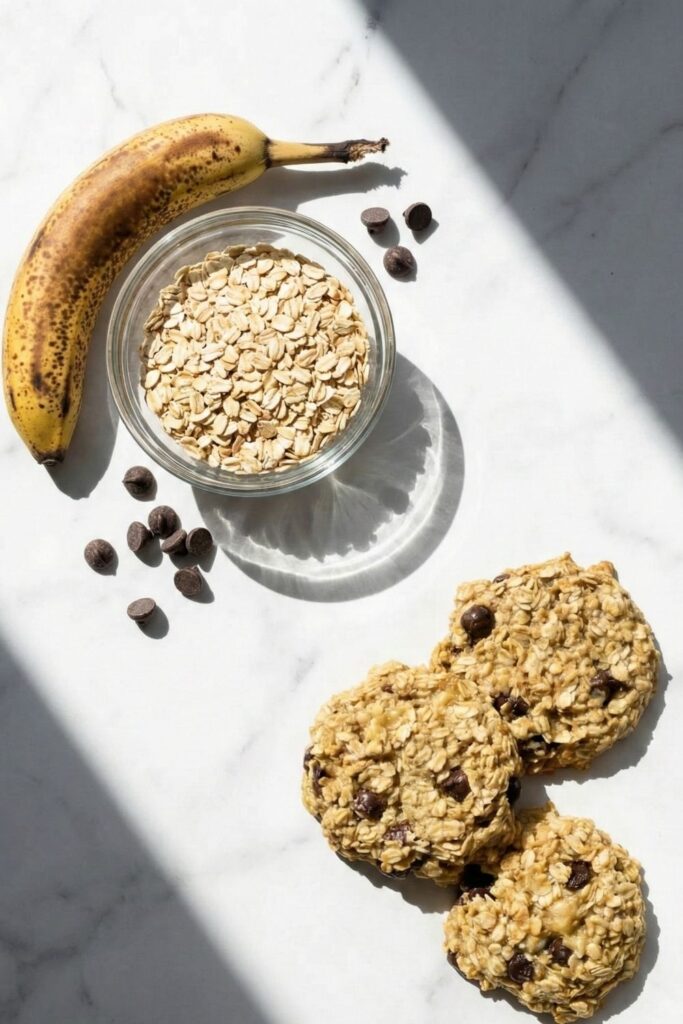
. The Binder: 2 Large Ripe Bananas (Exactly 1 ½ Cups Mashed)
You cannot use green or perfectly yellow bananas. You require bananas in the advanced stages of ripening, heavily speckled with brown enzymatic spots. At this stage, the fruit has achieved maximum starch-to-sugar conversion, providing the only sweetening agent in the formula. More importantly, the cellular breakdown yields exactly the right viscosity. You must measure exactly 1 ½ cups of mashed puree. If your bananas are too small and yield only 1 cup, the oats will not hydrate, and the cookies will disintegrate post-bake.
Pay attention to this.
2. The Matrix: 1 ½ Cups Old-Fashioned Rolled Oats
Do not substitute quick oats or steel-cut oats. Quick oats are milled too finely; they will absorb the banana moisture too rapidly, creating a dense, gummy paste with a high glycemic load. Old-fashioned rolled oats maintain their structural integrity and provide the necessary chew. They are comprised of approximately 11% dietary fiber, with a high concentration of the cholesterol-lowering beta-glucan required for the cardiovascular focus of this recipe.
3. The Palate Modulator: ⅓ Cup Chocolate Chips
To maintain the heart-health protocol while optimizing the sensory experience, utilize dark chocolate chips (70% cacao or higher). Dark chocolate introduces heart-protective flavonoids and stearic acid, which does not elevate LDL cholesterol. We restrict this to exactly ⅓ cup to ensure the melted lipid pockets do not compromise the starch-bound structure of the oat matrix.
Equipment Clinic
Your hardware dictates your success. You do not need a stand mixer, but you do need strict mechanical control.
- Large Glass Mixing Bowl: Glass retains a stable temperature and allows visual confirmation that no dry oat pockets remain at the bottom.
- Heavy-Duty Fork: Required for the initial mechanical maceration of the bananas to achieve the specific wet, lumpy viscosity.
- Silicone Spatula: Essential for folding. It prevents the shear-force crushing of the oats that a metal spoon would cause.
- Large Spring-Release Cookie Scoop: This is your most critical tool. Because there is no egg or gluten to hold the dough together, you must rely on physical compression. The scoop forcefully packs the hydrated oats together.
- Aluminum Baking Sheet & Parchment Paper: Aluminum ensures rapid, even heat transfer. Parchment paper provides a non-stick, chemical-free barrier. Do not use silicone baking mats; they insulate too much and prevent the bottoms from caramelizing.
Step-by-Step Guide
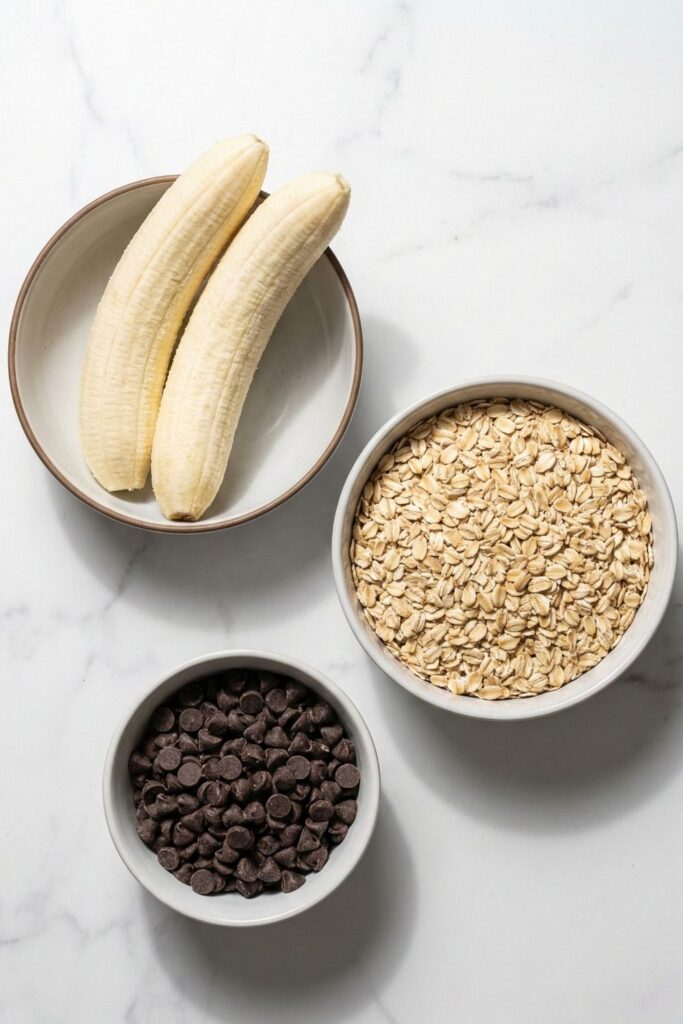
Preheat your oven immediately to 350°F (175°C). Line your aluminum baking sheet with parchment paper. And your ingredients
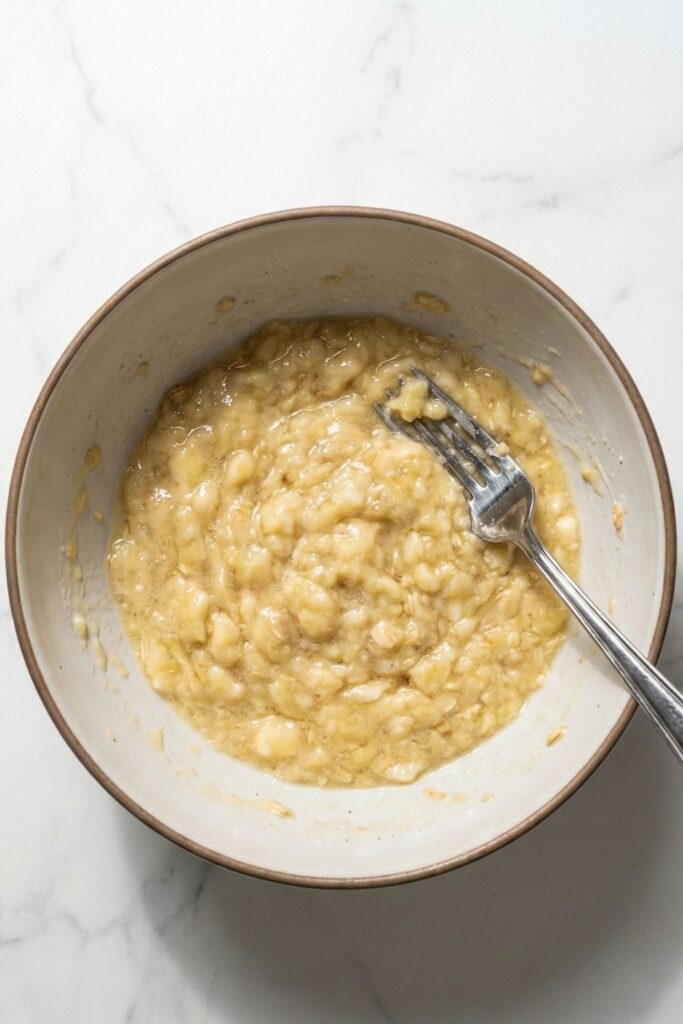
Peel your heavily speckled bananas. Using your fork, mash them against the bottom of your glass bowl.
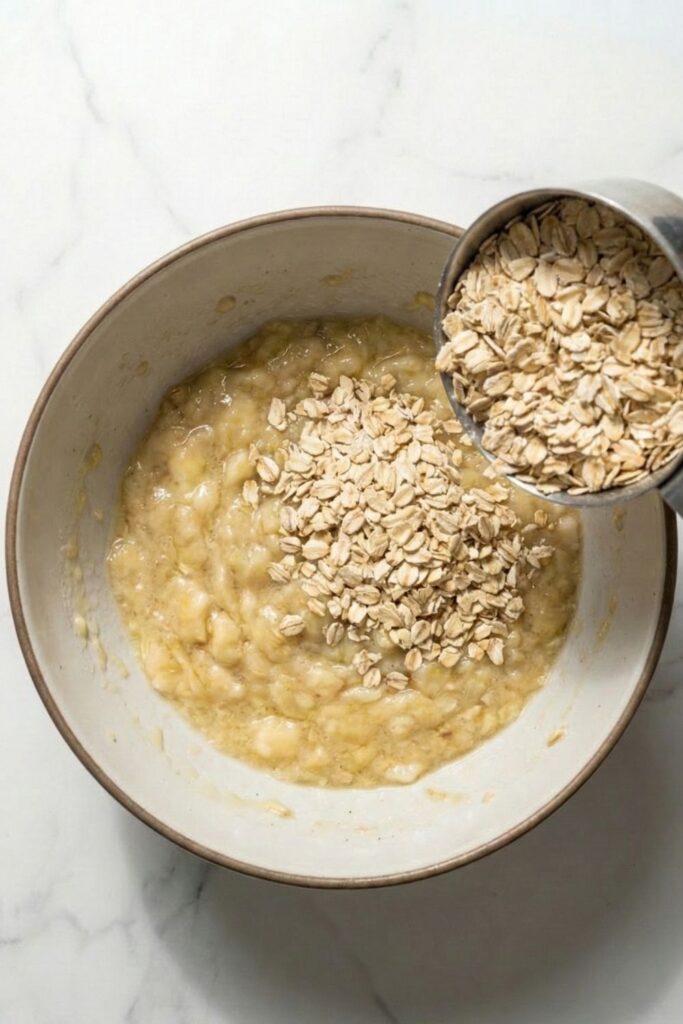
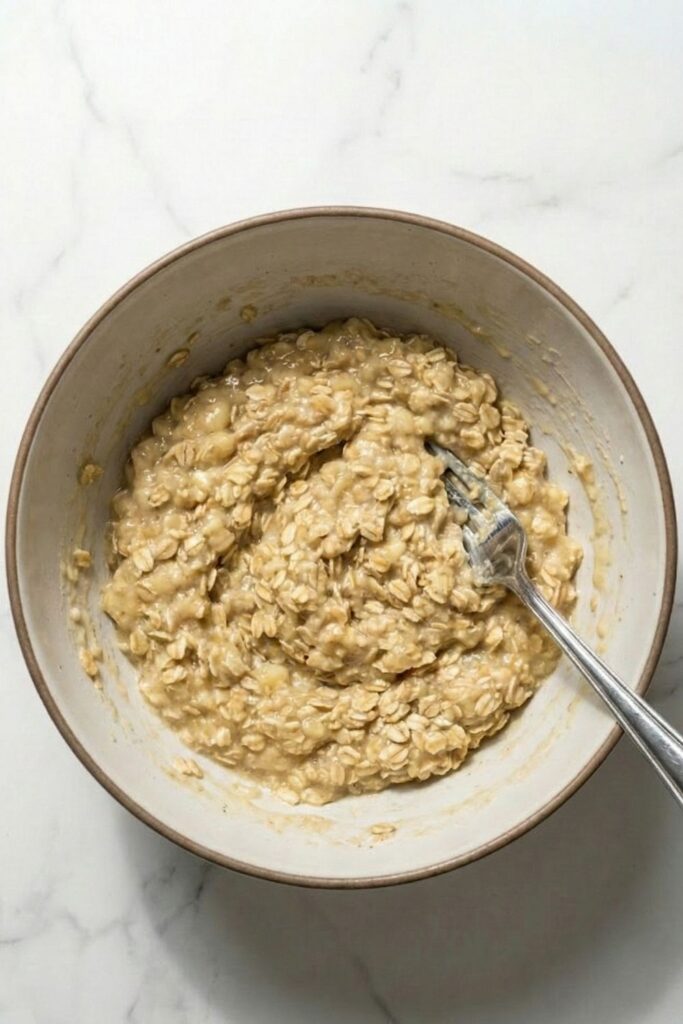
Step 3: The Hydration Sequence
Pour the 1 ½ cups of old-fashioned rolled oats directly into the banana slurry. Use your silicone spatula to turn the mixture until every single oat is coated in the wet binder.
The dough will immediately look “shaggy” and thick. Let it rest for exactly 60 seconds to allow the beta-glucan to begin absorbing the ambient moisture.
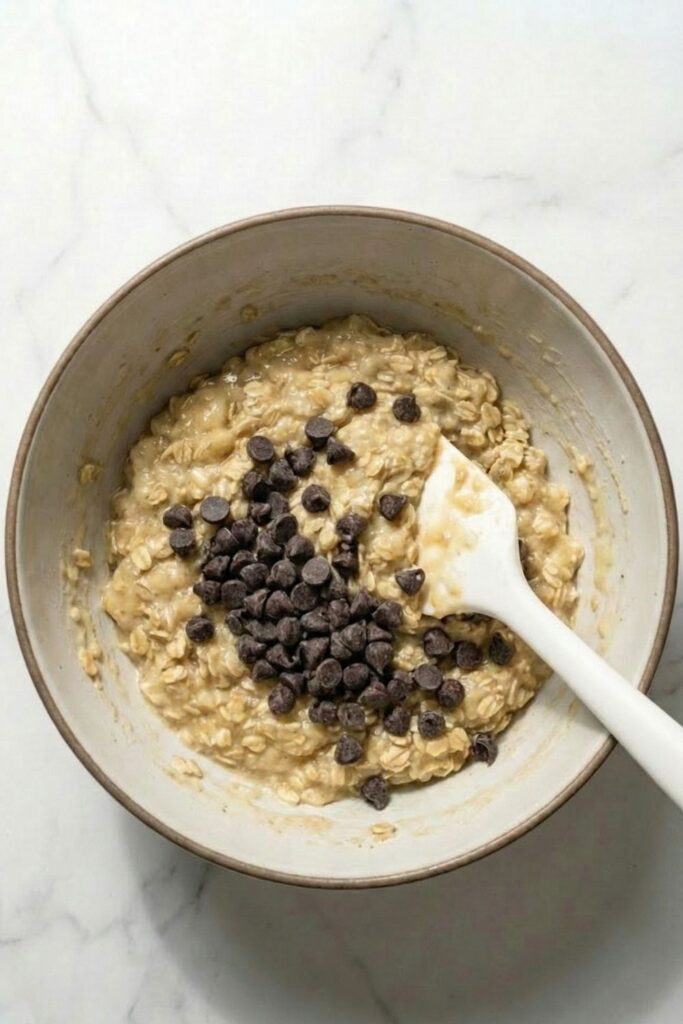
Pour the ⅓ cup of dark chocolate chips over the shaggy dough. Gently fold the mixture 4 to 5 times.
Stop folding as soon as the dark chocolate chips are evenly distributed against the pale oat background. Overmixing will cause the oats to break down.
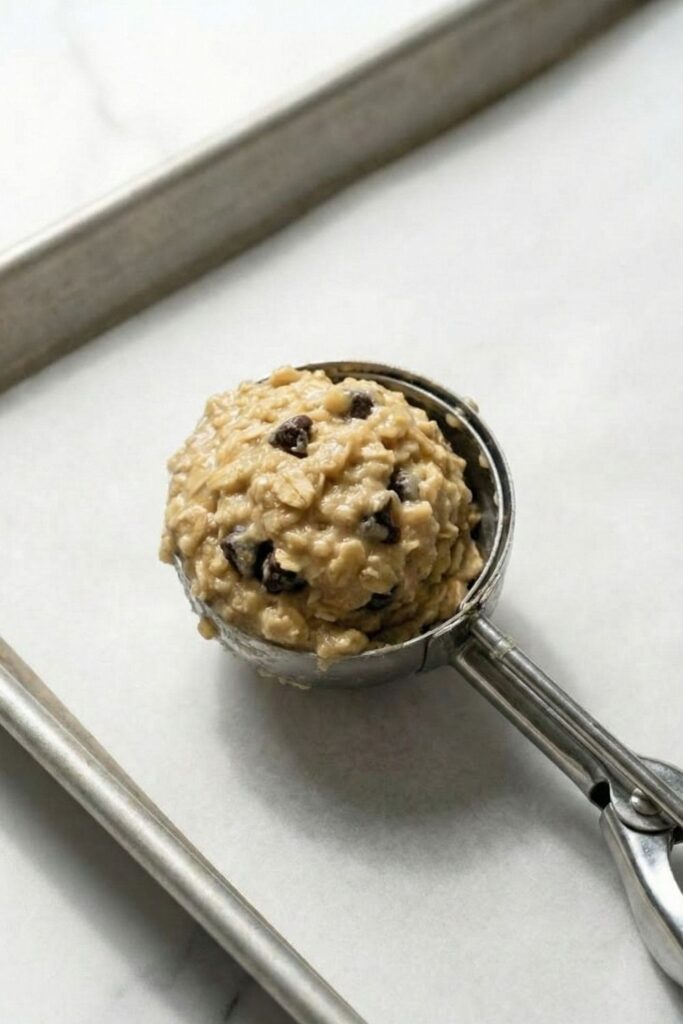
Drive your spring-release cookie scoop into the bowl. Pack the dough tightly against the side of the bowl to force out any air pockets. Release the dense domes onto your parchment paper, leaving 2 inches between each.
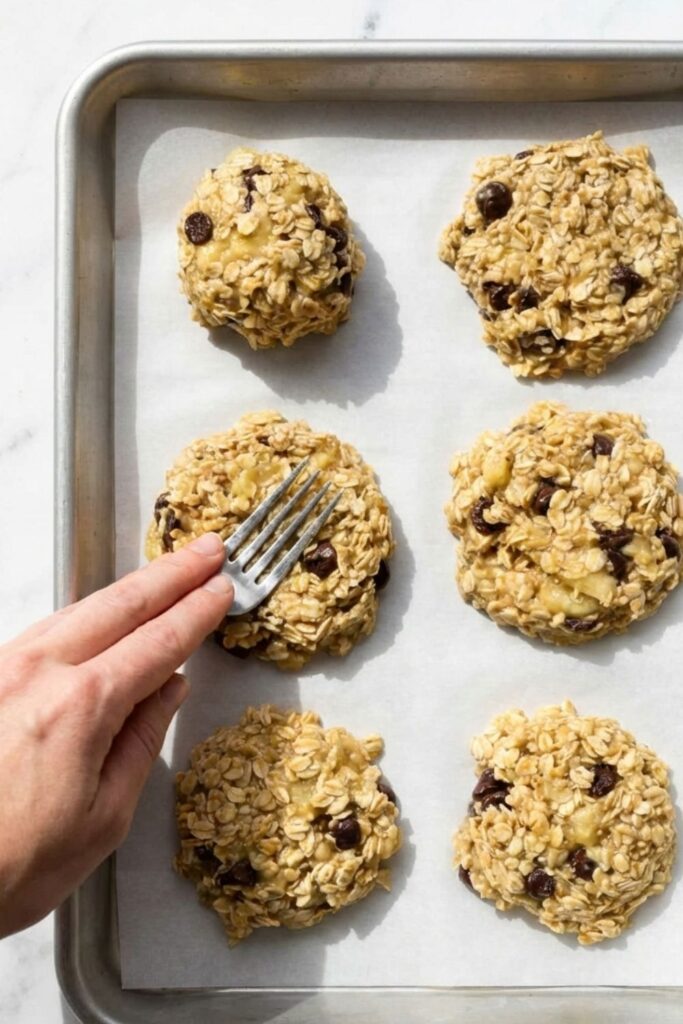
Step 6: The Structural Press
This is the most critical mechanical step.
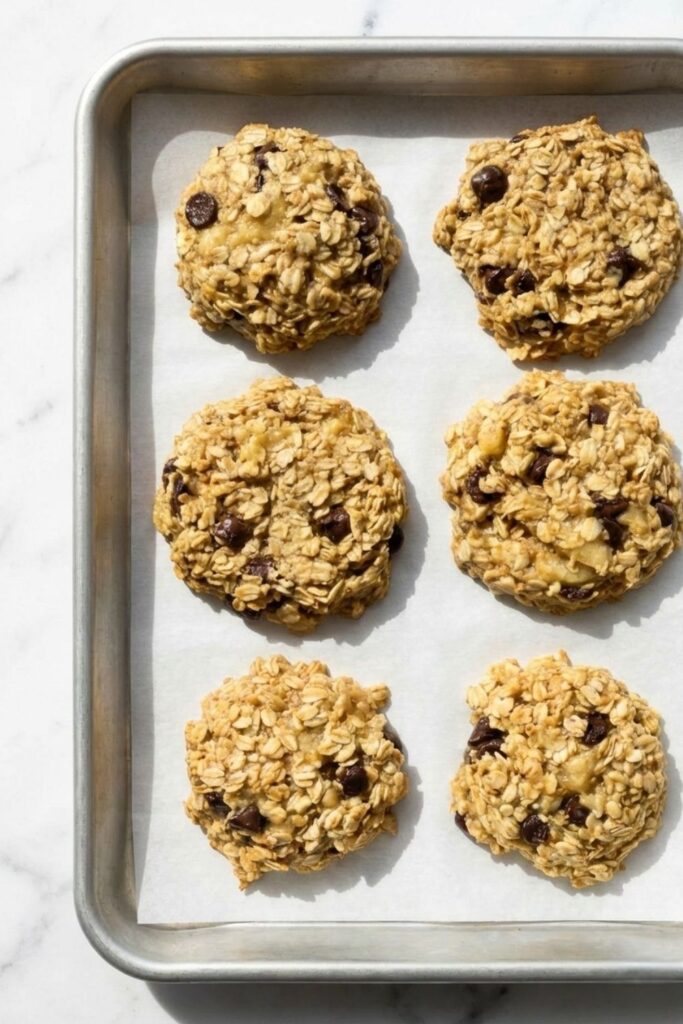
These cookies do not contain chemical leaveners (baking soda/powder) or melting fats (butter). Therefore, they will not spread in the oven. You must use the flat of your palm or fingers to press each dome down into a thick, ½-inch flat disc. The shape they enter the oven is exactly the shape they will retain.
Step 7: The Thermal Reaction
Place the baking sheet on the center rack. Bake for exactly 10 to 12 minutes at 350°F.
At the 10-minute mark, you will smell the distinct aroma of caramelized fruit sugars. Visually, the edges of the oats will shift from pale beige to a toasted golden-brown, signaling a successful Maillard reaction.
Step 8: The Cooling Matrix
Remove from the oven. Do not touch them. The starch bonds are highly fragile while hot. Let them set on the baking sheet for a full 10 minutes before transferring them to a wire rack.
If you love recipes like this check out my 3 Ingredient High Protein Cookies
Troubleshooting Guide
Even with three ingredients, human error can disrupt the chemical matrix. If your batch fails, diagnose the issue here.
The dough is dry, crumbly, and won’t hold a shape.
- Insufficient starch hydration. Your bananas were likely too small. You did not meet the mandatory 1 ½ cup volume requirement for the wet binder, leaving the oats starved for moisture.
- The Fix: Mash an additional half-banana and fold it into the dry mixture until the shaggy,
- You skipped Step 6 (The Structural Press). Because the formula lacks spreading agents, the ambient oven heat could not penetrate the dense core of the unpressed dough ball within the 12-minute window.
- The Fix: Always manually flatten the dough to a ½-inch thickness before heat application.
Here is another common failure.
- You used quick oats instead of old-fashioned rolled oats. Quick oats are pre-steamed and rolled paper-thin, meaning their cellular structure collapses immediately upon contact with the banana puree.
- The Fix: Discard the batch. You must use thick, old-fashioned rolled oats to maintain the structural integrity and the beta-glucan efficiency.
Serving and Storage Protocols
Because this formula relies on fresh fruit puree rather than refined preservatives, moisture migration is your primary storage concern.
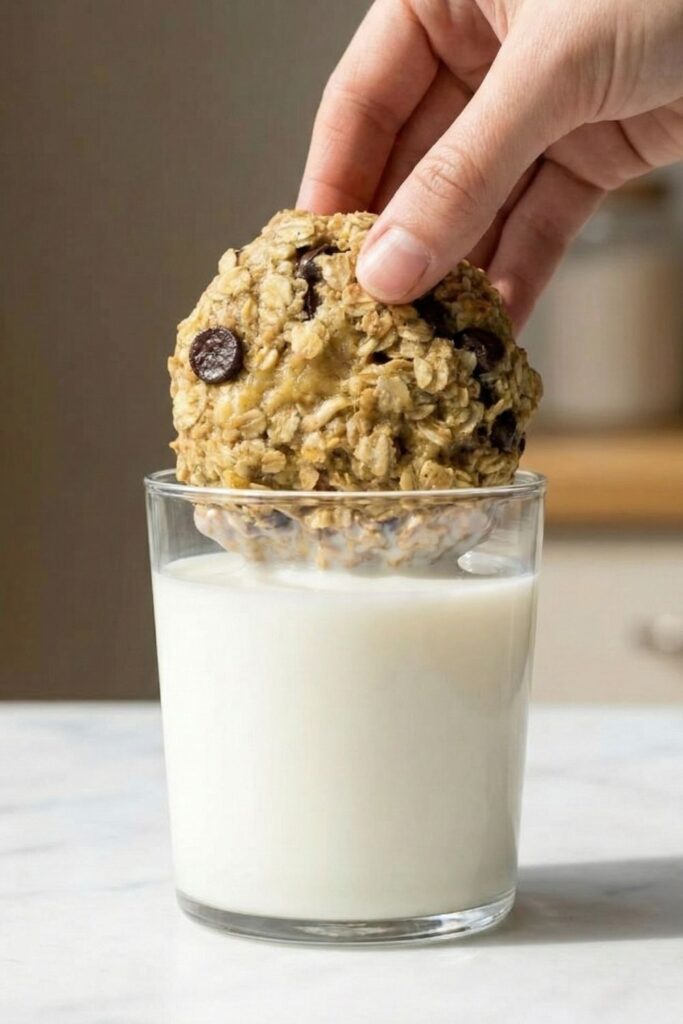
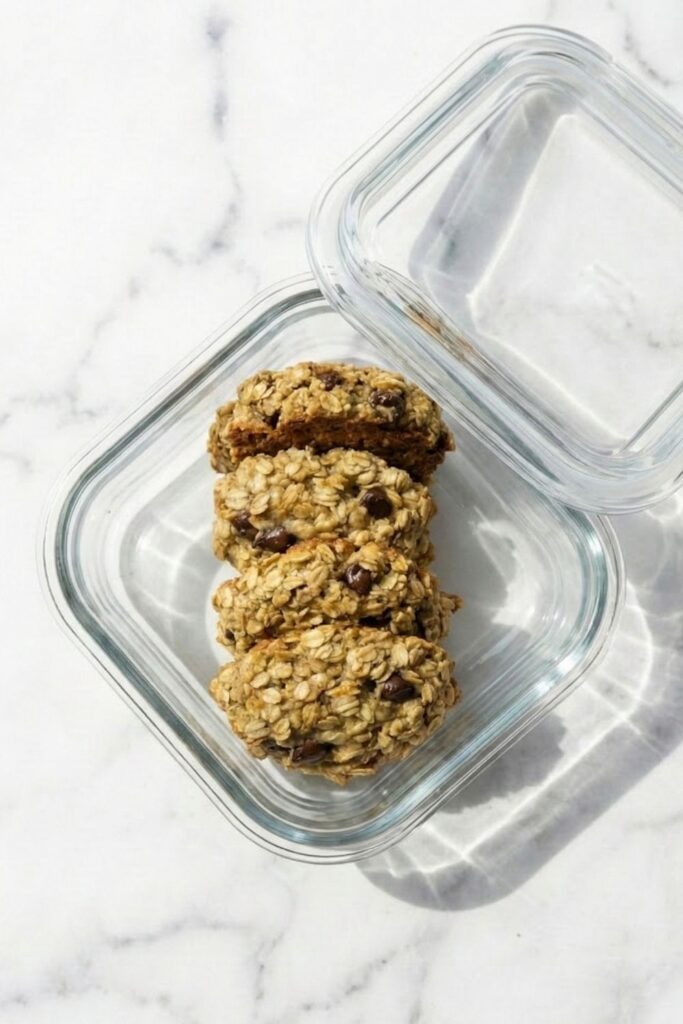
Do not leave these at room temperature. The high water activity of the banana will invite rapid microbial growth and cause the oats to sour. Place the fully cooled cookies into a square glass airtight container. Store them immediately in the refrigerator. The cold environment halts the degradation process, keeping them structurally sound and safe to consume for up to 4 days. Serve them cold, or allow them to reach room temperature for 10 minutes before eating to maximize the chocolate flavor profile.
Frequently Asked Questions
Yes. The hydrated oat matrix handles freezing exceptionally well. Place parchment paper between the layers in your airtight container. Store in the freezer for up to 1 month. Thaw in the refrigerator overnight; do not microwave them from frozen, as rapid steam expansion will blow the starch bonds apart.
The base recipe of oats and bananas is entirely plant-based. To maintain strict vegan compliance, ensure your ⅓ cup of chocolate chips is certified dairy-free and formulated without milk fat or whey derivatives.
drastically alter the hydration ratio, severely dehydrating the oats and resulting in a chalky, crumbling failure. If you require higher protein macros, consume the cookies alongside a synthesized protein shake rather than altering this balanced formula.
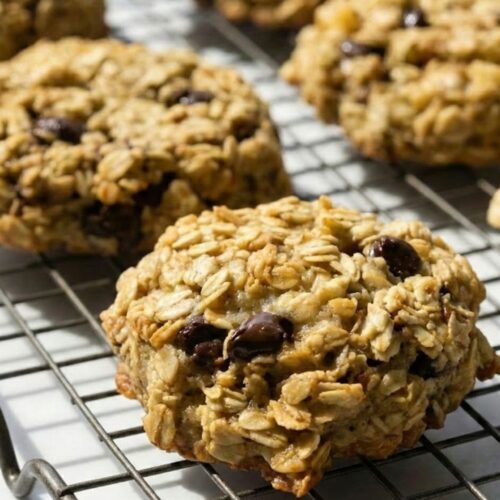
3-Ingredient Banana Oatmeal Cookies (Beta-Glucan Protocol)

Ingredients
- 2 large Ripe Bananas Must yield exactly 1 ½ cups mashed. Use heavily brown-speckled bananas for maximum starch-to-sugar conversion.
- 1 ½ cups Old-Fashioned Rolled Oats Do NOT substitute quick oats; thick rolled oats are crucial for structural integrity and beta-glucan efficiency.
- ⅓ cup Dark Chocolate Chips 70% cacao or higher. Use certified dairy-free chips to maintain strict vegan compliance.
Instructions
- Preheat your oven to 350°F. Line an aluminum baking sheet with parchment paper.
- Peel the heavily speckled bananas. Using your heavy-duty fork, mash them against the bottom of the glass bowl until they form a wet slurry with small, uniform lumps.
- Pour the 1 ½ cups of old-fashioned rolled oats directly into the banana slurry. Use your silicone spatula to fold the mixture until every oat is coated. Let it rest for 60 seconds to allow the starches to hydrate.
- Pour the ⅓ cup of dark chocolate chips over the dough. Gently fold 4 to 5 times until the chips are evenly distributed. Do not overmix.
- Drive your spring-release cookie scoop into the bowl, packing the dough tightly against the side to force out air pockets. Release the dense domes onto the parchment paper, spacing them 2 inches apart.
- Using the flat of your palm, fork or fingers, press each dough dome down into a flat, ½-inch thick disc. (Crucial: Because this formula lacks chemical leaveners, these will not spread during baking. They will retain their exact pre-baked shape).
- Place the baking sheet on the center oven rack. Bake for 10 to 12 minutes at 350°F, until the edges of the oats toast to a golden-brown indicating a successful Maillard reaction.
- Remove from the oven. Do not touch or move them. Let the fragile starch bonds set on the baking sheet for exactly 10 minutes before transferring them to a wire cooling rack with a spatula.
Notes
- Storage Protocol: Moisture migration is your primary concern. Store fully cooled cookies in a square glass airtight container in the refrigerator for up to 4 days. Do not store at room temperature due to the high water activity of the fresh fruit.
- Freezing Protocol: The hydrated oat matrix handles freezing well. Place parchment paper between the layers in your airtight container. Freeze for up to 1 month. Thaw in the refrigerator overnight.
- Ingredient Warning: Altering the 1 ½ cup volume requirement for either the wet binder (bananas) or the dry matrix (oats) will result in structural failure. Measure exactly.
Equipment
- Large mixing bowl
- Heavy-duty fork
- Large spring-release cookie scoop
- Aluminum baking sheet
- Parchment paper
Nutrition Facts
- Calories: 130 kcal
- Carbohydrates: 24 g
- Protein: 2 g
- Fat: 3 g
- Saturated Fat: 2 g
- Polyunsaturated Fat: 0.4 g
- Monounsaturated Fat: 0.3 g
- Sodium: 1 mg
- Potassium: 206 mg
- Fiber: 3 g
- Sugar: 5 g
- Vitamin A: 27 IU
- Vitamin C: 4 mg
- Calcium: 10 mg
- Iron: 1 mg