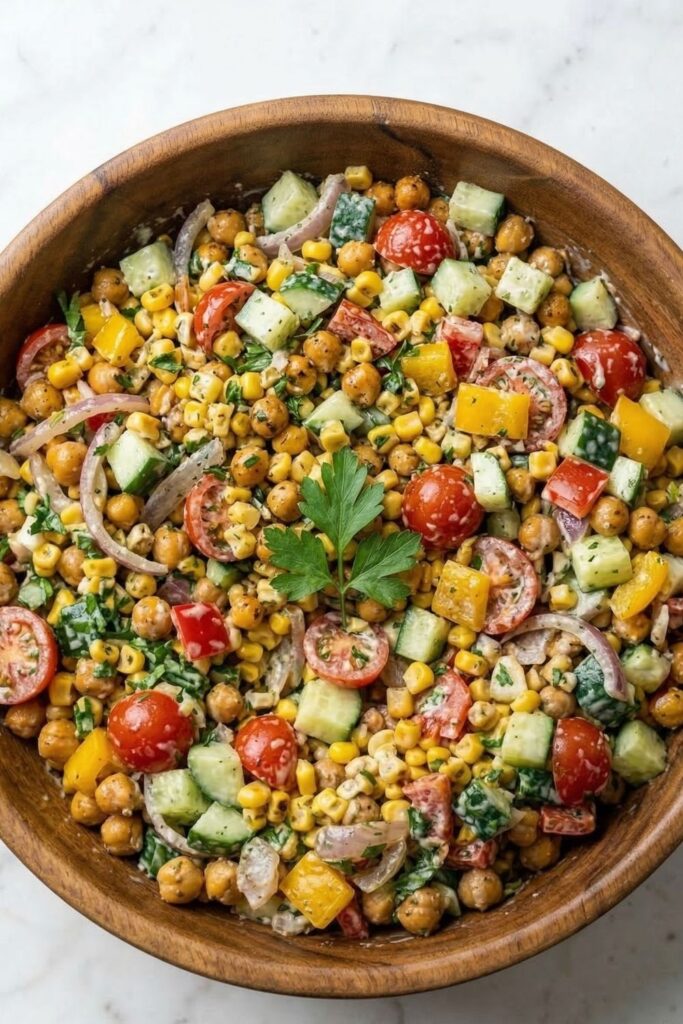
Blood sugar volatility is the enemy of sustained energy and metabolic health. When you consume naked carbohydrates, your blood glucose spikes, prompting a massive insulin release followed by a rapid, exhausting crash.
Here is the truth.
You do not need to eliminate carbohydrates to stabilize your blood sugar. You need to engineer a fiber-protein matrix that fundamentally alters gastric emptying rates. That is exactly what this high-protein, high-fiber roasted chickpea salad accomplishes. By combining complex, resistant starches with a sharp, acidic Greek yogurt emulsion, we are actively flattening the glucose curve while delivering a massive payload of micronutrients.
Let’s break down the chemistry.
This is not a delicate, leafy side dish. This is a biologically optimized, structurally sound nutritional protocol designed for maximum satiety and sustained energy release.
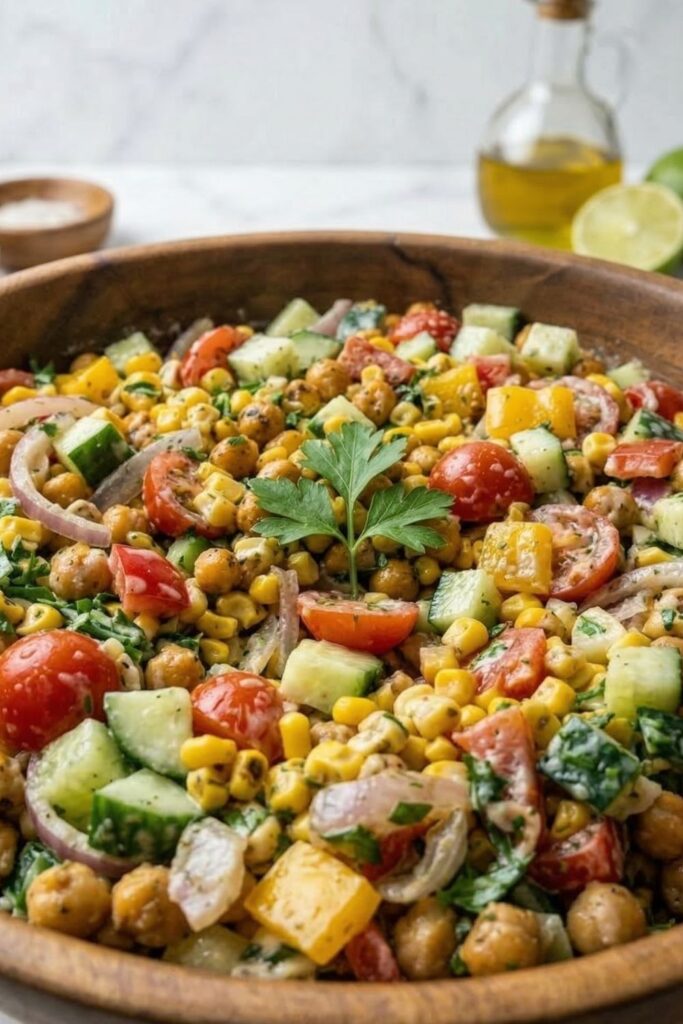
The Science: Why This Fiber-Protein Matrix Flattens Glucose Spikes
Understanding the metabolic impact of your food requires looking past simple calorie counts and examining the physical structure of the meal.
When you consume the roasted chickpeas and sweet corn in this recipe, you are ingesting highly complex carbohydrates locked within a fibrous cellular wall. The mechanical breakdown of this fiber requires significant digestive effort. Furthermore, the addition of a high-protein, high-fat dairy emulsion (the Greek yogurt and olive oil dressing) creates a viscous barrier in the stomach.
Why does this matter?
This physical barrier dramatically slows the rate at which chyme (partially digested food) empties into the small intestine. Slower gastric emptying means slower enzymatic conversion of starches into glucose. Instead of a rapid flood of sugar entering your bloodstream, you experience a slow, controlled drip.
Furthermore, the acetic and citric acids present in the lime juice and Greek yogurt dressing actively interfere with salivary and pancreatic amylase, the enzymes responsible for carbohydrate breakdown. This acidic environment blunts the glycemic impact of the meal by up to twenty percent. This is functional nutrition engineered for maximum metabolic stability.
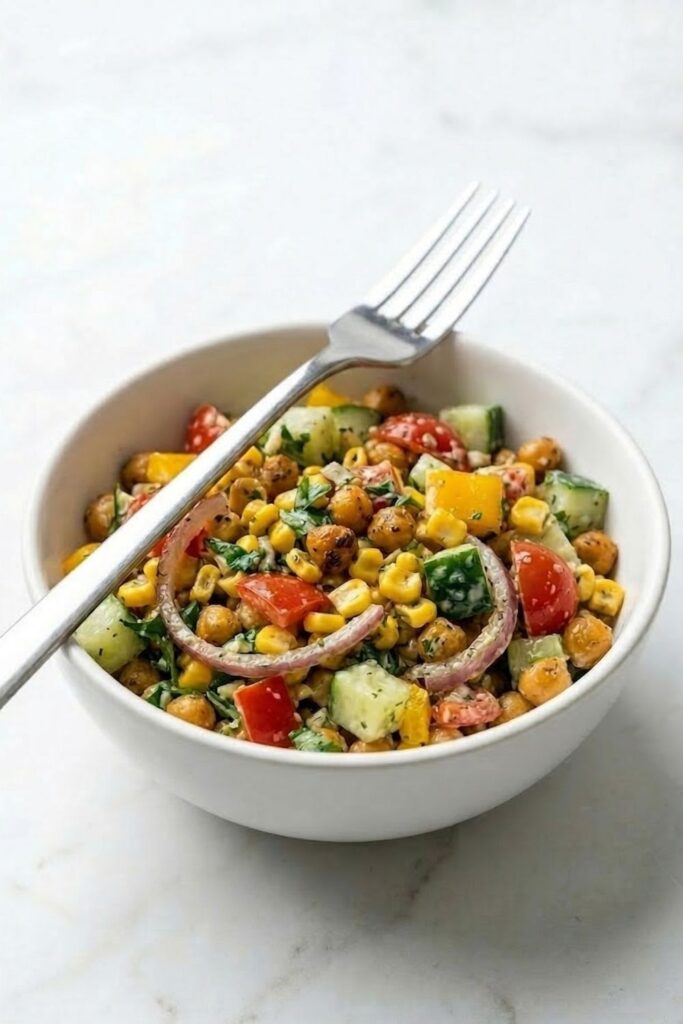
Ingredient Deep Dive: The Chemistry of Satiety
Every component in this matrix serves a distinct physiological purpose. We are prioritizing structural integrity and nutrient density.
The Legume Base: Roasted Chickpeas
We utilize two 15 oz cans of chickpeas. Chickpeas are roughly 20% protein by weight and boast an exceptionally high ratio of soluble fiber. When we expose them to dry heat in the oven, we trigger the Maillard reaction. This chemical reaction between amino acids and reducing sugars not only creates the golden-brown crust and savory flavor profile but also reduces the moisture content, increasing the textural crunch required to slow down the chewing process.
The Acidic Emulsion: Plain Greek Yogurt
We use 5 to 6 heaping tablespoons of plain Greek yogurt. Standard yogurt is strained, but Greek yogurt undergoes a secondary straining process that removes liquid whey, resulting in a product that is nearly 10% protein by weight. This provides a robust, casein-dominant protein source that coagulates in the stomach, further delaying digestion and extending the feeling of fullness for hours.
The Antioxidant Payload: Raw Vegetables
The 4 cups of cherry tomatoes and 2 large bell peppers provide critical hydration and volume without excess caloric density. The high water content (over 90% for both) creates physical distension in the stomach, which triggers stretch receptors that signal the brain to terminate the feeding response. The raw English cucumber adds an enzymatic crunch, while the fresh parsley delivers concentrated Vitamin K and blood-purifying chlorophyll.
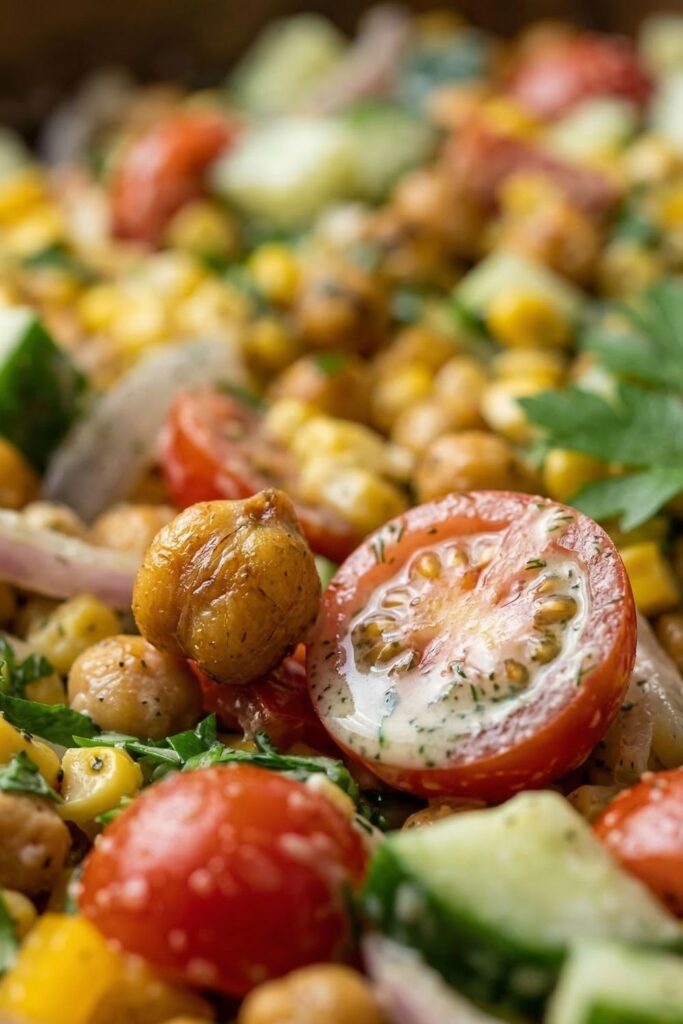
Equipment Clinic: Engineering the Workspace
Precision requires the correct tools. Do not attempt this protocol with inadequate equipment.
The Mixing Vessel
You require one large, high-walled wooden mixing bowl. Do not use plastic. Plastic retains microscopic lipid residues from previous meals, which can interfere with the structural integrity of your acidic yogurt emulsion. Wooden remains clinically sterile and cold, keeping the raw vegetables crisp during the final toss.
The Roasting Surface
You must use a heavy-duty aluminum baking sheet lined strictly with unbleached parchment paper. Do not apply oil directly to the pan. The parchment paper provides a thermally neutral barrier that prevents the chickpeas from scorching while allowing the Maillard reaction to proceed evenly across the entire surface area.
The Chopping Station
A heavy wooden cutting board and an 8-inch high-carbon steel chef’s knife are mandatory. Dull blades crush the cellular walls of the cherry tomatoes, bleeding excess water into the salad and ruining the structural integrity of the dish.
Step-by-Step Guide with Sensory Cues
Follow these precise steps to execute the recipe.
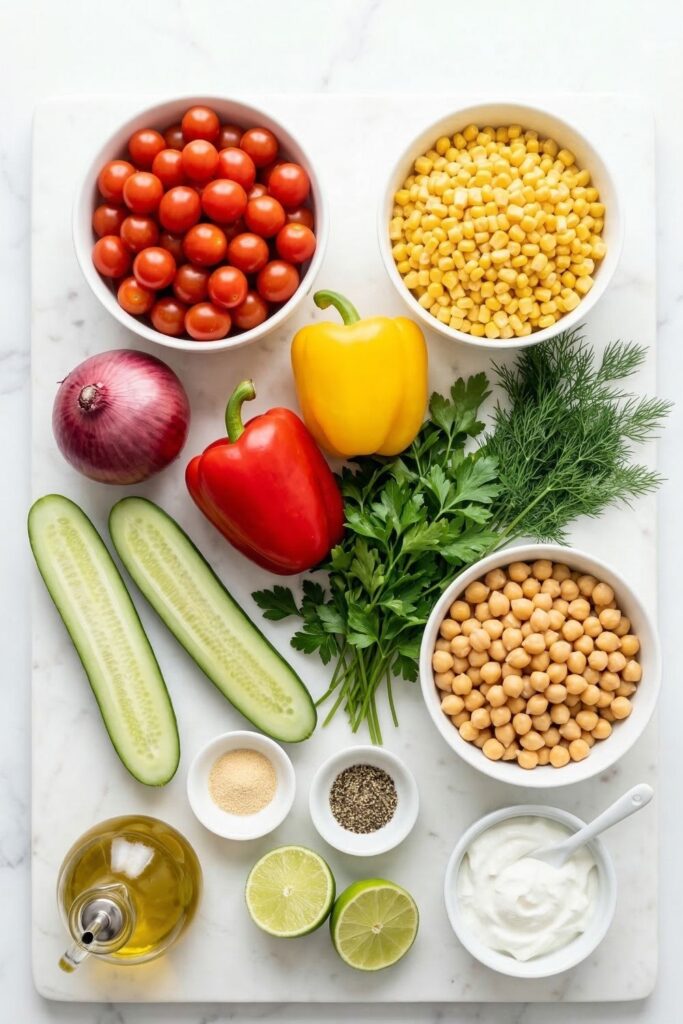
Before making a single cut, verify your inventory. You should see the sharp contrast of the red and yellow bell peppers, the deep crimson of the 4 cups of cherry tomatoes, and the dense, matte finish of the drained chickpeas. Ensure the Greek yogurt is cold to the touch.
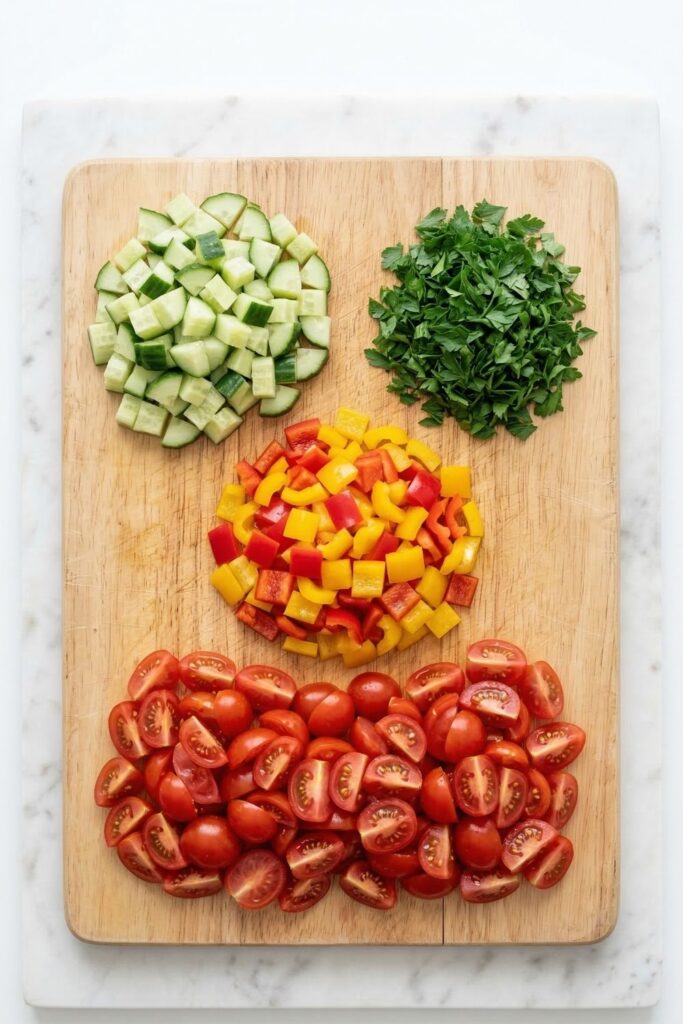
Execution is everything. Dice the English cucumber into exact half-inch cubes. Quarter the cherry tomatoes precisely so the gel surrounding the seeds remains intact. Dice the bell peppers to match the cucumber, and finely mince the large handful of parsley. The wooden board should smell sharply of fresh chlorophyll and raw alliums.
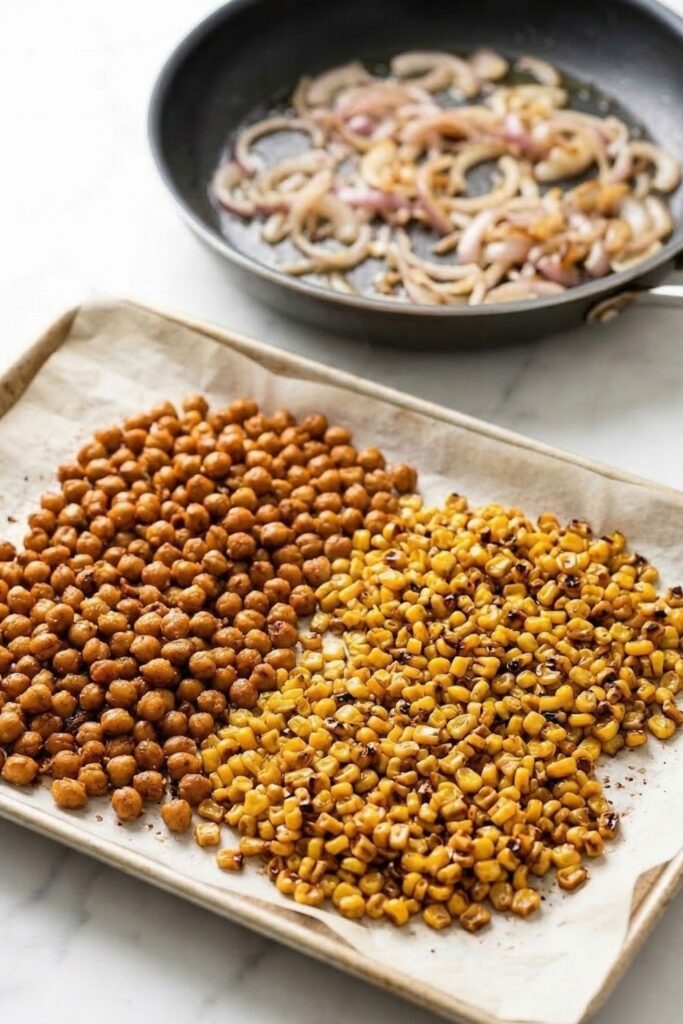
Drain and dry the 2 cans of chickpeas and 2 cans of sweet corn. Roast them on the parchment-lined sheet until golden brown. You are looking for a visual color shift to a deep amber and a distinct, nutty aroma filling the kitchen. Simultaneously, heat your non-stick pan. Sauté the diced medium red onion until the harsh, volatile sulfur compounds evaporate, leaving a translucent, sweet, pliable texture. Allow all hot elements to reach room temperature.
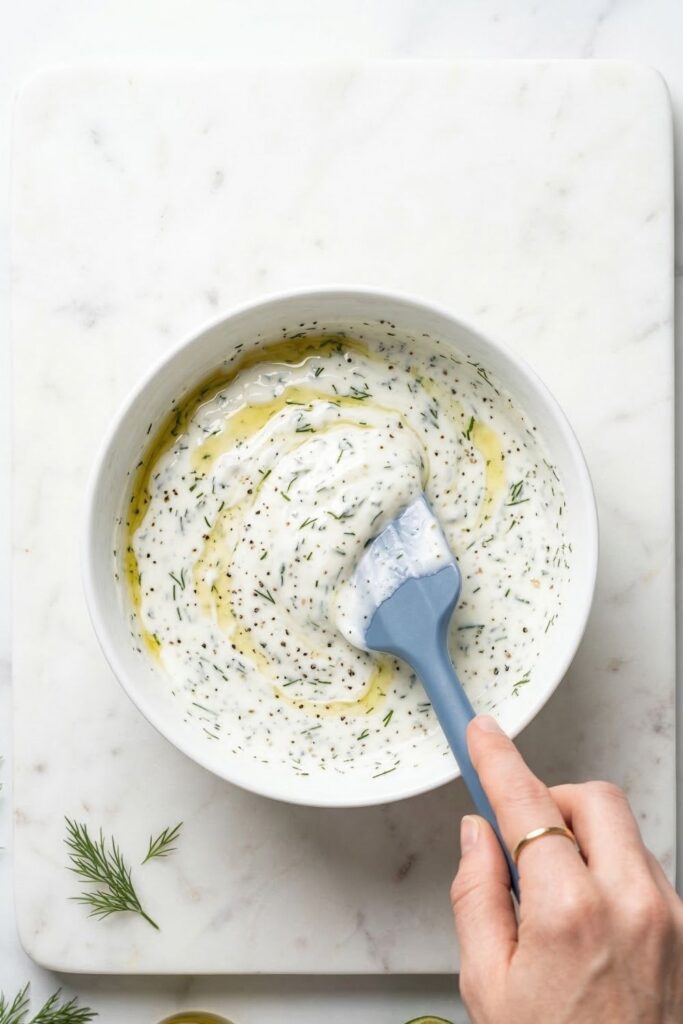
In a small glass prep bowl, combine the 5 to 6 heaping tablespoons of plain Greek yogurt, the juice of 1 lime, a handful of chopped fresh dill, and a drizzle of olive oil. Whisk aggressively. Watch the mechanical shear force bind the fat from the oil into the water-base of the yogurt. Add garlic powder and black pepper. The texture should transform from thick paste to a velvety, pourable ribbon. Add microscopic amounts of water only if the viscosity remains too high.
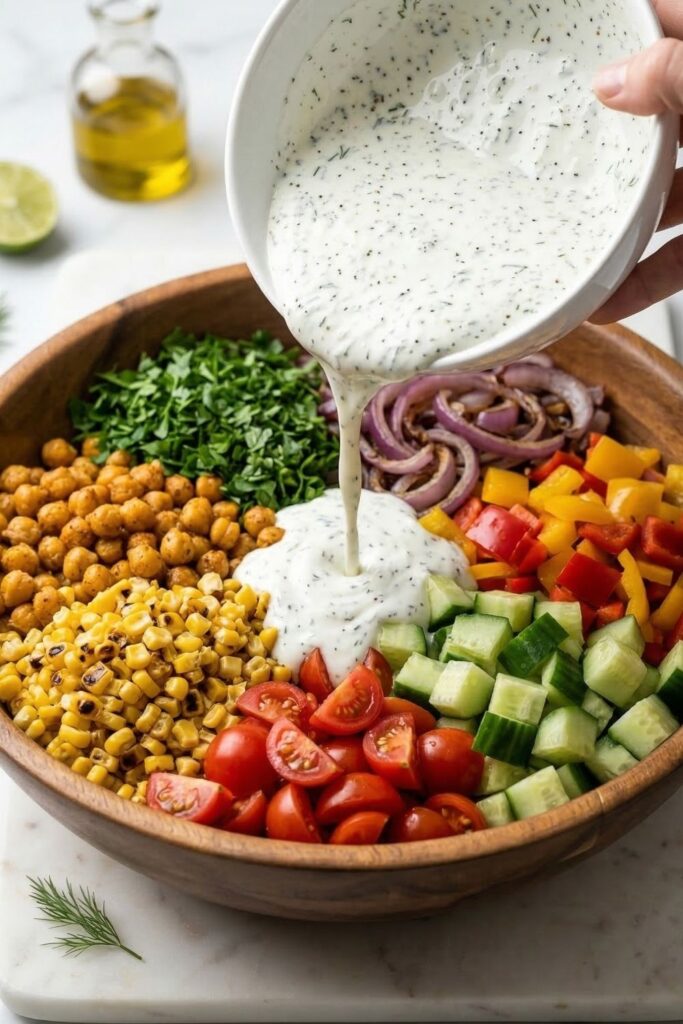
Transfer the cooled, roasted chickpeas, corn, and cooked onions into the large metal bowl alongside the raw, chopped vegetables. Execute the pour. The thick, white dressing should cascade over the vibrant vegetables, instantly dulling their glossy exterior with a creamy, herbaceous coating.
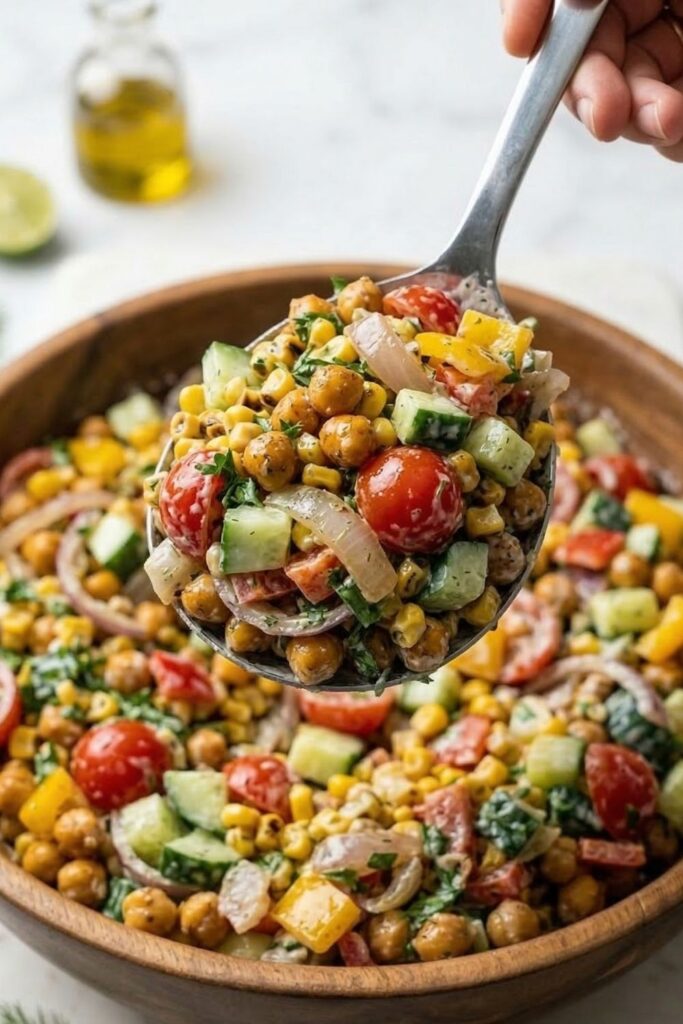
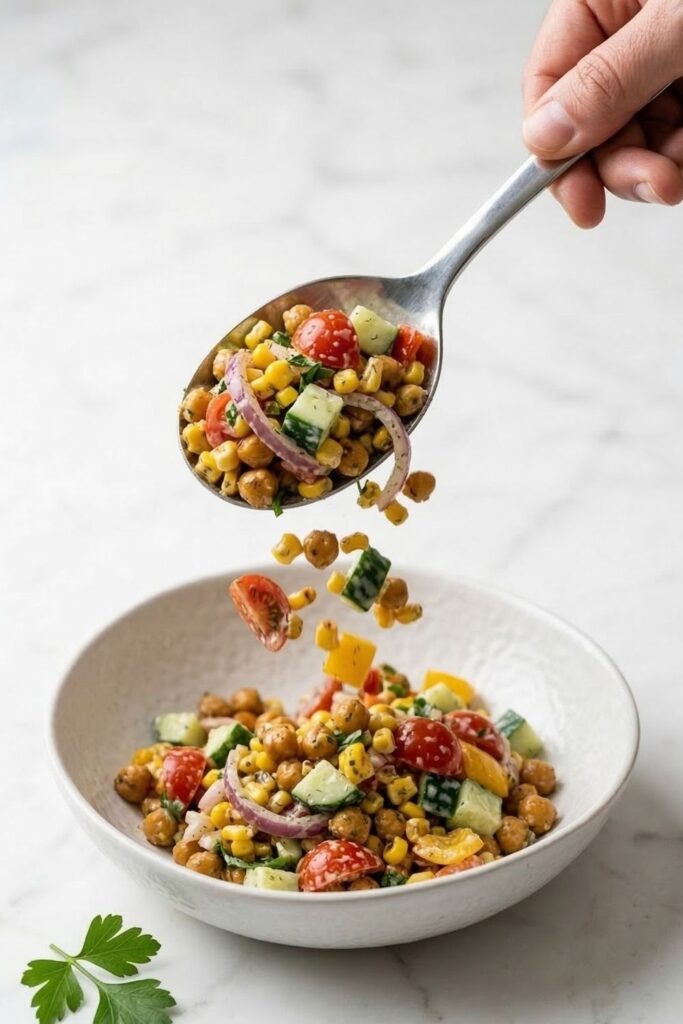
Use a large metal serving spoon to aggressively fold the mixture from the bottom up. Do not crush the tomatoes. The auditory cue is a wet, heavy folding sound. Every single component must be evenly coated in the lipid-protein matrix of the dressing.
Troubleshooting Guide: Preventing Structural Failure
Even with precise measurements, environmental factors can compromise the final product. Here is how to mitigate common failures.
Failure Matrix 1: The Soggy Yield
If your salad produces a pool of watery liquid at the bottom of the bowl within twenty minutes, you have failed to manage cellular moisture. This occurs when the cherry tomatoes and cucumbers are over-salted too early. Salt operates via osmosis, aggressively pulling water across the semi-permeable cell membranes of the raw vegetables.
- The Fix: Do not add raw salt to the vegetable mix. All sodium must be suspended within the Greek yogurt dressing emulsion. The fat coats the vegetables, providing a temporary hydrophobic barrier against osmotic bleed.
Failure Matrix 2: The Broken Emulsion
If your dressing looks separated, grainy, or features floating pools of yellow oil, the emulsion has broken. This happens when the olive oil is introduced too rapidly to the cold yogurt, overwhelming the limited emulsifiers present in the dairy proteins.
- The Fix: Temperature control. Ensure your lime juice is at room temperature. Introduce the olive oil in a microscopic, slow stream while whisking with high mechanical force.
Failure Matrix 3: The Rubber Chickpea
If your roasted chickpeas are tough and chewy rather than crisp and structured, your oven ambient humidity was too high, or you failed to thoroughly dry the legumes before roasting.
- The Fix: After draining the 15 oz cans, roll the chickpeas aggressively in highly absorbent paper towels. Friction removes the outer skins, which trap moisture. A dry exterior is mandatory for the Maillard reaction to trigger a crisp shell.
Serving and Storage Protocol
This salad is engineered for high-yield meal preparation, but its structural integrity degrades over time if stored improperly.
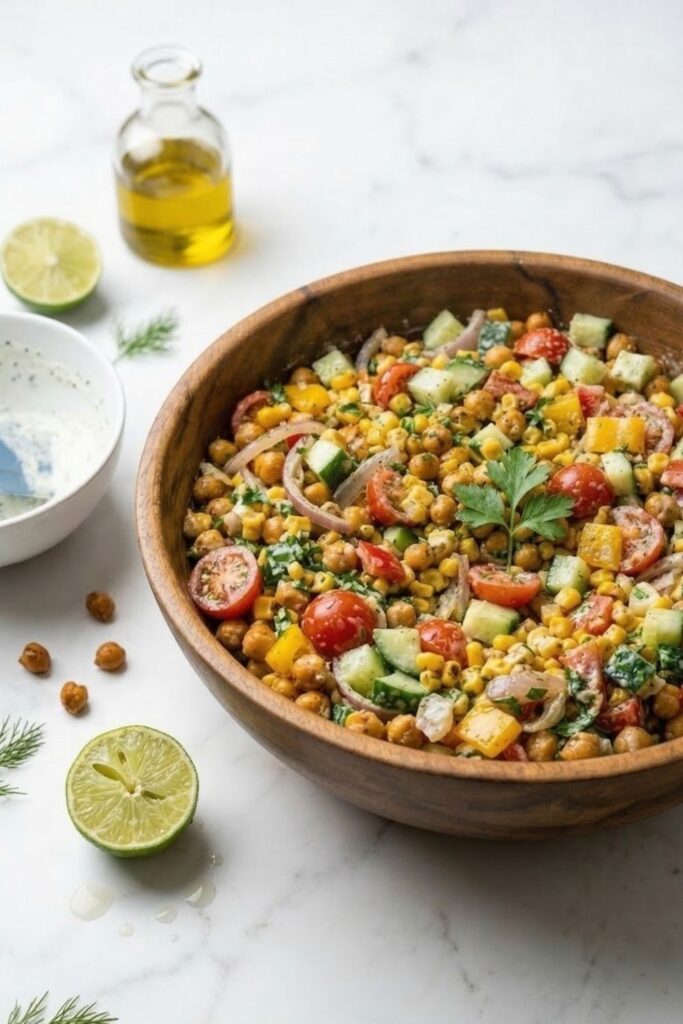
Immediately divide the batch into airtight, tempered glass containers. Do not use plastic Tupperware, as the acidic lime juice will slowly degrade the polymer surface over a 72-hour period. Store the sealed glass containers in the coldest zone of your refrigerator (typically the bottom rear shelf). The salad will maintain optimal texture for exactly 48 hours. Past the 72-hour mark, the cellular walls of the cucumbers will permanently collapse, though the nutritional profile remains entirely intact.
Frequently Asked Questions
No. Regular yogurt lacks the required protein density and structural viscosity. Using regular, unstrained yogurt will result in a watery, broken dressing that pools at the bottom of the mixing bowl rather than clinging to the vegetables.
Thermodynamics. Introducing 400-degree roasted chickpeas directly into the raw vegetable matrix will instantly flash-steam the delicate parsley and soften the crisp cucumbers. It will also cause the cold dairy proteins in the dressing to separate and curdle upon contact.
Applying heat to the red onion degrades a small percentage of its volatile Vitamin C content. However, the application of heat disables the alliinase enzyme, preventing the formation of harsh sulfenic acids. This makes the onion vastly more digestible and prevents the gastrointestinal distress often associated with raw allium consumption.
Absolutely not. Freezing this matrix will cause the water inside the tomatoes and cucumbers to crystallize, expanding and permanently rupturing their cellular walls. Upon thawing, the salad will collapse into an unpalatable, watery sludge. Refrigeration is the only acceptable preservation method.
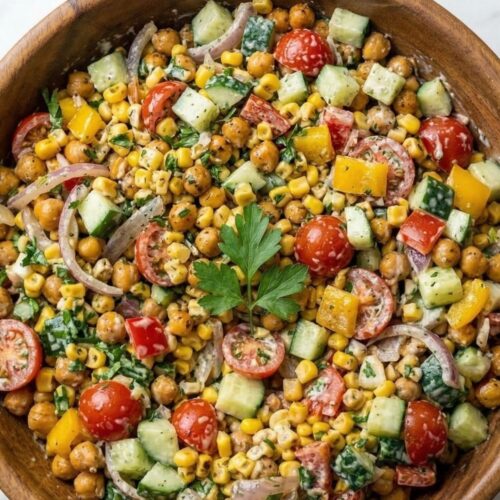
High-Protein Blood Sugar Stabilizer Salad

Ingredients
The Salad Matrix
- 1 large English cucumber diced into 1/2-inch cubes
- 4 cups cherry tomatoes quartered, approx. 24 oz
- 2 large bell peppers 1 red, 1 yellow, diced into 1/2-inch cubes
- 1 large handful fresh parsley finely minced
- 1 medium red onion diced
- 2 cans 15 oz each chickpeas (drained, rinsed, and thoroughly dried)
- 2 cans 15 oz each sweet corn (drained and dried)
The Acidic Emulsion (Dressing)
- 6 heaping tbsp plain Greek yogurt cold
- 1 whole lime juiced, room temperature
- 1 handful fresh dill finely chopped
- 1 tbsp olive oil for the emulsion drizzle
- 1/2 tsp garlic powder or to taste
- 1/2 tsp black pepper or to taste
- 1 tbsp water strictly as needed to adjust viscosity
Instructions
- Prep the Produce: Using an 8-inch chef's knife and a wooden cutting board, dice the English cucumber and bell peppers into exact half-inch cubes. Quarter the cherry tomatoes. Finely mince the fresh parsley. Transfer all raw, chopped vegetables into a large high-walled metal mixing bowl.
- Trigger the Maillard Reaction: Preheat your oven to 400°F (200°C). Drain the cans of chickpeas and sweet corn, drying them thoroughly with paper towels to remove excess moisture. Spread them evenly across an aluminum baking sheet lined strictly with unbleached parchment paper. Roast in the oven for 20-25 minutes until golden brown and crisp.
- Sauté the Alliums: While the legumes roast, heat a small non-stick frying pan over medium heat. Add the diced red onion and sauté until translucent and soft, cooking off the harsh sulfur compounds.
- Cool the Cooked Elements: Remove the roasted chickpeas, roasted corn, and sautéed onions from their heat sources. Allow them to reach room temperature. Do not add hot ingredients to the raw vegetables to prevent flash-steaming.
- Build the Emulsion: In a small glass prep bowl, combine the cold plain Greek yogurt, room-temperature lime juice, chopped fresh dill, and olive oil. Whisk aggressively until the fats bind into a smooth, velvety ribbon. Season with garlic powder and black pepper to taste. If the viscosity is too thick, whisk in water one teaspoon at a time.
- The Integration Pour: Transfer the cooled chickpeas, corn, and onions into the large wooden mixing bowl with the raw vegetables. Pour the Greek yogurt emulsion over the top.
- The Final Toss: Using a large metal serving spoon, fold the mixture aggressively from the bottom up until every component is evenly coated in the lipid-protein dressing matrix. Serve immediately.
Notes
- Moisture Control: Do not add raw salt directly to the chopped vegetables, as this will trigger osmosis and pull water out of the tomatoes and cucumbers, resulting in a soggy salad. All seasoning must be suspended within the Greek yogurt dressing.
- Storage Protocol: Divide leftovers into airtight, tempered glass containers immediately. Do not use plastic. Store in the coldest zone of your refrigerator. The salad maintains optimal structural integrity for exactly 48 hours.
- Do Not Freeze: Freezing this matrix will permanently rupture the cellular walls of the raw vegetables, resulting in a collapsed, unpalatable texture upon thawing.
Equipment
- 1 Large high-walled wooden mixing bowl
- 1 Heavy-duty aluminum baking sheet
- Unbleached parchment paper
- 1 Wooden cutting board
- 1 8-inch high-carbon steel chef’s knife
- 1 Small non-stick frying pan
- 1 Small glass prep bowl (for emulsion)
WPRM Nutritional Information (Per Serving)
- Serving Size: 1 generous bowl (1/4 of the master batch)
- Calories: 407 kcal
- Carbohydrates: 72 g
- Protein: 19 g
- Fat: 9 g
- Saturated Fat: 1.5 g
- Polyunsaturated Fat: 2 g
- Monounsaturated Fat: 4.5 g
- Trans Fat: 0 g
- Cholesterol: 2 mg
- Sodium: 410 mg (Note: This accounts for the natural sodium in canned legumes. Rinsing thoroughly reduces this).
- Potassium: 1,150 mg
- Fiber: 15 g
- Sugar: 16 g (Note: These are naturally occurring sugars from the sweet corn, cherry tomatoes, and red onion, suspended in the fiber matrix not added refined sugars).
- Vitamin A: 2,450 IU
- Vitamin C: 115 mg
- Calcium: 110 mg
- Iron: 4.5 mg