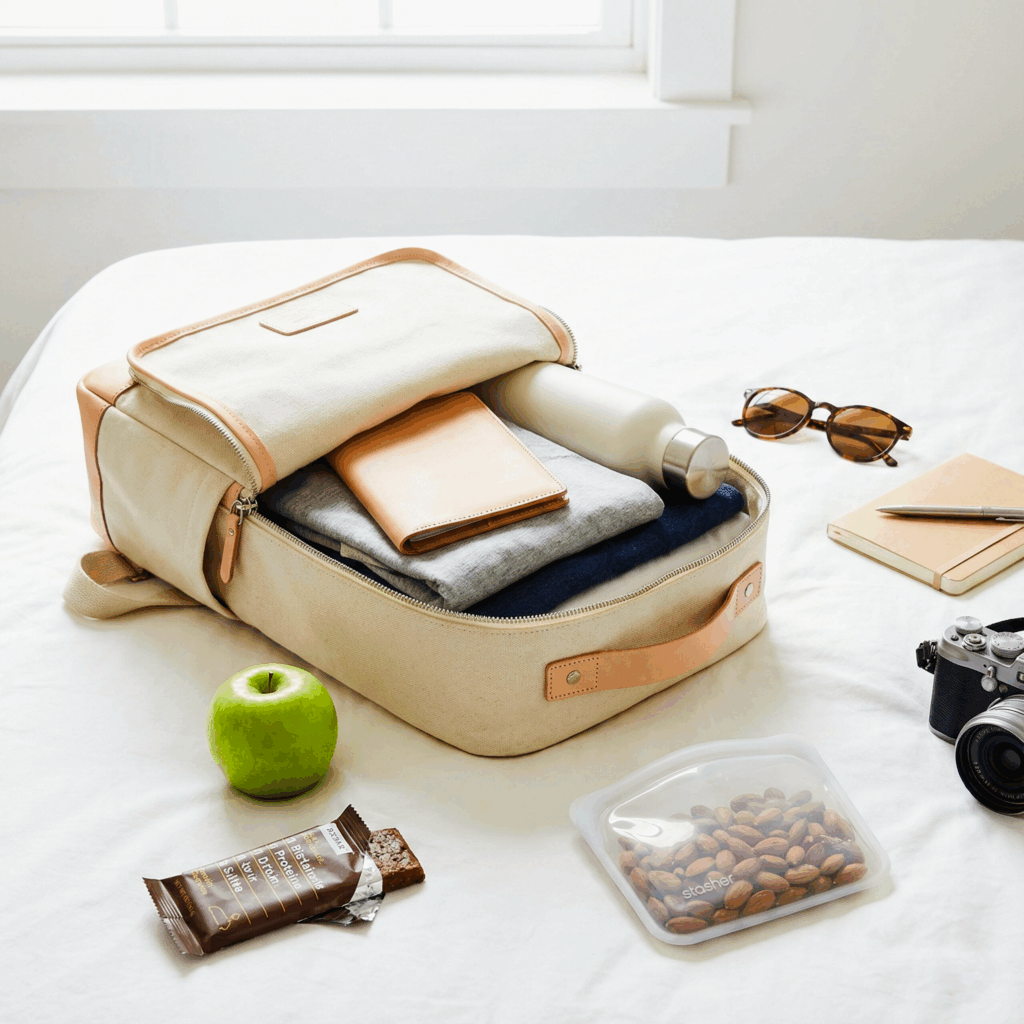
We’ve all been there. You are four hours into a twelve-hour flight across an ocean. The cabin lights are dimmed, your legs are cramping, and a sudden, intense hunger hits you. You wait patiently for the flight attendants to come around, only to be presented with a tiny bag of overly salted pretzels or a questionable “chicken or pasta” option that looks grayish and smells. vague.
Flying, especially long-haul, is physically demanding. The recycled air is dehydrating, the cabin pressure changes wreak havoc on your digestion, and the disruption to your circadian rhythm throws your hunger hormones out of whack.
Relying solely on airline meals or overpriced, sugary airport terminal options is a recipe for feeling sluggish, bloated, and irritable upon arrival.
The secret to arriving at your destination feeling refreshed isn’t just about scoring an exit row seat; it’s about strategic fueling. Packing your own healthy travel snacks gives you control over your nutrition, saves you money, and ensures you have food you actually enjoy when hunger strikes at 35,000 feet.
The Science of In-Flight Hunger: Why You Need a Strategy
Before we dive into the snacks, it helps to understand why you feel so crummy on planes.
When cruising at altitude, the cabin pressure is roughly equivalent to standing on an 8,000-foot mountain. This lower pressure causes gas in your intestines to expand, leading to that uncomfortable “jet belly” bloating.
Simultaneously, the humidity in a plane cabin is notoriously low (often around 10-20%, drier than some deserts). This rapidly dehydrates you, which can mistakenly manifest as hunger pangs and contribute to headaches and fatigue.
Furthermore, studies show that background noise and cabin pressure actually dull your sensitivity to sweet and salty tastes by about 30%. This is why airline food is often overly salted and sugared to compensate for your dulled senses.
The Goal of Your Snacks:
To combat this, your in-flight snack arsenal needs to focus on three things:
1. Hydration: Foods with water content or that don’t require massive water intake to digest.
2. Sustained Energy: A balance of protein, healthy fats, and fiber to keep blood sugar stable and keep you full longer.
3. Gut Health: Foods that are easy to digest and won’t exacerbate bloating.
The 10 Best Healthy Travel Snacks for Long Flights
Here are the elite tier of travel snacks: portable, durable, nutritious, and neighbor-friendly (no tuna salad, please!).
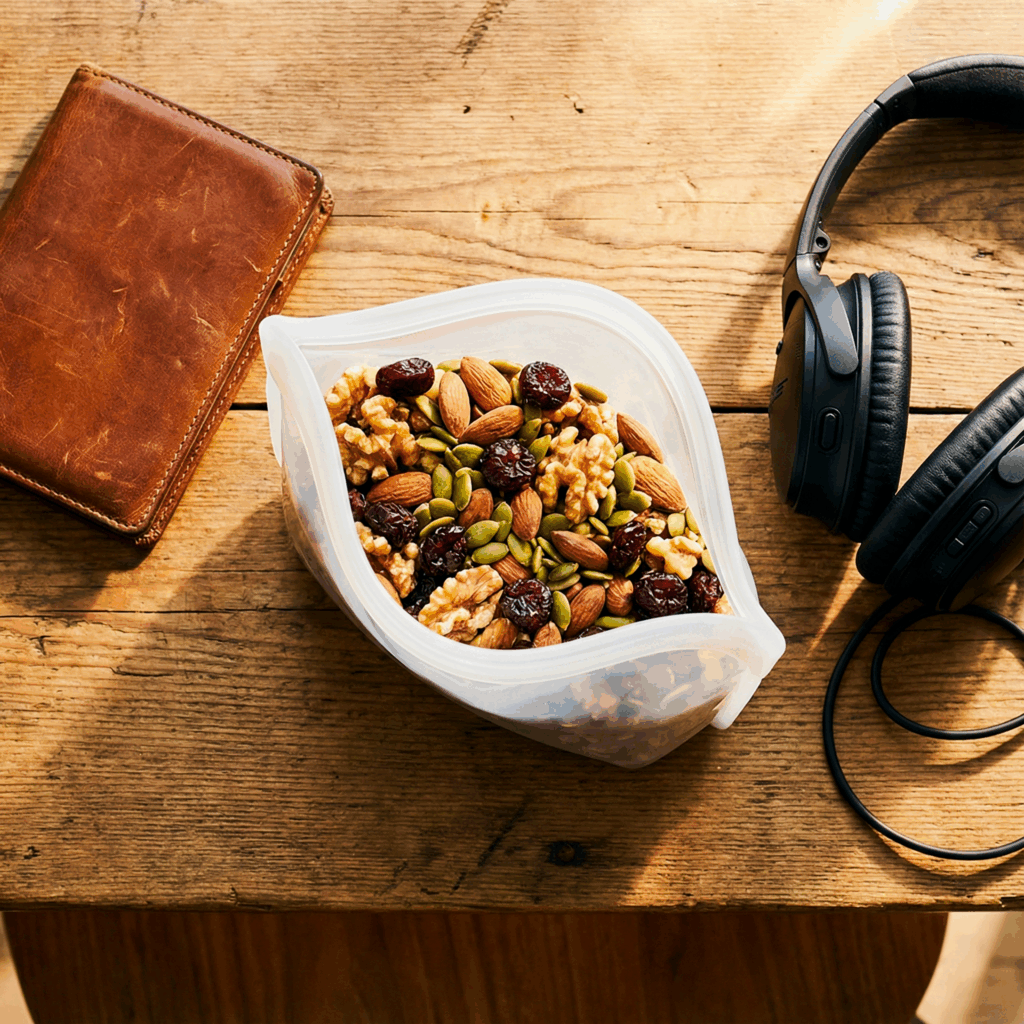
1. The Powerhouse DIY Trail Mix
Forget the store-bought mixes loaded with chocolate candies and peanuts roasted in low-quality oils. Making your own is cheaper and healthier.
- Why it works: This is the ultimate combination of healthy fats, protein, and fiber. The fats (like omega-3s in walnuts) are crucial for brain health and fighting inflammation during travel, while the protein keeps you satiated for hours.
- The Perfect Mix: Combine raw almonds, walnuts, pumpkin seeds (pepitas), and a small amount of dried unsweetened tart cherries. The tart cherries contain natural melatonin, which might even help you get some sleep on a red-eye.
- Pro Tip: Choose unsalted or lightly salted nuts to prevent worsening dehydration.
2. Instant Oatmeal Packets
This is an underrated hack for long-haul flights. It’s warm, comforting, and incredibly easy to prepare.
- Why it works: Oats are packed with beta-glucan, a soluble fiber that helps you feel full and regulates blood sugar. It’s also soothing on a nervous or bloated stomach
- How to eat it: Pack 2-3 packets of plain, instant rolled oats in a sturdy mug or a collapsible silicone bowl. When the beverage cart comes around, simply ask the flight attendant for hot water. Stir, let it sit for two minutes, and you have a hot meal.
- Pro Tip: Pre-mix cinnamon and a few chia seeds into your packets at home for extra flavor and nutrients without the added sugar of flavored packets.
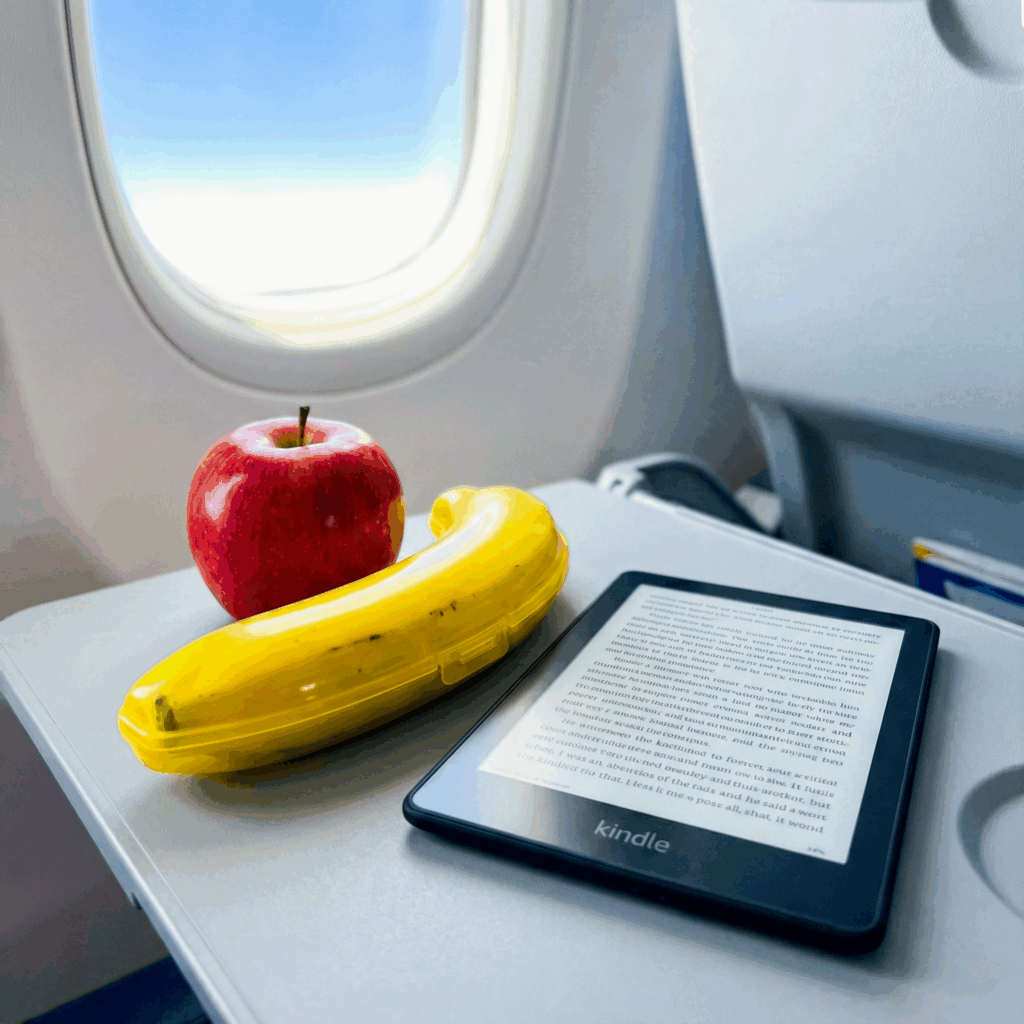
3. Sturdy Fresh Fruit (Apples and Bananas)
While dried fruit is convenient, fresh fruit offers essential hydration that you desperately need up in the air.
- Why it works: Apples provide pectin (fiber) and a satisfying crunch that helps wake up your senses. Bananas are rich in potassium, an electrolyte that helps combat muscle cramps from sitting too long, and are easy on the stomach.
- Packing Tip: Berries will get smashed into jam in your backpack. Stick to the “hard shell” fruits. If packing a banana, buy a protective plastic banana case or pack it at the very top of your personal item to avoid squishing.
4. Roasted Chickpeas
If you are a nervous flyer who craves the salty crunch of potato chips, this is your healthy swap.
Why it works: Unlike empty-calorie chips, roasted chickpeas are loaded with plant-based protein and fiber. They satisfy the savory craving without the greasy crash later.
How to eat it: You can buy pre-packaged flavors (like sea salt or turmeric) or make your own at home for a fraction of the cost. They are incredibly durable and won’t get crushed easily.
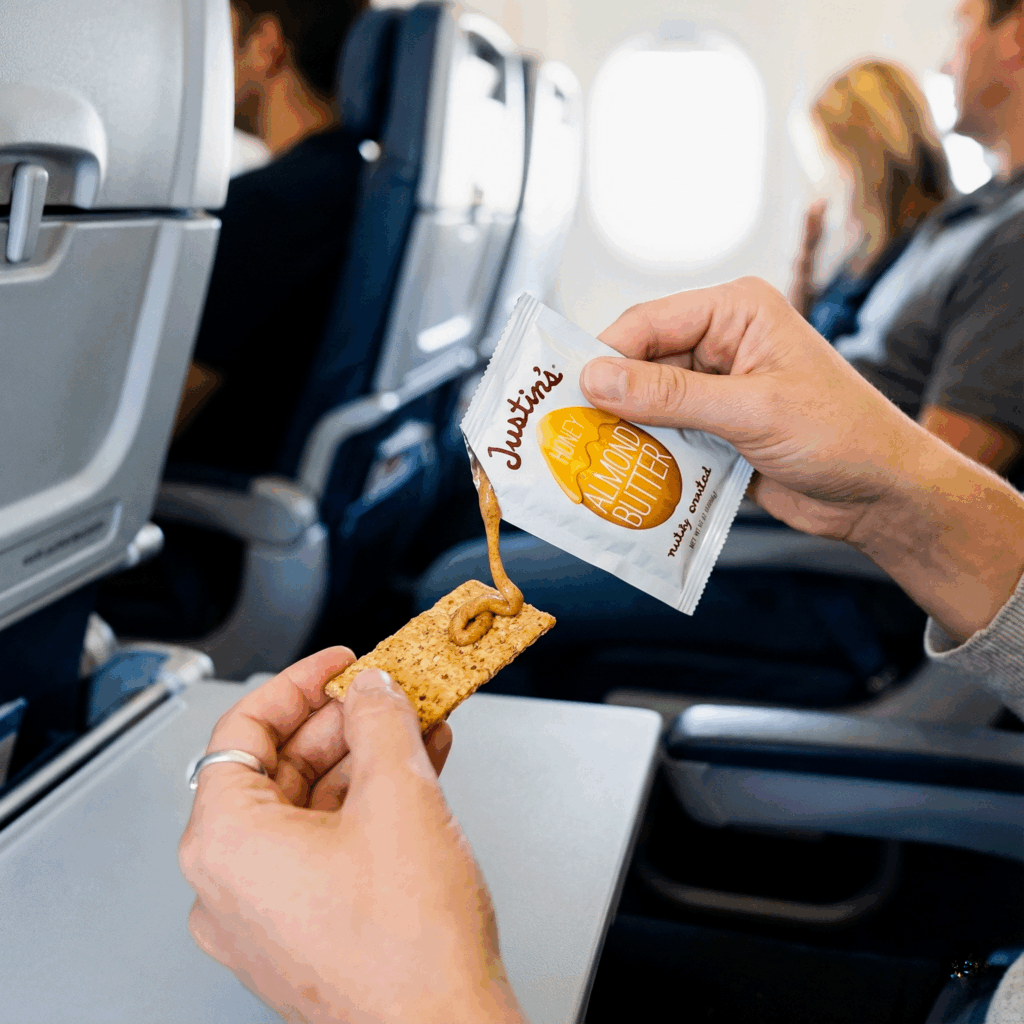
5. Single-Serve Nut Butter Packs
A massive jar of peanut butter is a TSA no-go (it counts as a liquid/gel), but single-serve packets are perfectly fine.
- Why it works: These are calorie-dense fat bombs that provide immediate satiety. They are mess-free and require no refrigeration.
- How to eat it: Squeeze it directly into your mouth (no shame!), spread it on the apple you brought, or pair it with whole-grain crackers. Look for brands that only list one or two ingredients (e.g., “Almonds” or “Peanuts, Salt”).
6. High-Quality Beef or Turkey Jerky
Jerky is the ultimate space-saving protein source. A small bag packs a massive nutritional punch.
Why it works: It’s almost pure protein, which is essential for keeping hunger hormones in check. It’s shelf-stable, doesn’t crumb, and takes up virtually no space in a carry-on.
What to look for: This is important many commercial jerky are loaded with sugar, MSG, and too much amounts of sodium. Read the label. Look for “grass-fed beef,” low sugar content, and recognizable ingredients. Turkey or mushroom jerky are great alternatives if you don’t eat red meat.
7. Homemade Energy Balls
If you have a sweet tooth, prepare these ahead of time to avoid succumbing to the inflight brownie.
- Why it works: You control the ingredients. By using a base of dates, oats, and nuts, you get natural sweetness combined with slow-burning carbohydrates.
- Quick Recipe Idea: In a food processor, pulse 1 cup of pitted dates, ½ cup of oats, ½ cup of walnuts, and a tablespoon of cocoa powder until sticky. Roll into balls.
- Packing Tip: These hold up well, but can get slightly sticky if warm. Pack them in a small rigid container rather than a plastic bag.
8. Whole Grain Crackers or Rice Cakes
Sometimes you just need a vehicle for other snacks, or something bland to settle your stomach.
- Why it works: Whole grain crackers provide complex carbohydrates for energy, while rice cakes are light and airy, which can feel better if you are already feeling bloated.
- How to eat it: Use them as the base for your nut butter packets, or eat them plain if you’re feeling queasy during turbulence. Choose sturdy crackers (like woven wheat crackers) over brittle ones that will turn to dust.
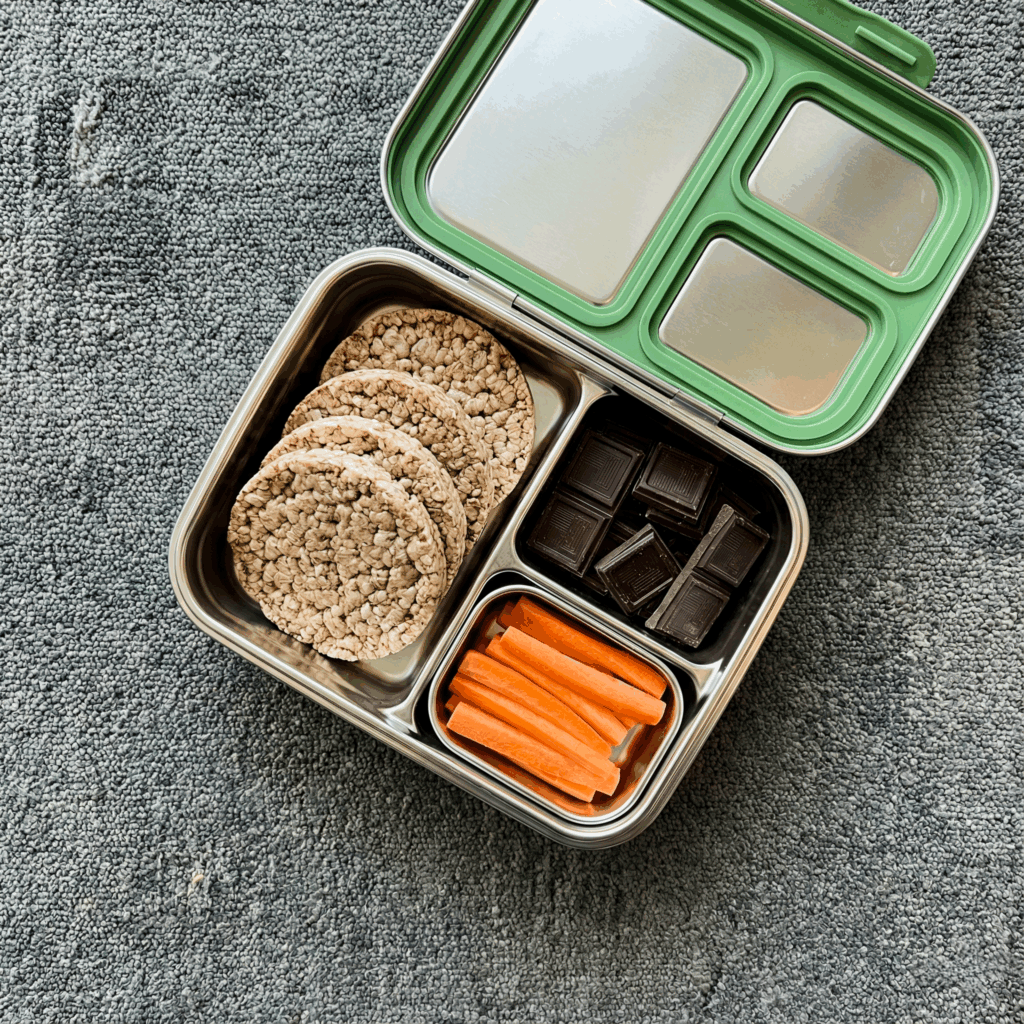
9. Dark Chocolate (70% Cocoa or higher)
Traveling is stressful. You deserve a treat that also offers some health benefits.
- Why it works: Dark chocolate is rich in antioxidants and magnesium (which relaxes muscles). A small square can satisfy a sugar craving with far less sugar than a candy bar. It also contains a small amount of caffeine for a gentle boost upon landing.
- Pro Tip: Break up a bar ahead of time and mix it into your trail mix for a sweet surprise.
10. Protein Bars (The Right Kind)
Protein bars are the most convenient travel snack, but 90% of them are just glorified candy bars disguised with vitamins.
Why it works: Incredibly easy, pre-packaged, and calorically dense.
The Criteria: You must read the label. A good travel protein bar should have:
- At least 10g of protein.
- Less than 8g of added sugar.
- At least 3-5g of fiber.
- Whole food ingredients list (nuts, egg whites, dates) rather than soy protein isolate and high fructose corn syrup.
The Vital Component: Hydration Strategy
You cannot snack your way out of dehydration. You must drink water.
The rule of thumb is to drink roughly 8 ounces (one cup) of water for every hour you are in the air. On a 10-hour flight, that’s a lot of water.
Do not rely on the tiny cups the flight attendants hand out.
The Strategy:
- Bring a large, empty, reusable water bottle through security.
- Immediately fill it up at a hydration station by your gate before boarding.
- Buy a second large bottle of water at the airport kiosk if it’s an ultra-long flight. Yes, it’s expensive, but dehydration feels worse.
- Electrolytes: For flights over 5 hours, consider packing portable electrolyte drink tablets (like Nuun or Liquid I.V.). Add one to your water bottle mid-flight to help your body absorb hydration better than plain water alone.
Frequently Asked Questions (FAQ)
Final Thoughts
A long-haul flight doesn’t have to mean derailing your health goals or arriving feeling terrible. By taking twenty minutes the night before your trip to pack a selection of these healthy travel snacks, you are investing in a better travel experience. You’ll save money, stay energized, and step off the plane ready to explore your destination. Safe travels!