There is nothing worse than touching down in a dream destination, ready to explore, only to feel sluggish, heavy, and completely uncomfortable in your own skin. We have all experienced the dreaded “airplane belly” that tight, distended feeling that seems to happen the moment the seatbelt sign turns off.
I’ll never forget a flight to Italy a few years ago. I had planned the perfect airport outfit high-waisted vintage jeans and a cute bodysuit thinking I’d look chic for arrival. Big mistake. By hour seven, I was unbuttoning my pants under the airline blanket because my stomach felt like a rigid, inflated balloon. I spent the first night of my dream vacation lying in the hotel room, feeling sluggish and refusing to put on real clothes. It was miserable, and I promised myself: never again.
For years, I thought this was just an unavoidable part of travel. But as I dove deeper into gut health for Abby’s Health Series, I learned that the combination of cabin pressure, dehydration, and sedentary hours creates a perfect storm for digestion issues. I realized I needed more than just water; I needed a strategy.
After plenty of trial and error, I have finally curated a specific protocol that works. In this post, I am sharing my exact travel supplement routine to beat bloat on long flights so you can land feeling light, energized, and ready for your vacation.
The Science: Why We Bloat at 30,000 Feet
Before we dive into the supplements, it is crucial to understand why this happens. It isn’t just about the salty snacks you ate at the terminal; “airplane belly” is actually a matter of physics and physiology.
1. The Physics of Gas (Boyle’s Law)
The most significant factor is cabin pressure. Commercial airplanes are pressurized to simulate an altitude of about 6,000 to 8,000 feet. According to Boyle’s Law, as atmospheric pressure decreases, the volume of a gas increases
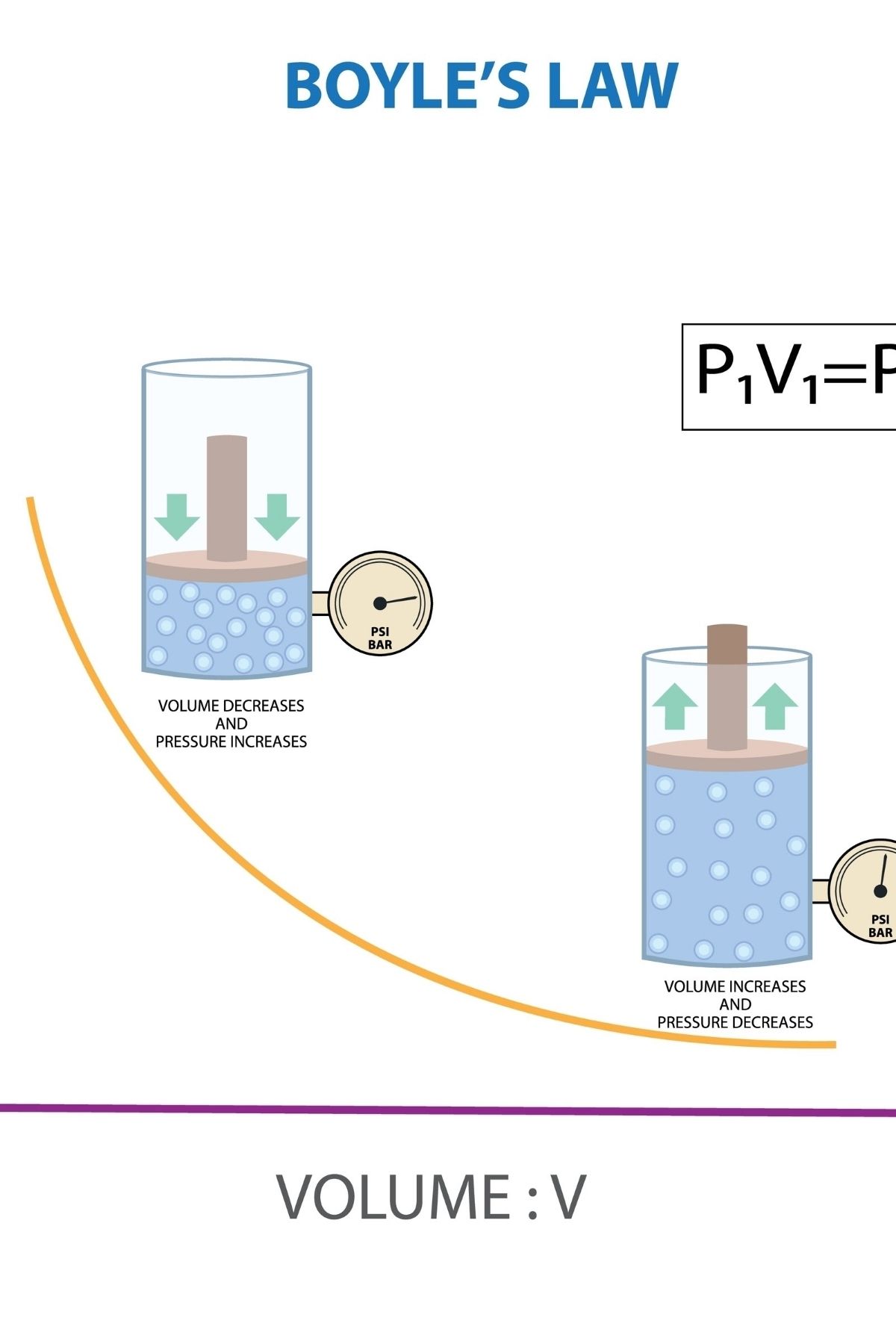
Think about a water bottle you drink on a flight: when you land and look at the empty bottle, it’s often crushed. The opposite happens inside your body. As the plane climbs, the gas trapped in your stomach and intestines expands often by up to 30%. This expansion presses against your abdominal walls, creating that tight, distended feeling.
2. Extreme Dehydration
Cabin air is notoriously dry, with humidity levels often dropping below 20% (drier than the Sahara Desert). When your body detects dehydration, it naturally holds onto water as a survival mechanism. This fluid retention, combined with expanded gas, creates a “puffy” look and feel.
3. Slowed Motility
Finally, your digestive system relies on movement to function. Sitting in a cramped seat for hours slows down gut motility (the movement of food through your digestive tract). When digestion stalls, food sits longer in the intestines, fermenting and producing even more gas.
By understanding these three factors, we can curate a supplement routine that specifically targets gas reduction, hydration, and motility.
My Pre-Flight Prep: The 24 Hours Before
Most travelers wait until the beverage cart rolls down the aisle to start thinking about hydration. In my experience, if you wait until you are in the air, it is already too late. The battle against bloat is actually won or lost in the 24 hours before you even step foot in the airport.
My strategy relies on “priming” my body to handle the stress of altitude. Here is exactly what I do the day before a long-haul flight.
1. Strategic Hydration (It’s Not Just Water)
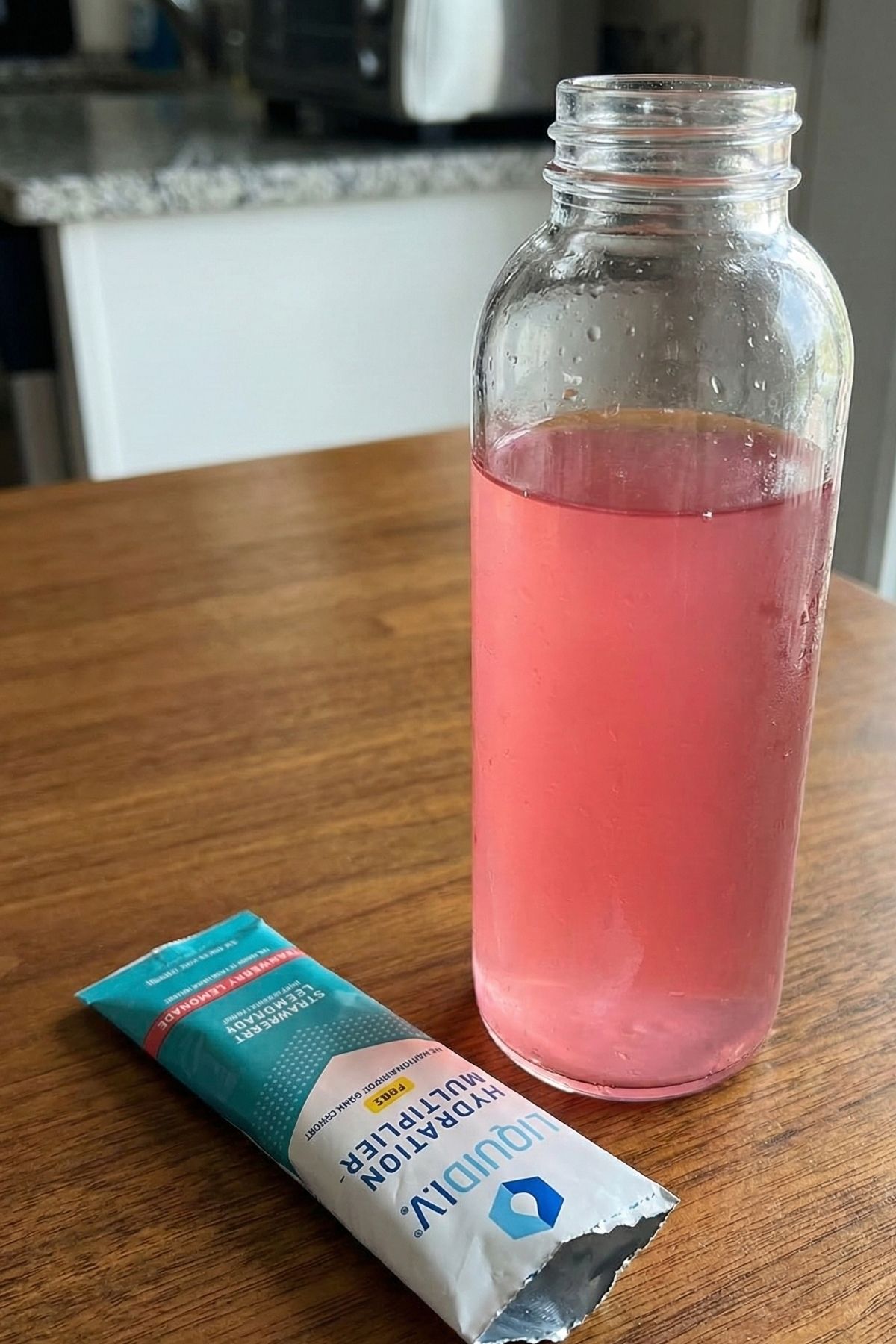
We all know we need to drink water, but chugging plain water before a flight often just leads to frequent bathroom trips, which can actually flush out essential minerals. To combat this, I focus on cellular hydration by adding electrolytes to my water bottle.
I usually mix a packet of high-quality electrolyte powder into my water bottle the night before. I’m currently obsessed with a watermelon-salt flavor. It has that crisp, refreshing sweetness of real fruit juice without the sticky, syrupy aftertaste of typical sports drinks. It’s slightly salty which tells me it actually has the minerals I need but it’s smooth enough to sip on while I’m rushing around packing my carry-on. This ensures my cells are holding onto moisture effectively, rather than just letting it pass right through me. If you prefer a sugar-free option, I usually also get this LMNT Electrolyte Powder and it’s is another fantastic choice that many keto travelers swear by.
2. The “Low-Residue” Diet
The day before flying is not the time for a massive kale salad or a bean burrito. While fiber is usually great for you, high-fiber foods can sit in the digestive tract and ferment, expanding rapidly once you hit altitude.
I switch to a temporary “Low-Residue Diet” 24 hours prior. This means eating foods that are easy to digest and leave very little waste in the gut.
- What I Eat: Grilled chicken, white rice, eggs, sourdough toast, and cooked carrots.
- What I Avoid: Cruciferous vegetables (broccoli, cauliflower), beans, heavy dairy, and carbonated drinks.
3. Gut Priming
Finally, I double down on my probiotic intake. Taking a robust probiotic the night before helps populate the gut with healthy bacteria, preparing it to fight off any potential “travel bugs” or inflammation caused by the stress of navigating security lines and terminals.
The Core Routine: My In-Flight Supplement Kit
Once I am on the plane, my goal shifts from “preparation” to “defense.”
The environment at 30,000 feet is aggressive on the body. Your digestion is fighting against cabin pressure, immobility, and the body’s natural stress response (fight-or-flight), which shuts down the digestive process to save energy.
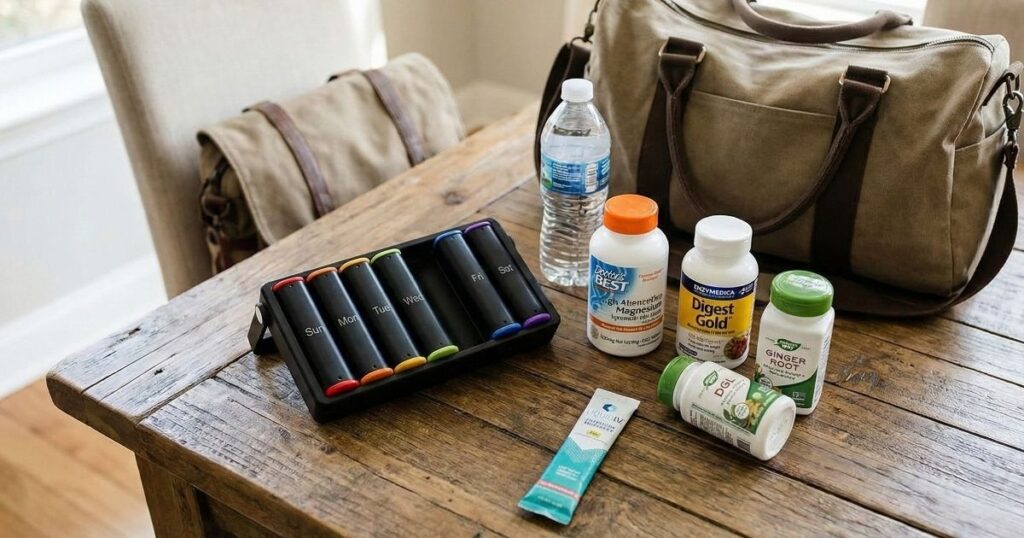
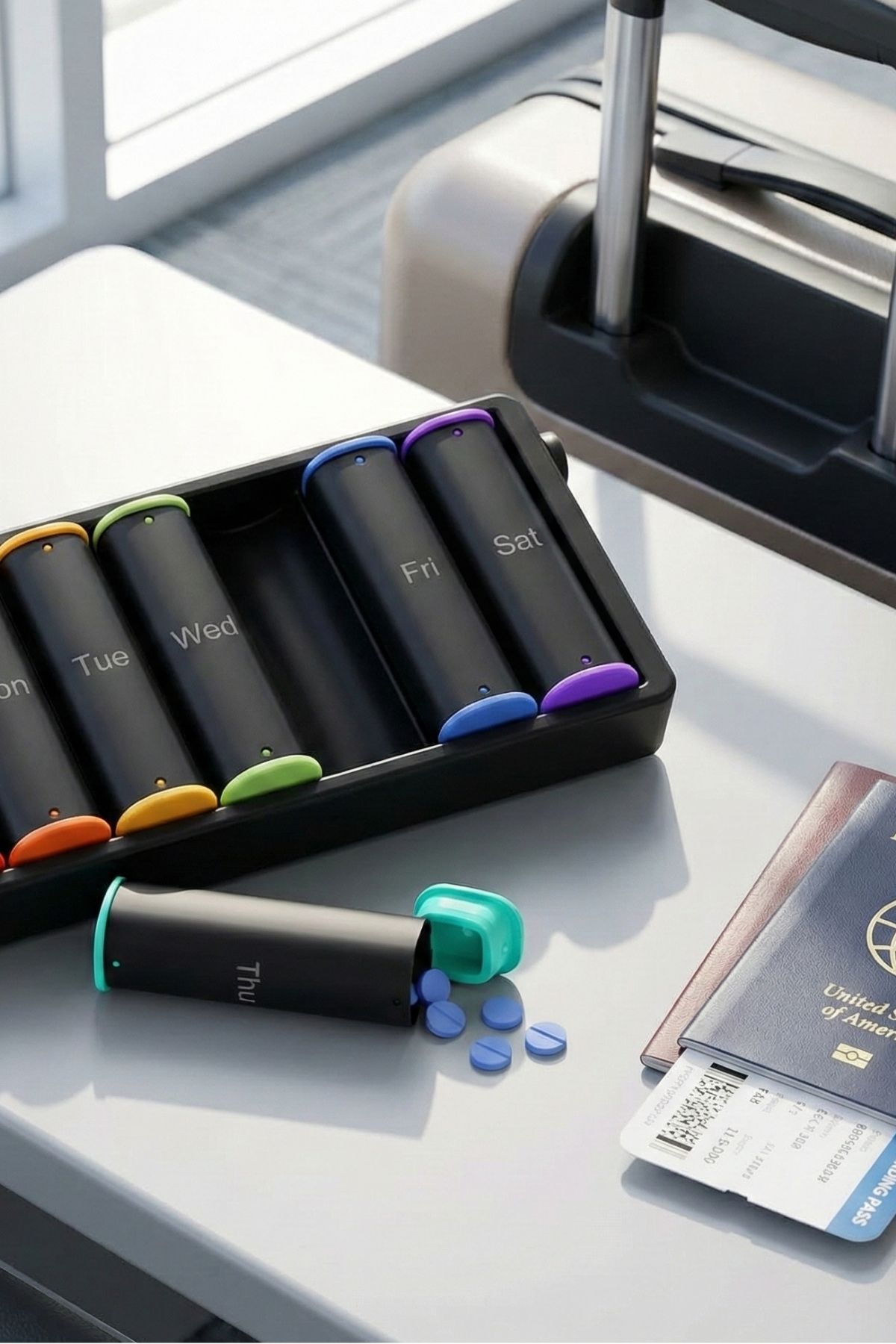
Here is the exact protocol I follow to support my body when it needs it most. I keep these sorted in a small pill organizer in my carry-on so I never have to dig through my bag mid-flight.
1. Broad-Spectrum Digestive Enzymes
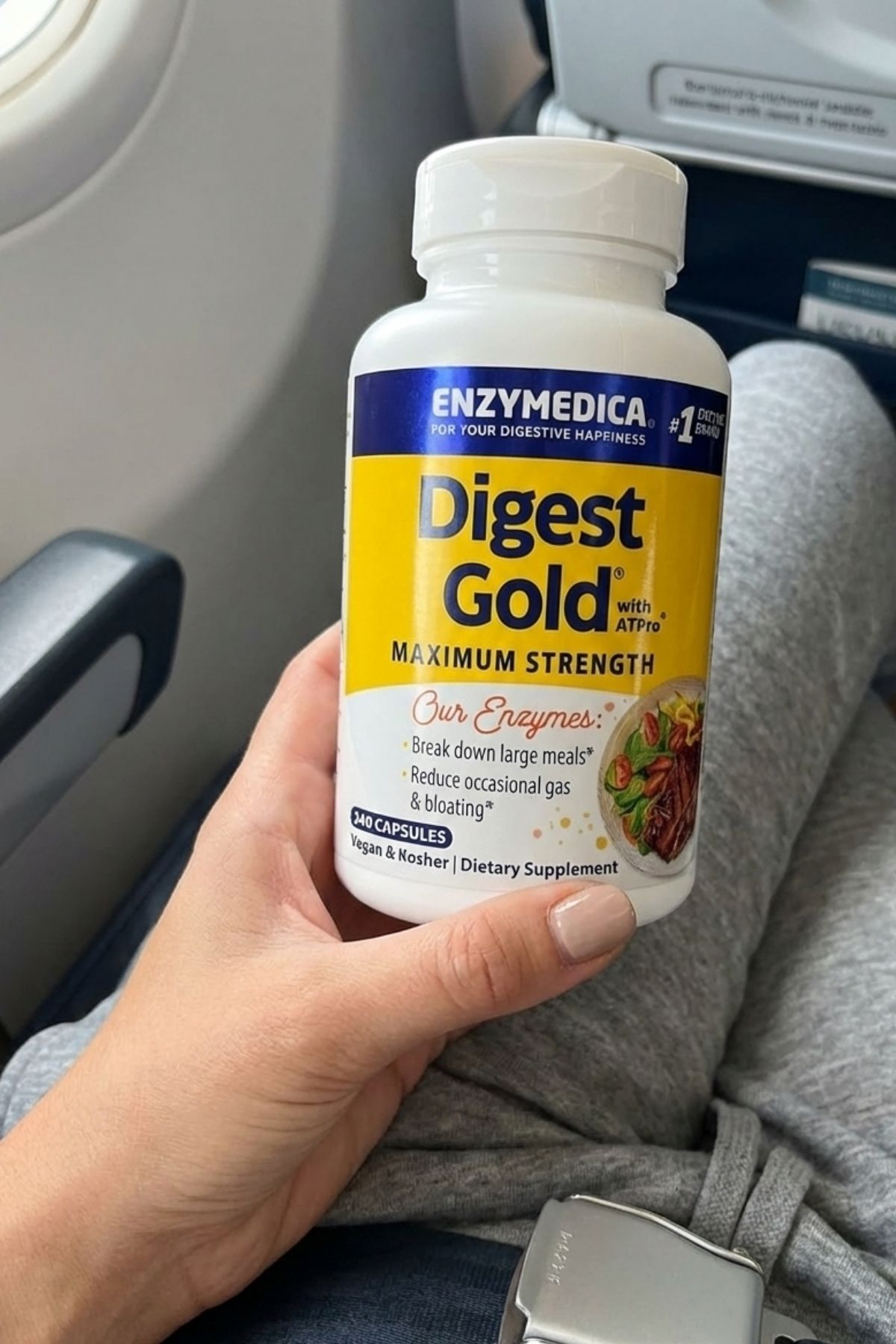
If you only take one thing from this list, let it be this. When we are stressed or traveling, our bodies produce fewer enzymes, making it difficult to break down food. This is why you often feel like that airplane meal is just “sitting” in your stomach like a rock. but I swear by these Enzymedica Digest Gold It is one of the most potent enzyme blends and covers fats, carbs, protein, and fiber.
- What it does: These capsules contain a mix of enzymes (like amylase, protease, and lipase) that act as “scissors,” cutting up your food into absorbable nutrients so your stomach doesn’t have to work as hard.
- When I take it: I take one capsule immediately before my first bite of any in-flight meal or snack.
- Why it helps: It essentially outsources the hard work of digestion. By breaking food down quickly, there is less undigested matter fermenting in the gut, which means significantly less gas production.
2. Magnesium Glycinate (Crucial: Not Citrate)
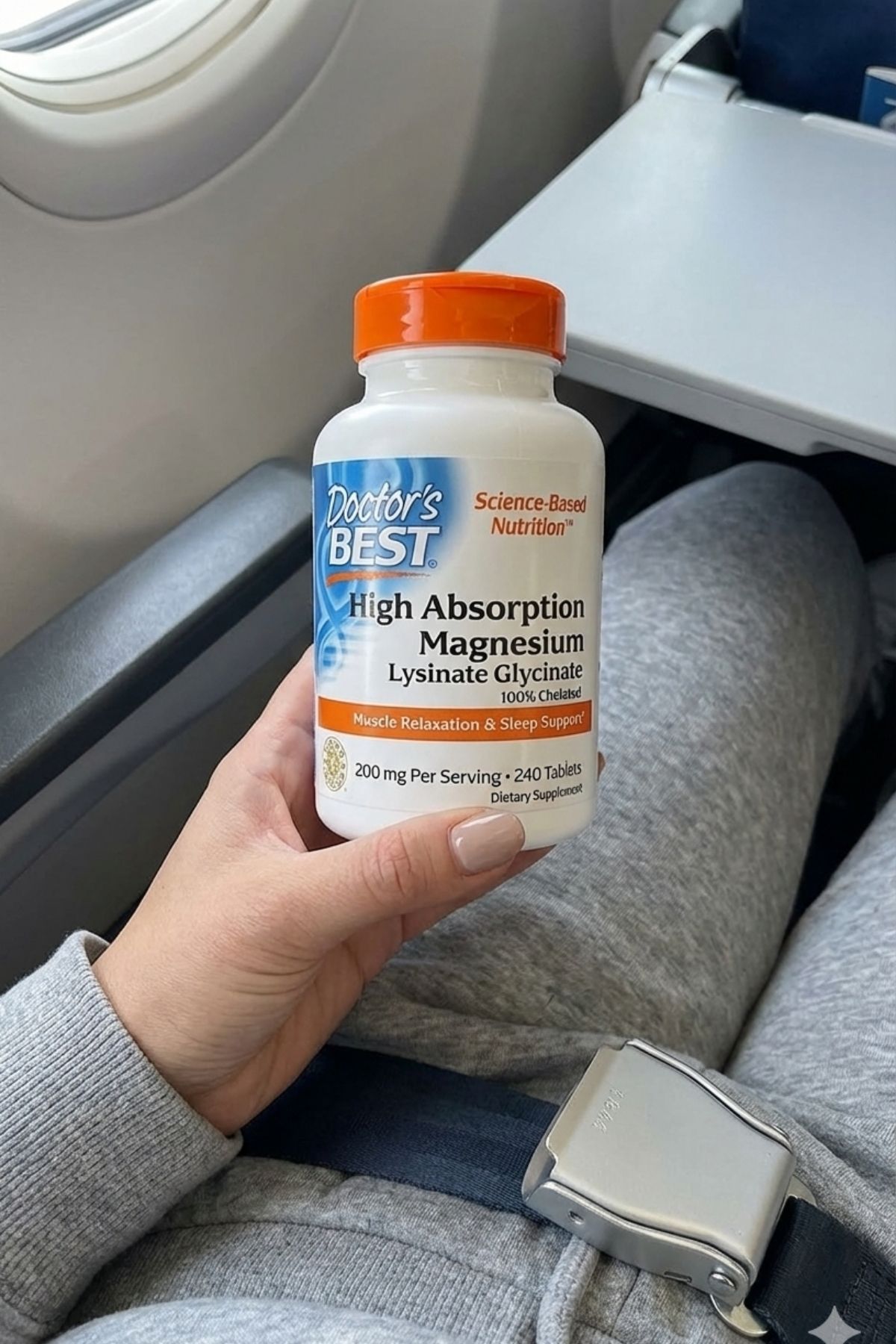
Magnesium is a travel superpower, but the type you take matters immensely. I specifically use Doctor’s Best High Absorption Magnesium Glycinate.It is highly bioavailable and doesn’t have the laxative effect that cheaper forms (like Oxide or Citrate) often have.
- What it does: Magnesium is an electrolyte that supports muscle relaxation. Remember, your digestive tract is essentially one long muscle. When you are anxious or cramped in a seat, that muscle tenses up.
- When I take it: About 30 minutes after my meal, or when I am trying to sleep.
- Why it helps: It helps relax the intestinal walls, allowing for smoother peristalsis (the wave-like movements that push food through).
Note: I avoid Magnesium Citrate on planes, as it draws water into the intestines and can have a strong laxative effect something you definitely do not want in an airplane bathroom! Glycinate is much gentler and also supports better sleep.
3. Ginger Root Capsules
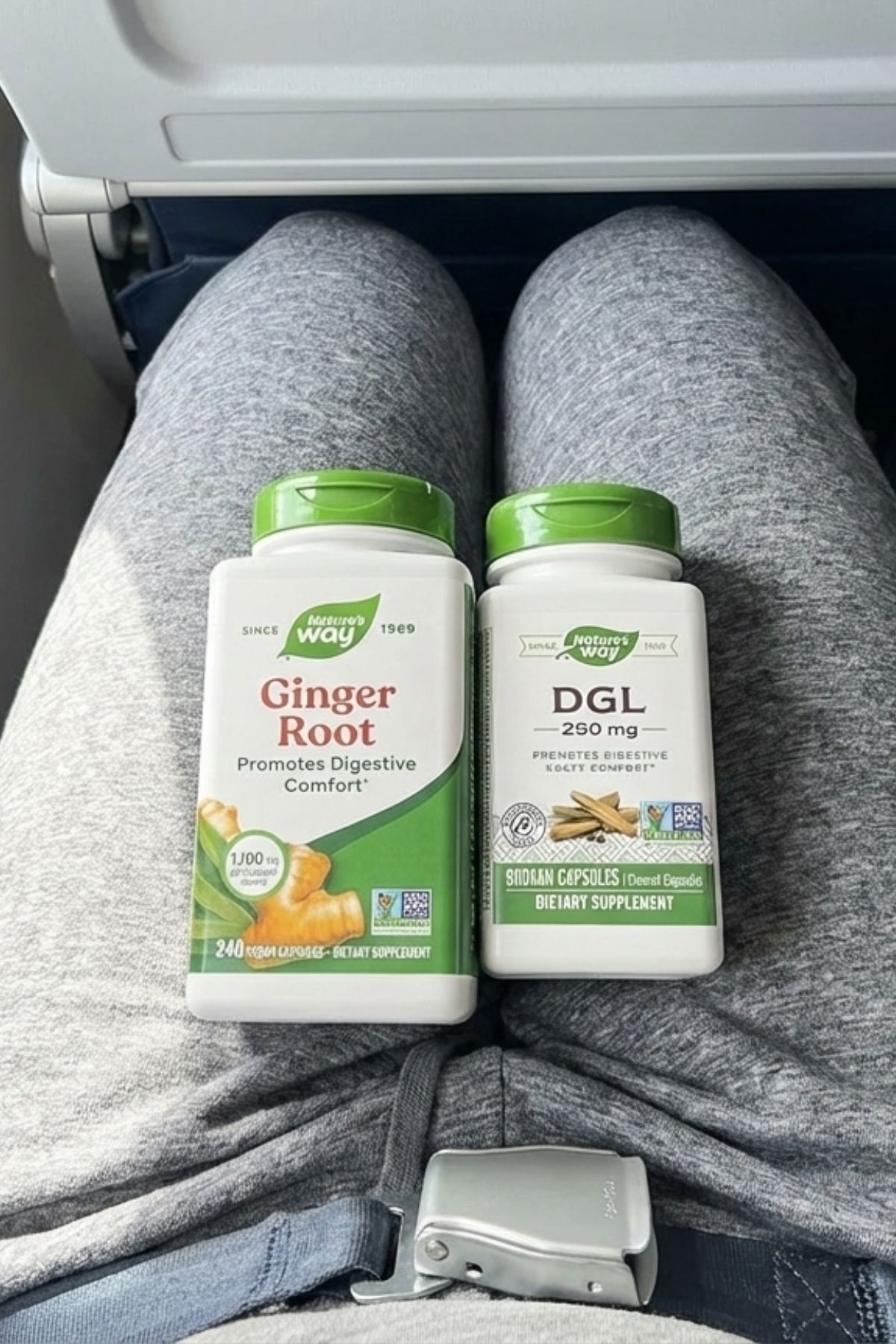
Ginger has been used for centuries, and for good reason. It is one of the most research-backed natural remedies for digestive distress and nausea. I keep a bottle of my Nature’s Way Ginger Root in my bag. They are affordable, effective, and don’t contain unnecessary fillers.
On a particularly bumpy flight over the Atlantic last year, the seatbelt sign was on for three hours straight. I started feeling that familiar wave of nausea and pressure building up. I popped two ginger capsules, and within 20 minutes, the heat in my chest settled and my stomach stopped churning. It saved me from a very embarrassing moment.
- What it does: Ginger is a “prokinetic,” meaning it helps encourage the stomach to empty its contents into the small intestine. It is also a powerful anti-nausea agent.
- When I take it: I pop one of these if I feel any turbulence-induced nausea or that familiar “full” feeling creeping in.
- Why it helps: It acts as a natural carminative, helping to break up and expel gas bubbles. Unlike sugary ginger ale (which is carbonated and makes bloat worse), pure ginger root capsules provide the anti-inflammatory benefits without the sugar or bubbles.
4. Deglycyrrhizinated Licorice (DGL)
This is my secret weapon for heartburn, which often flares up when sleeping upright in a seat. I use the Nature’s Life DGL Chewables. Since they are chewable, they work faster to coat the esophagus.
- What it does: DGL stimulates the production of protective mucus in the stomach and esophagus.
- When I take it: Chewed 20 minutes before eating.
- Why it helps: It coats and soothes the stomach lining. If you are prone to acid reflux while traveling, this provides a protective barrier against the acidity of coffee or spicy plane foods.
Important Health Note: I am sharing what works for my body. Supplements interact differently with everyone. For example, ginger can thin the blood, and magnesium can interact with certain antibiotics. Always check with your doctor before packing these in your carry-on.
Food Strategy: What I Eat (and Avoid) on Travel Days
Supplements can only do so much if you are actively feeding the bloat. Plane food is notoriously high in sodium to compensate for our dulled taste buds at altitude, which leads directly to water retention.
To stay comfortable, I follow a strict “Travel Menu” that prioritizes easy digestion and stable blood sugar.
The “Do Not Fly” List I avoid these foods strictly for 12 hours before and during the flight. They are the biggest culprits for gas production and air ingestion.
- Carbonated Drinks: Drinking sparkling water or soda is literally swallowing gas. Stick to flat water.
- Chewing Gum: It might help your ears pop, but constant chewing makes you swallow excess air (aerophagia), which gets trapped in your stomach.
- Cruciferous Vegetables: Broccoli, cauliflower, and Brussels sprouts are high in raffinose, a sugar that ferments in the gut.
- “Sugar-Free” Candy: The sugar alcohols used in these are major bloating triggers for most people.
My Go-To Travel Menu (BYO-Food) I never rely on the airline meal. Instead, I pack my own high-protein, low-fermentation snacks. Controlling my food intake is the single best way to control how I feel.
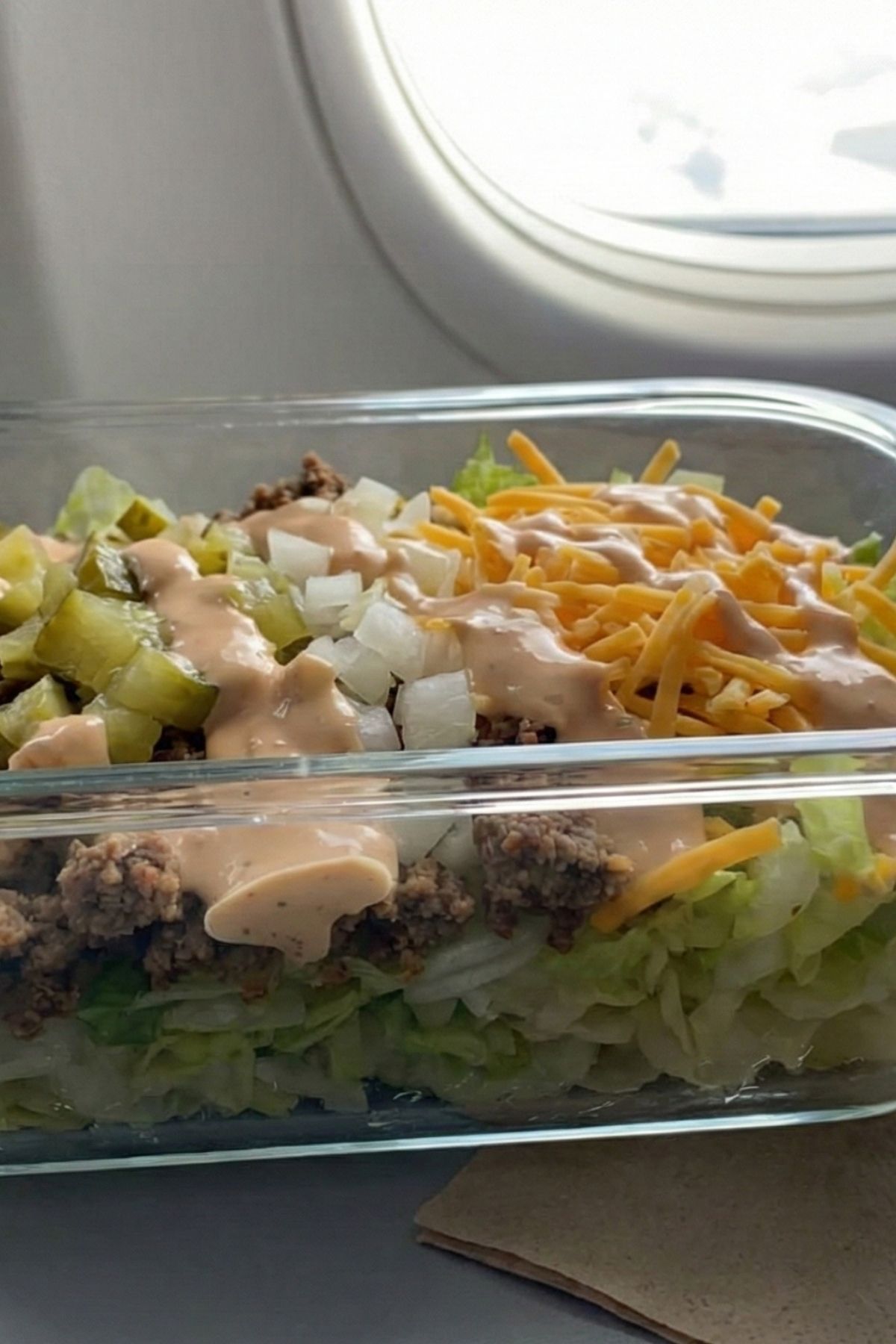
For a main meal, I always pack a container of my [High Protein Salads That Actually Keep You Full]. I usually opt for the chicken variation because it is satisfying without being heavy, and the protein keeps my blood sugar stable so I don’t crave sugary airport snacks.
If I need a snack mid-flight, I reach for something that won’t crumble or make a mess. My [ Low Calorie Protein Bars] are a lifesaver here. They are nutrient-dense enough to replace a meal if I’m sleeping through service, and unlike store-bought bars, they don’t contain sugar alcohols that cause digestive distress.
By bringing my own food, I ensure that my body is fueling on clean ingredients rather than processed, high-sodium preservatives.
Lifestyle & Movement Hacks: Beyond the Bottle
While supplements and food choices are powerful, they cannot completely override basic mechanics. If you sit perfectly still in tight clothing for 10 hours, your lymphatic system which helps drain fluid and waste will stall, leading to puffy ankles and a stagnant gut.
Here are three non-negotiable lifestyle rules I follow to keep things moving.
1. The “Comfort Over Style” Rule
There is a time for fashion, but a long-haul flight isn’t it. Wearing high-waisted skinny jeans or tight belts restricts your abdomen. As your stomach naturally expands from the altitude, that restrictive clothing digs in, causing pain and trapping gas. I always fly in loose-fitting joggers or leggings with a soft, rolling waistband.
2. Compression is Key
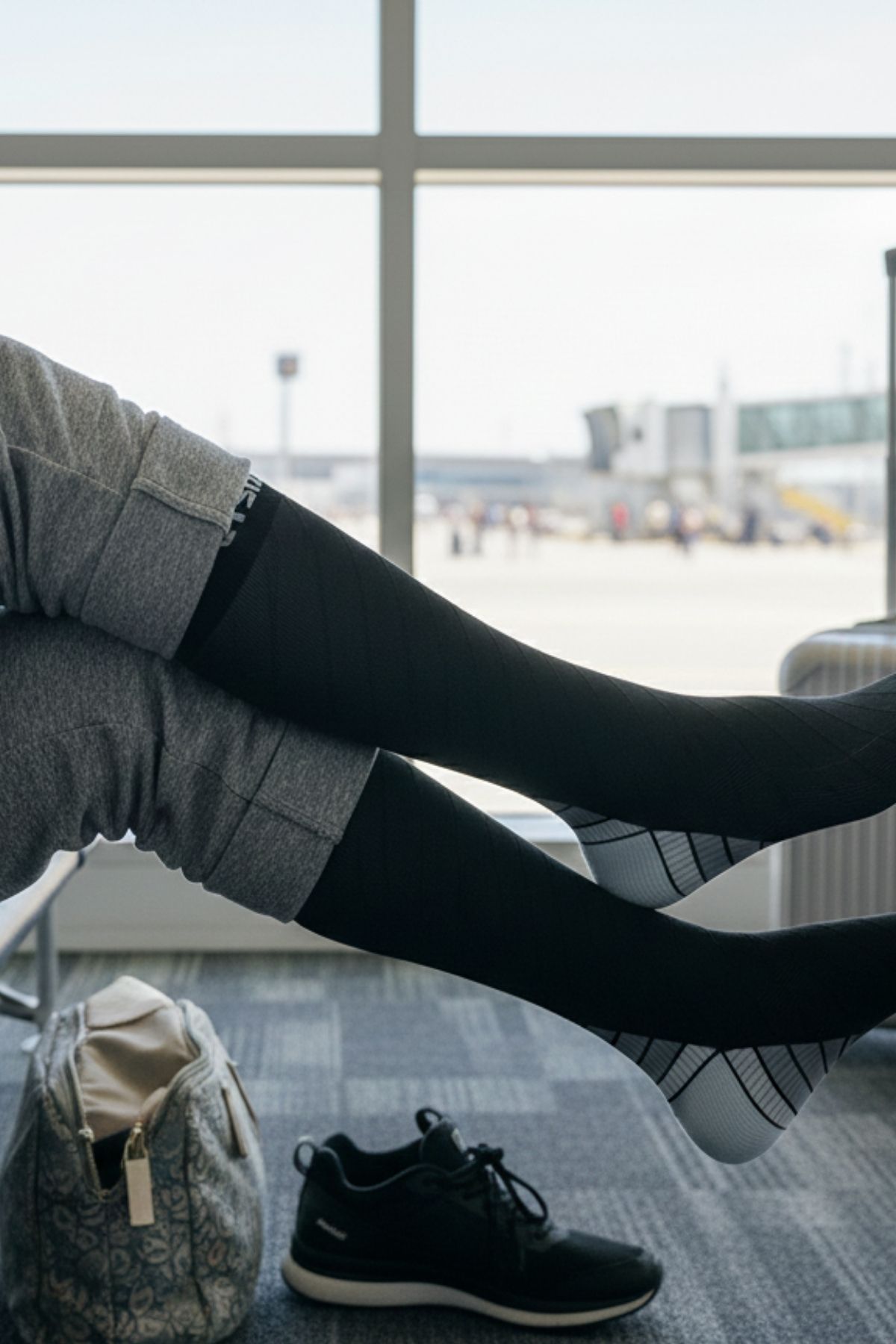
I never step on a plane without wearing medical-grade compression socks. They aren’t just for preventing blood clots; they also help circulation and prevent fluid from pooling in your legs. If you want a splurge, Bombas are incredibly comfortable. But for a reliable budget option that ships fast from Amazon, I love the Physix Gear Compression Socks. They provide firm support (20-30 mmHg) without cutting off circulation at the knee. Better circulation means better systemic blood flow, which indirectly supports your digestive organs.
3. The Two-Hour Rule
You need to move to help your gut move. I set a timer on my phone for every two hours. When it goes off, I get up and walk the full length of the plane twice. Even simple seated twists or marching your legs in place while sitting can help massage the intestines and encourage gas to pass (hopefully in the bathroom!).
Frequently Asked Questions About Travel Bloat
Yes, absolutely. The TSA (and most international security) allows solid supplements like capsules and tablets in carry-on bags without restriction. If you are bringing liquid supplements (like a liquid probiotic), they must follow the 3-1-1 liquids rule (under 3.4oz/100ml) unless they are medically necessary prescription medications.
While intermittent fasting is popular, I don’t recommend strictly fasting on long-haul flights if it stresses your body. Fasting can sometimes increase cortisol (stress hormone) levels in a travel environment, which shuts down digestion. It is better to eat small, high-protein, low-carb snacks t
Yes. Alcohol is dehydrating and inflammatory. At altitude, the effects of alcohol are amplified. One glass of wine in the air can dehydrate you as much as three on the ground, leading to severe water retention and “puffy face” upon landing.
If possible, choose an aisle seat. This gives you the freedom to stand up and walk or stretch as often as needed without disturbing your neighbor. Movement is the #1 way to manually move gas through the intestines.
Conclusion
Travel is about making memories, not managing stomach pain. By implementing this simple routine hydrating with electrolytes, eating the right foods, and using targeted supplements like digestive enzymes and magnesium you can beat the bloat and start your vacation feeling your best. It took me years to perfect this strategy, but now I won’t fly without it.
Tell me in the comments: What is your one non-negotiable travel essential? I’m always looking to add to my kit!
Disclaimer: I am not a doctor or a registered dietitian. The information provided in this post is based on my personal experience and research for educational purposes only. It is not intended to diagnose, treat, or cure any medical condition. Always consult with your healthcare provider before starting any new supplement routine, especially if you are pregnant, nursing, or taking medication.