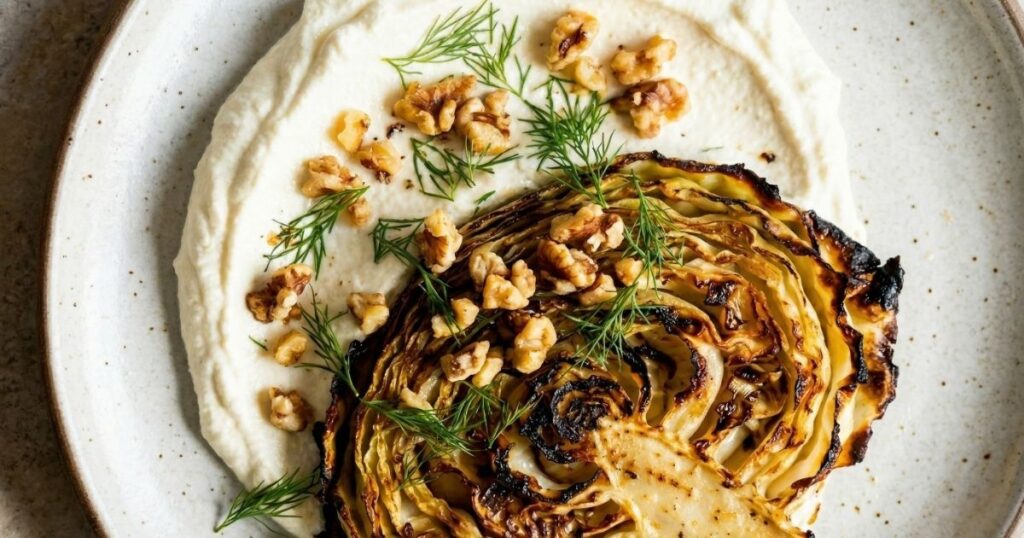
Let’s be honest: the phrase “cabbage steaks” usually elicits an eye-roll. It sounds like diet culture trying too hard to make a vegetable sound exciting. For years, cabbage was merely coleslaw or that boiled, sulfur-smelling side dish your grandparents ate.
But if you are looking for a substantial, “meaty” vegetarian dinner that is low-carb, keto-friendly, and actually satisfying, you have to stop steaming cabbage and start treating it like a piece of protein.
I used to be incredibly skeptical of cabbage as a main course. I remember trying to impress a friend years ago with a “vegetable-forward” dinner back when I was first learning to cook. Then I mistakenly treated the cabbage delicately, roasting it at a low temperature. The result was sad, pale, soggy, and smelled vaguely of old gym socks. We pushed it around our plates for ten minutes before eventually giving up and ordering a pizza.
This recipe is my apology for that meal.
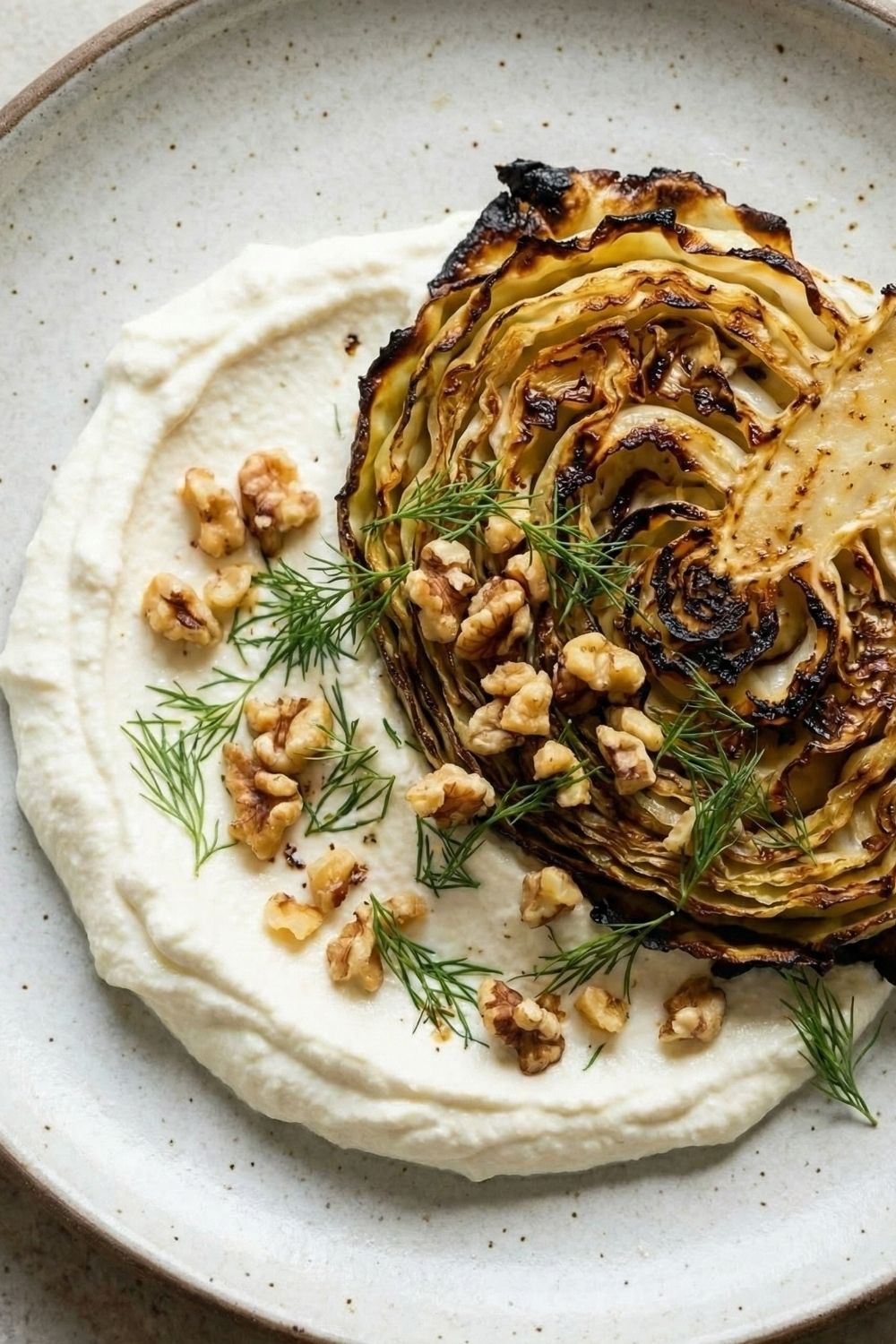
When treated correctly with high heat, cabbage transforms completely. The natural sugars caramelize, the edges become impossibly crispy, and the flavor deepens into something nutty, sweet, and savory.
However, roasted cabbage on its own isn’t a meal it’s a side dish. To turn this into a filling dinner, we need fat and crunch. That is where the cooling, tangy whipped feta and the earthy toasted walnuts come in. This isn’t just “rabbit food”; it’s a textured, restaurant-quality meal that happens to be incredibly healthy.
Why This Baked Cabbage Steaks Beats the Others (The Anti-Soggy Method)
If you have tried roasting cabbage before and ended up with a limp, watery mess, it wasn’t your fault it was the method. Cabbage is over 90% water. If you don’t give that water a way to escape quickly, you are essentially steaming the vegetable in its own juices.
Here is why this specific technique works to create crispy edges and a tender interior:
- The Heat is High (425°F): Many recipes call for 375°F or 400°F. This is too low. We need aggressive heat (425°F / 220°C) to shock the exterior of the cabbage, causing rapid evaporation and the Maillard reaction (browning) before the inside turns to mush.
- The “Core” Technique: The biggest frustration with cabbage steaks is that they fall apart into individual leaves when you flip them. In the instructions below, I explain exactly how to slice the stem so the core holds the “steak” together like a ribeye.
- The Flavor Balance: Cabbage is naturally sweet when roasted. It needs the sharp, salty contrast of the feta and the bitter earthiness of the walnuts to make it a complete palate experience.
The Ingredients and Why They Matter
To get the best results, you cannot swap these ingredients out mindlessly. Here is what you need and why.
(Note: Links below are affiliate links. I may earn a commission if you purchase through them.)
For the Cabbage Steaks
- Green Cabbage: Do not use Savoy cabbage (it’s too delicate and burns fast) or Red Cabbage (it bleeds color and turns an unappetizing blueish-grey when roasted with feta). Look for a tight, heavy head of standard green cabbage.
Where to buy: [local grocery delivery]
- High-Quality Olive Oil: You need a substantial amount of oil to conduct the high heat of the oven onto the surface of the cabbage. Skimping on oil leads to dry, burnt cabbage rather than crispy, caramelized cabbage.
My Recommendation: [California Olive Ranch]
- Kosher Salt & Fresh Cracked Pepper: Essential for drawing out moisture and seasoning the dense vegetable layers.
- Garlic Powder & Smoked Paprika: Fresh garlic will burn at these temperatures before the cabbage is cooked. Garlic powder provides savory depth, and smoked paprika adds a “meaty,” chargrilled flavor profile.
For the Whipped Feta
- Feta Cheese (In Brine): This is the most critical rule of this recipe. Do not buy pre-crumbled feta.
- Texture Description: Block feta sold in brine has a higher moisture content and a much richer flavor profile. When whipped in a food processor, the brine-soaked block transforms into a luscious, tangy cloud that resembles cream cheese but with a distinct salty kick. Pre-crumbled feta is coated in cellulose (an anti-caking agent) resulting in a grainy, dry paste that refuses to ever become truly smooth, no matter how long you blend it.
- My Recommendation: [Mt. Vikos]
- Cream Cheese or Greek Yogurt: You need a neutralizing dairy fat to help the feta emulsify and tone down the intense saltiness. Full-fat cream cheese makes for a stiffer whip; Greek yogurt makes it tangier and looser.
- Lemon Zest: This cuts through the richness of the cheese and brightens the entire dish.
The Toppings
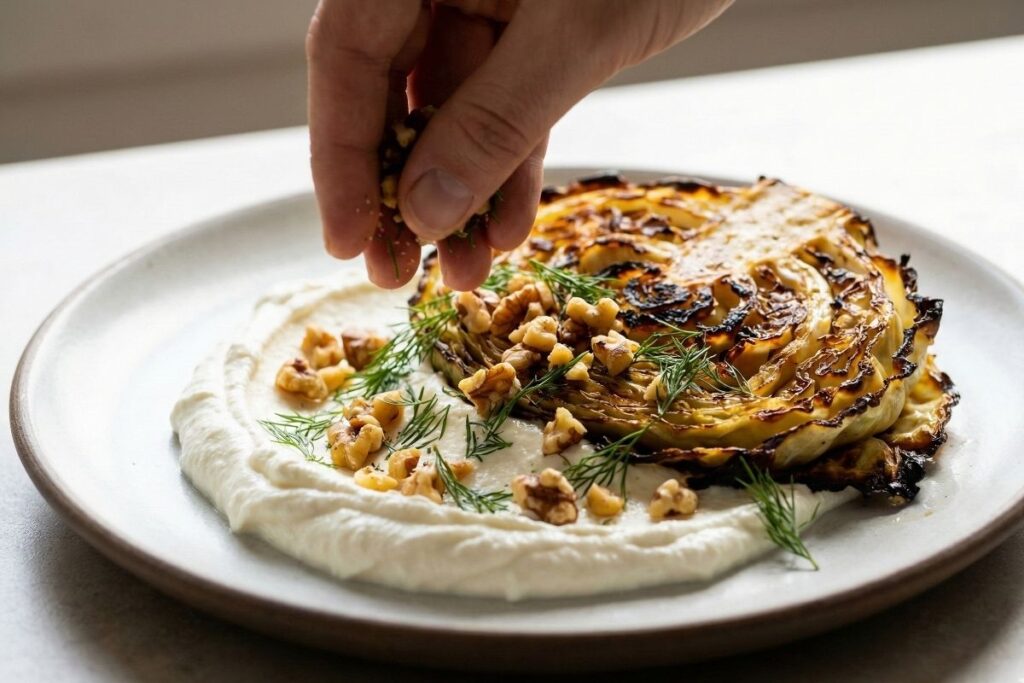
- Raw Walnuts: Toasting these yourself takes 5 minutes and makes a world of difference compared to buying pre-roasted nuts.
- Where to buy: [Amazon]
- Fresh Dill: The anise-like flavor of dill pairs perfectly with feta and cabbage.
Kitchen Tools You Need
To execute this perfectly, you need the right gear.
- A Large, Heavy-Duty Baking Sheet: Flimsy pans warp in high heat, causing oil to pool and the cabbage to cook unevenly. You need a sturdy aluminum pan.
- I use: [Nordic Ware Baker’s Big Sheet]
- A Food Processor: You cannot make whipped feta by hand or with a blender (it’s too thick). A food processor is non-negotiable for that airy texture.
- I recommend: [14-Cup Food Processor]
- A Very Sharp Chef’s Knife: Cutting through a dense cabbage core requires a stable, sharp blade for safety and precision.
- I use: [Wüsthof Classic Chef’s Knife]
How to Make Perfect Baked Cabbage Steaks.
Step 1: The High-Heat Prep
Arrange two oven racks one in the middle and one in the upper third of the oven. Preheat your oven to 425°F (220°C). Let it preheat fully; putting cabbage into a lukewarm oven is a recipe for sogginess.
Step 2: The Critical “Core Cut”
Remove any damaged or incredibly loose outer leaves of the cabbage.
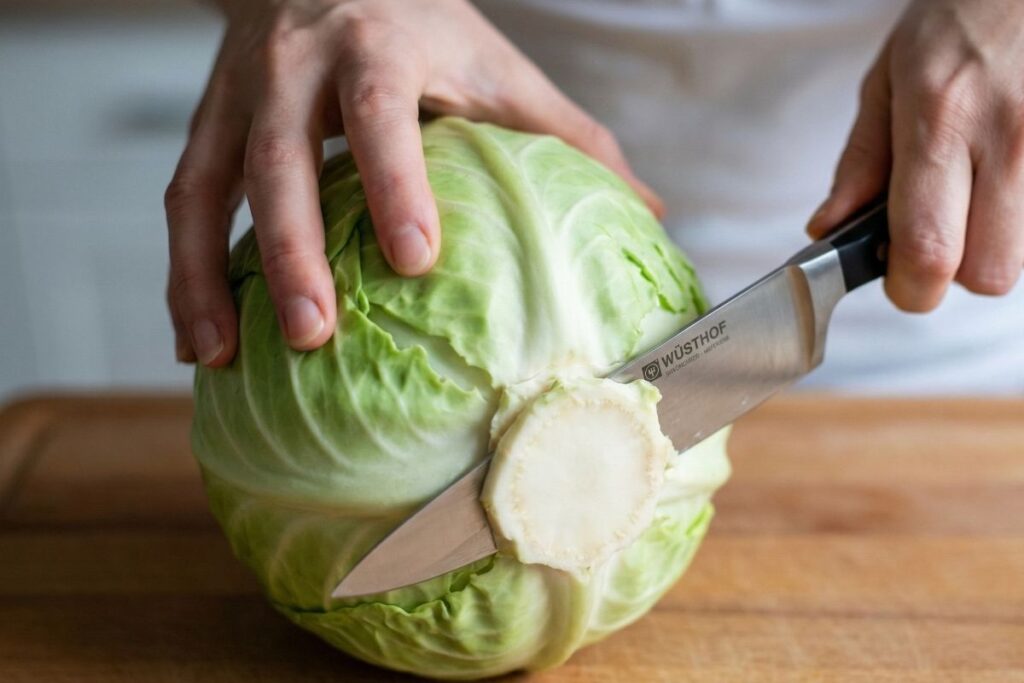
Sit the cabbage upright on its stem base. Using your sharp chef’s knife, slice the cabbage vertically, straight down through the middle of the core.
Now, look at the halved cabbage. You will see the solid white core near the bottom. You must leave a portion of this core attached to each steak. If you cut the core out completely, the leaves have nothing anchoring them together, and your “steak” will collapse into coleslaw mix in the oven.
Slice the halves into 1-inch thick semi-circles, ensuring every slice remains attached to that central core piece.
Step 3: Seasoning and Oil
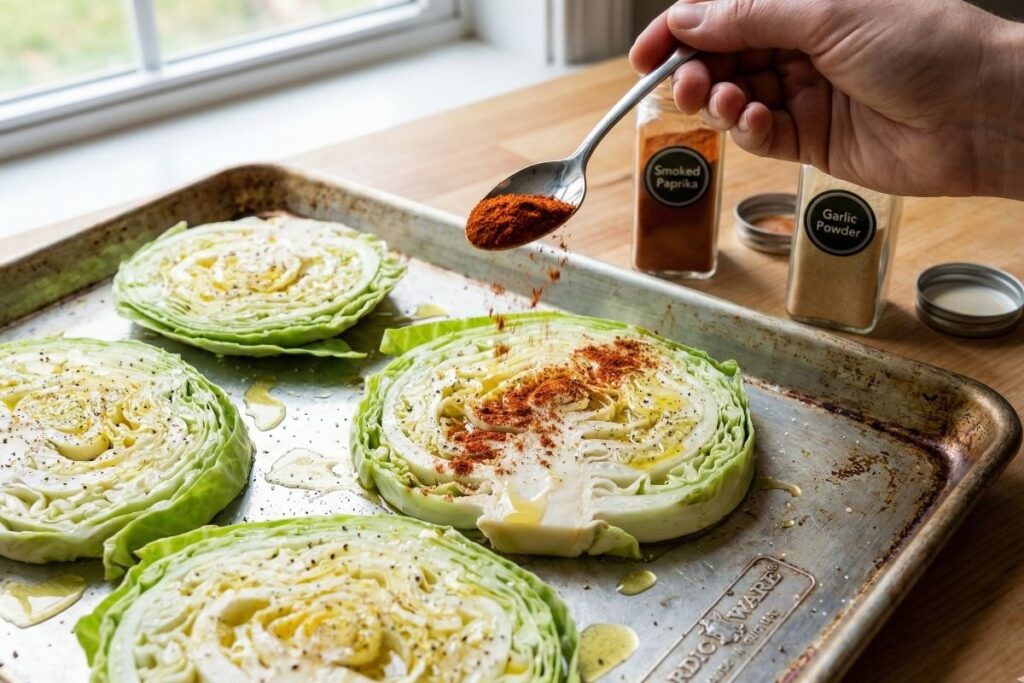
Place the cabbage steaks on your large baking sheet. Do not overcrowd the pan. If the steaks are touching, they will steam each other instead of roasting. Use two pans if necessary.
Drizzle both sides generously with olive oil. Use your hands to rub the oil to the very edges of the leaves. Season liberally with kosher salt, black pepper, garlic powder, and smoked paprika.
Step 4: The Roast
Roast on the middle rack for 20-25 minutes.
Carefully flip the steaks. You should see significant browning on the bottom side.Return them to the oven, perhaps moving to the upper rack for maximum browning, and roast for another 15-20 minutes.
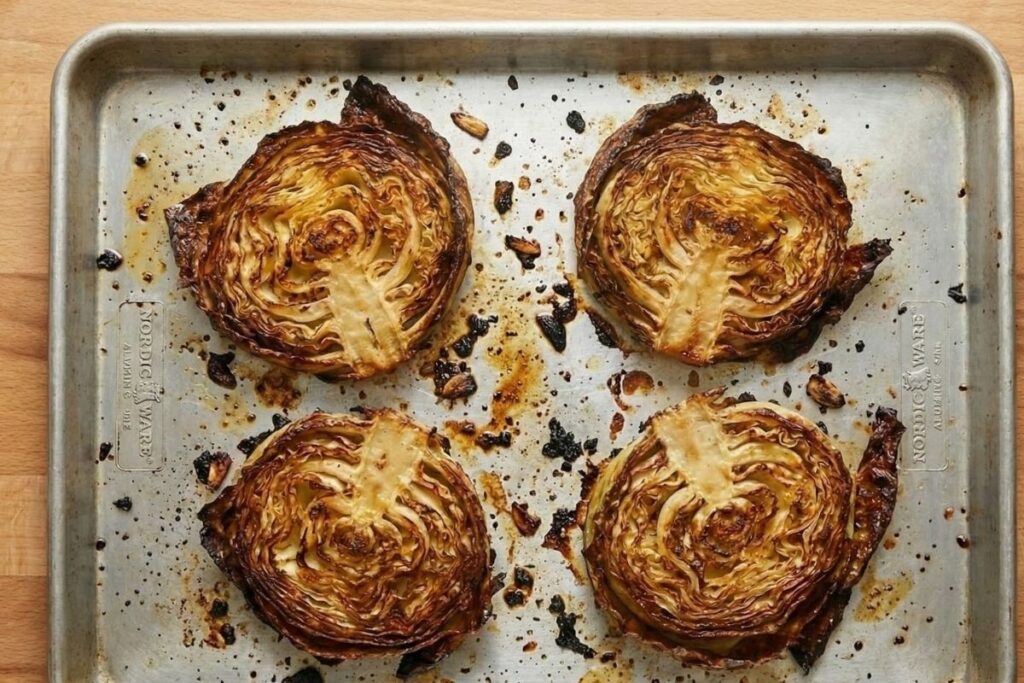
How to tell when they are done: The thickest part of the core should be fork-tender, the center leaves should be softened and sweet, and the outer edges should be dark brown and very crispy. Do not fear the char; that’s where the flavor lives.
Step 5: The Whipped Feta
While the cabbage roasts, make the whip. Crumble your block of feta into the food processor. Add the cream cheese (or Greek yogurt), olive oil, and lemon zest.
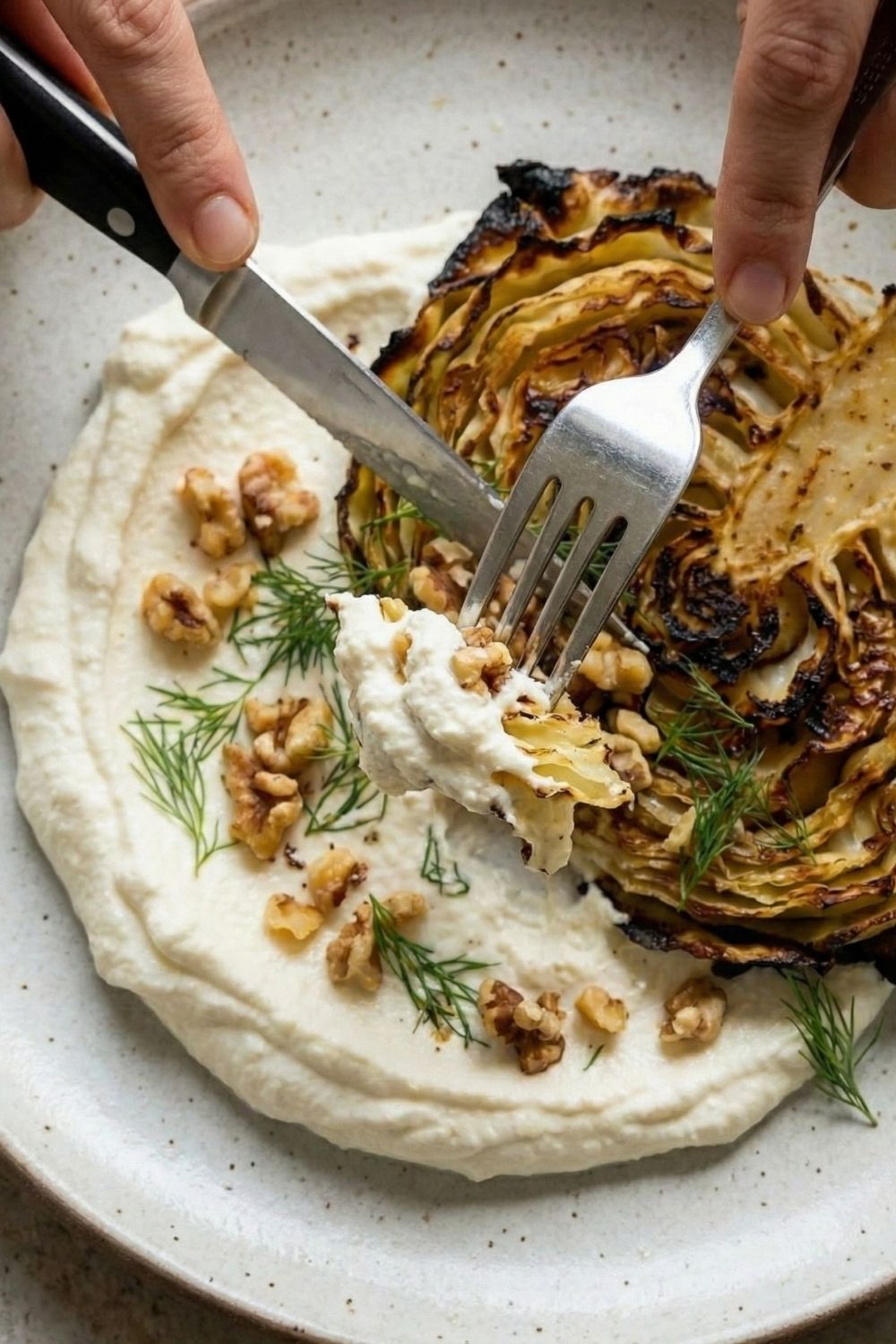
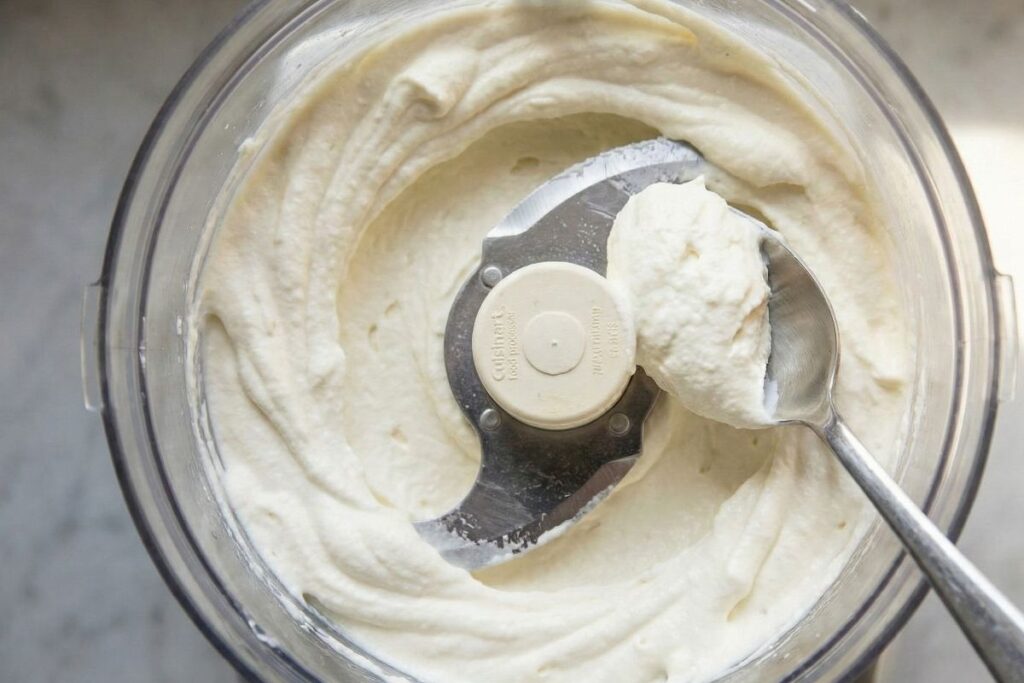
Process for a full 2-3 minutes. Stop halfway through to scrape down the sides of the bowl. You want the consistency of a light buttercream frosting. Taste it. it should be punchy and salty. If it’s too thick, add a teaspoon of water or olive oil while the motor is running.
Step 6: Finishing Touches
In a small dry skillet over medium heat, toast the walnuts for 4-5 minutes until they smell fragrant and are slightly darkened. Watch them closely so they don’t burn. Chop them roughly.
To serve, smear a generous swoosh of whipped feta on a plate. Top with a hot roasted cabbage steak. Sprinkle heavily with toasted walnuts and fresh dill. Serve immediately.
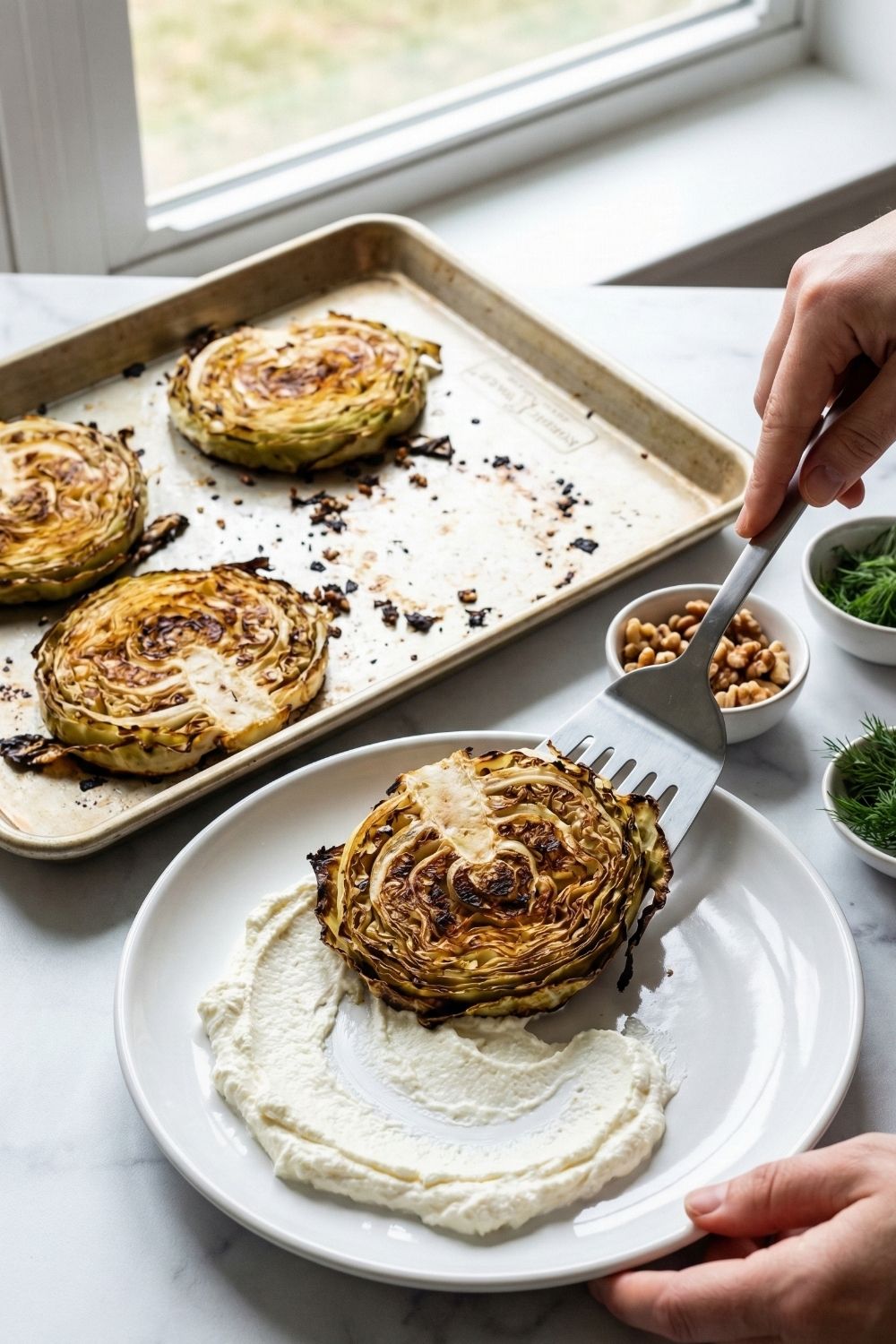
Crispy Roasted Cabbage Steaks with Whipped Feta & Walnuts Troubleshooting and FAQs
This usually happens for one of three reasons: 1) Your oven wasn’t hot enough (must be 425°F+). 2) You overcrowded the pan, trapping steam. 3) You didn’t use enough oil to help the surface caramelize.
You likely cut off too much of the stem base. You must leave that dense white core intact so the leaves stay connected to it.
Yes. Cabbage is a relatively low-carb vegetable, and the fats from the olive oil, feta, and walnuts make this very keto-friendly and satiating.
The roasted cabbage is naturally vegan. To replace the whipped feta, you could use a high-quality vegan ricotta alternative, or simply drizzle the finished steaks with a lemon-tahini dressing instead.
The Best Cabbage Steaks Recipe

Equipment
- Nordic Ware Baking Sheet (Heavy-duty aluminum prevents warping)
- Wüsthof Classic Chef's Knife (Essential for cutting the core safely)
- Cuisinart Food Processor (Required for the whipped feta texture)
Ingredients
Group 1: The Cabbage Steaks
- 1 large Green Cabbage approx. 2.5 lbs
- 4 tbsp Olive Oil Divided
- 1 tsp Kosher Salt
- 1/2 tsp Black Pepper Freshly cracked
- 1 tsp Garlic Powder
- 1 tsp Smoked Paprika
Group 2: The Whipped Feta
- 8 oz Feta Cheese Block in brine, NOT crumbled
- 4 oz Cream Cheese or full-fat Greek Yogurt
- 1 tbsp Olive Oil
- 1 tsp Lemon Zest
- 1/2 tsp Black Pepper
Group 3: The Toppings
- 1/3 cup Raw Walnuts Roughly chopped
- 2 tbsp Fresh Dill Chopped
Instructions
Step 1: Preheat & Prep
- Preheat your oven to 425°F (220°C). Arrange two oven racks: one in the middle and one in the upper third. Drizzle a small amount of oil on your baking sheet to prevent sticking.
Step 2: Cut the Steaks (The Core Technique)
- Remove outer damaged leaves. Slice the cabbage vertically through the center of the stem. Crucial Step: Slice the halves into 1-inch thick semi-circles, ensuring a piece of the white core remains attached to every steak. This core holds the leaves together like a ribeye.
Step 3: Seasoning
- Arrange steaks on the baking sheet (do not overcrowd; use two pans if needed). Drizzle generously with olive oil, rubbing it into the crevices. Season heavily with salt, pepper, garlic powder, and smoked paprika.
Step 4: The Roast
- Roast on the middle rack for 20-25 minutes. Carefully flip the steaks (use a large spatula). Move to the upper rack and roast for another 15-20 minutes until the edges are dark brown and crispy.
Step 5: Make the Whipped Feta
- While cabbage roasts, combine the feta block, cream cheese, olive oil, and lemon zest in a food processor. Process for 2-3 minutes until completely smooth and fluffy.
Step 6: Toast Walnuts & Serve
- Briefly toast chopped walnuts in a dry skillet over medium heat for 3-4 minutes. To serve, spread a layer of whipped feta on the plate, place a hot cabbage steak on top, and garnish with toasted walnuts and fresh dill.