Most breakfast smoothies fail the technical audit.
They are essentially “sugar bombs” disguised as health food.
When you blend fruit without a protein scaffold, you spike blood glucose.
This triggers an immediate insulin response.
The result?
A crash within 90 minutes.
We are correcting that variable today.
This is not a milkshake. This is a functional nutrition protocol designed to combat Cellular Oxidative Stress while maximizing Muscle Protein Synthesis.
By pairing the high-anthocyanin load of raspberries with the slow-digesting casein protein in Greek yogurt, we create a “timed-release” energy source.
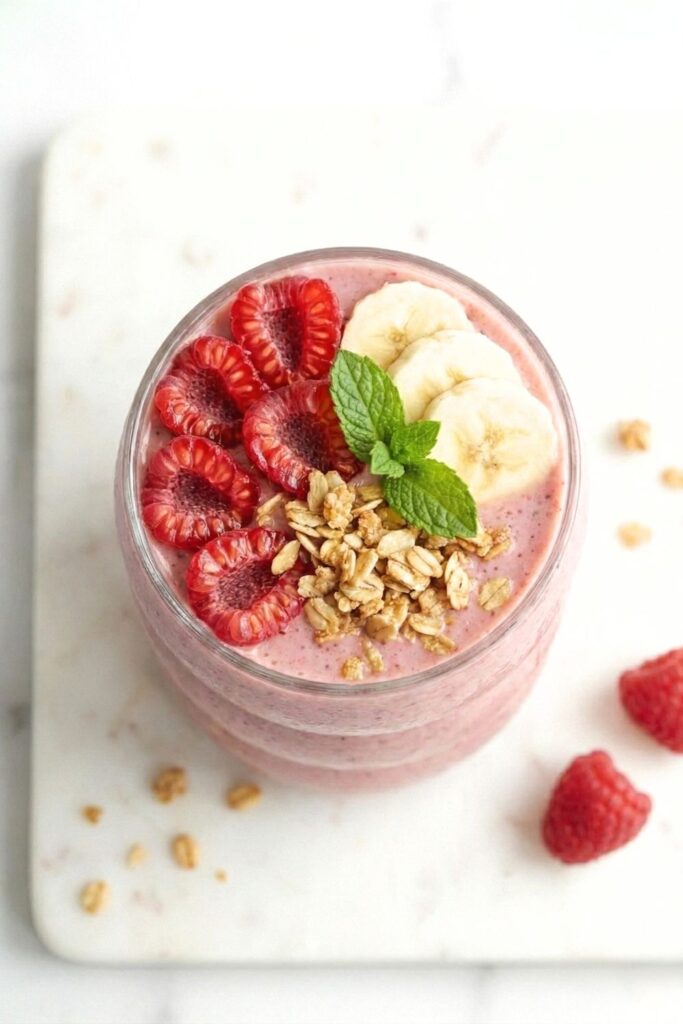
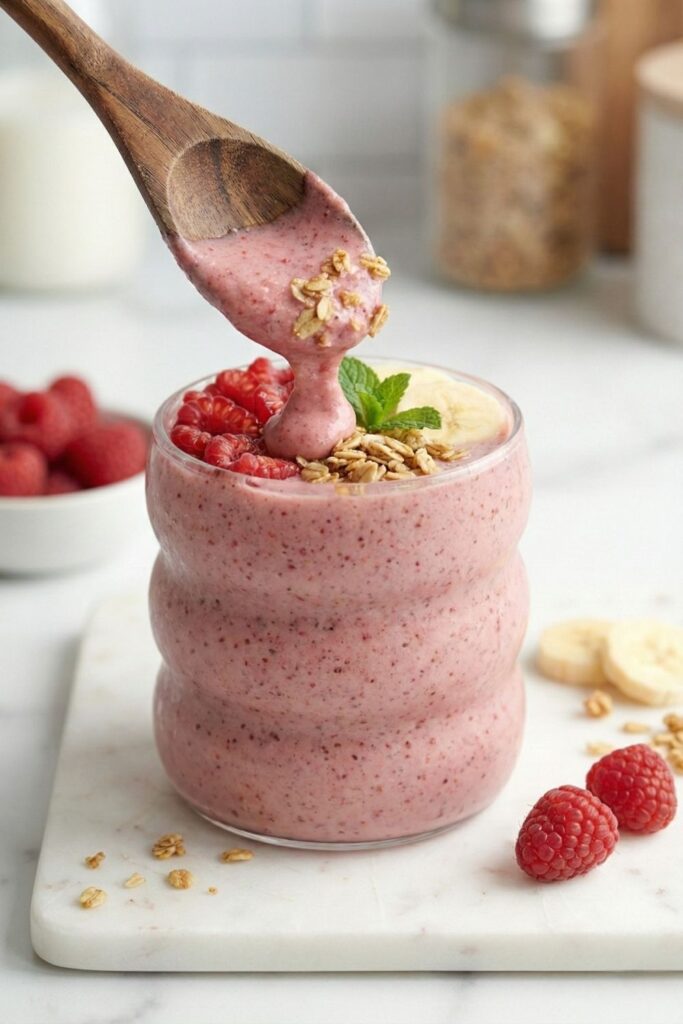
The texture is engineered to mimic soft-serve ice cream.
No ice.
No fillers.
Just density.
This manual documents the precise thermal and mechanical method to achieve a 25g protein load with zero powder.
We focus on the chemistry of the emulsion.
Let’s begin the protocol.
The Science: Why We Pair Casein with Anthocyanins
To understand why this formula works, we must look at the “Anabolic Window” myth.
You do not need protein immediately after a workout.
You need sustained amino acid delivery.
The Casein Advantage
Greek yogurt is dominant in casein protein (80%), unlike milk which is higher in whey.
Whey absorbs fast (30 minutes).
Casein absorbs slow (up to 7 hours).
When you consume this smoothie, the casein forms a “gel” in the stomach. This slows down gastric emptying.
The Oxidative Buffer
Raspberries are not just flavor. They are a utility ingredient.
They contain Ellagic Acid.
This is a polyphenol that binds to toxins in the digestive tract.
When we blend raspberries, we rupture the cell walls.
This increases the surface area of the antioxidants.
However, antioxidants are unstable.
They degrade with heat and oxygen.
The Temperature Variable
By keeping the ingredients frozen (-18°C) until the moment of shear force (blending), we preserve the integrity of the phytochemicals.
If you used fresh fruit and ice, the water content from the melting ice would dilute the acid profile.
It would also lower the viscosity.
We need high viscosity to trick the brain.
The Satiety Signaling
Thicker liquids register as “food” to the brain’s hypothalamus. Thin liquids register as “water.”
By engineering a “soft-serve” texture, we trigger the release of satiety hormones (Leptin) more effectively than a drinkable liquid.
You eat this with a spoon.
You digest it like a meal.
Ingredient Deep Dive: Bioavailability Stats
We utilize five specific inputs for this chemical reaction. Do not substitute without calculating the water-content variance.
1. Frozen Raspberries (The Substrate)
- Quantity: 1 cup / 130g
- Key Stat: 8g of Fiber per serving.
- Thermal State: Must be frozen solid.
- Why: Raspberries have the highest fiber-to-sugar ratio of any commercial berry. This fiber matrix traps the natural sugars, preventing a glucose spike. The frozen water content provides 90% of the hydration for the smoothie, eliminating the need for excess added liquid.
2. High-Protein Greek Yogurt (The Scaffold)
- Quantity: 3/4 cup / 190g
- Key Stat: 13g Protein per 100g (Total ~25g).
- Selection Criteria: Look for “Strained” yogurt. Traditional yogurt retains the liquid whey (acid whey). Strained yogurt removes it, leaving a denser protein structure.
- Fat Content: 0% or 2% is acceptable. 5% may cause the emulsion to split if over-blended.
3. Frozen Banana (The Emulsifier)
- Quantity: 1/2 Banana (Sliced).
- Chemistry: Bananas contain pectin.
- Function: Pectin is a gelling agent. When frozen, the starch in the banana effectively acts as a stabilizer. It prevents the yogurt and raspberry juice from separating into layers.
4. The Liquid Catalyst (Milk)
- Quantity: 1/4 cup / 60ml.
- Function: Lubrication.
- Physics: Without this small volume of liquid, the blender blades will create a “cavitation bubble” (spinning in air). This liquid bridges the gap between the blade and the frozen solid.
5. Vanilla Extract (The Volatile Compound)
- Quantity: 1/2 tsp.
- Function: Sensory enhancement. It masks the “sour” note of the Greek yogurt without adding sugar.
Equipment Clinic: Understanding Shear Force
The High-Speed Blender (Vitamix/Blendtec)
- Technique: Use the “Tamper.”
- Why: The mixture is too thick to circulate on its own. You must physically push the frozen solids into the blades.
- Setting: Start Low. Ramp to High.
The Standard Blender (Ninja/Oster)
- Technique: The “Pulse and Scrape.”
- Why: Standard blades are smaller. If you run it continuously, the motor will heat up. This heat transfers to the food.
- Danger: If the mixture rises above -5°C, the “soft-serve” texture collapses into liquid.
- Protocol: Pulse 5 times. Scrape sides. Pulse 5 times.
The Glassware
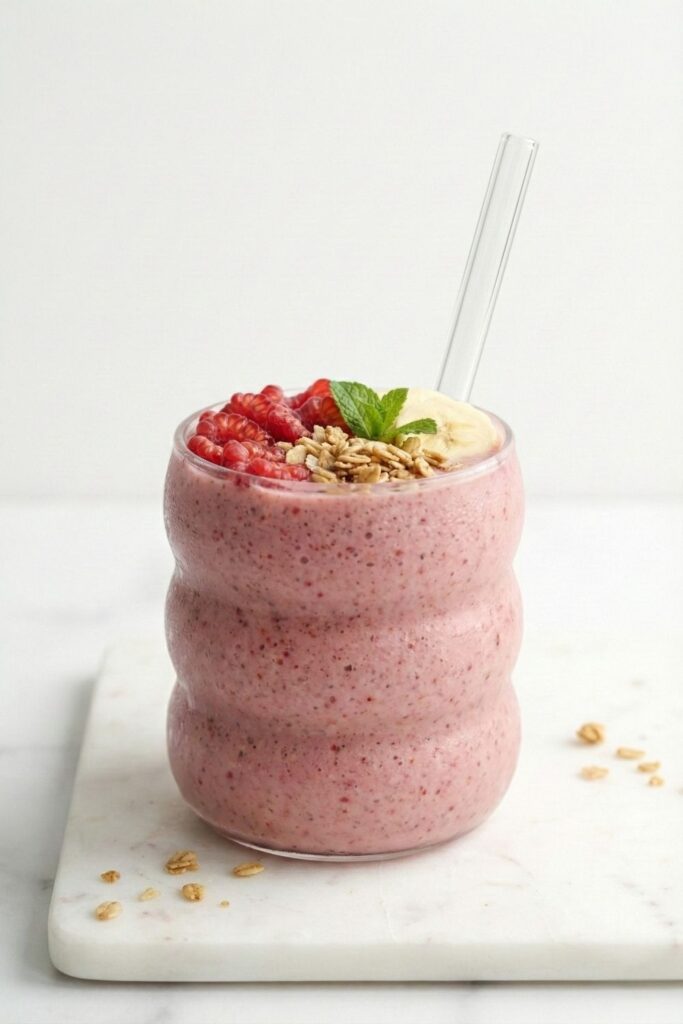
We use the Nordic Bubble Glass (Borosilicate).
The three-ring structure is not just aesthetic.It provides a tactile grip and insulates the cold mixture from your hand heat better than standard thin glass.
Step-by-Step: The Emulsification Protocol
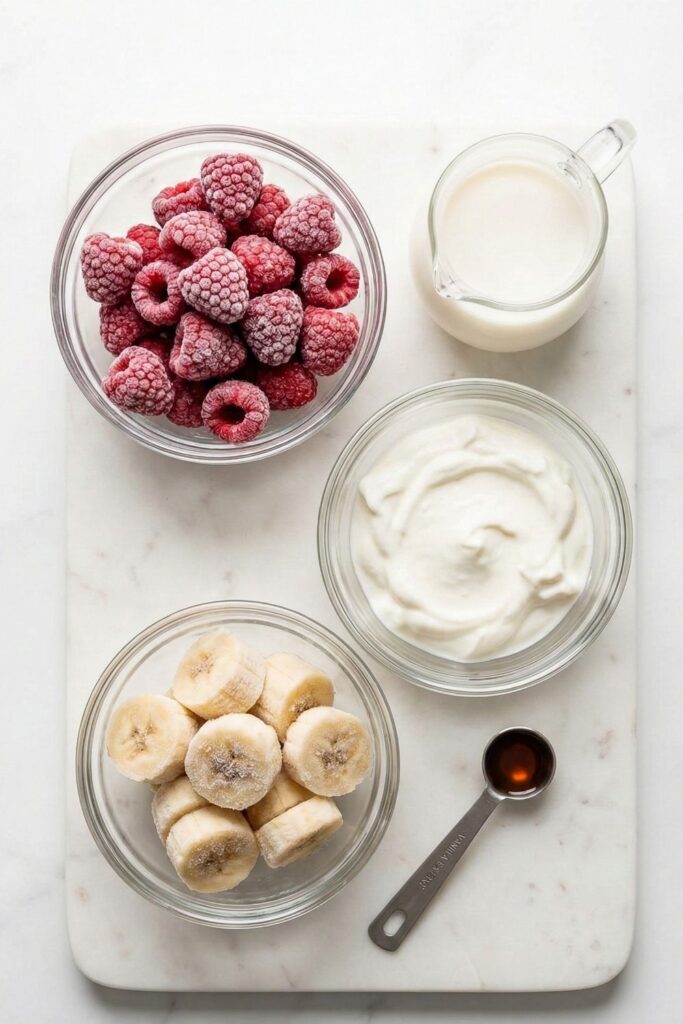
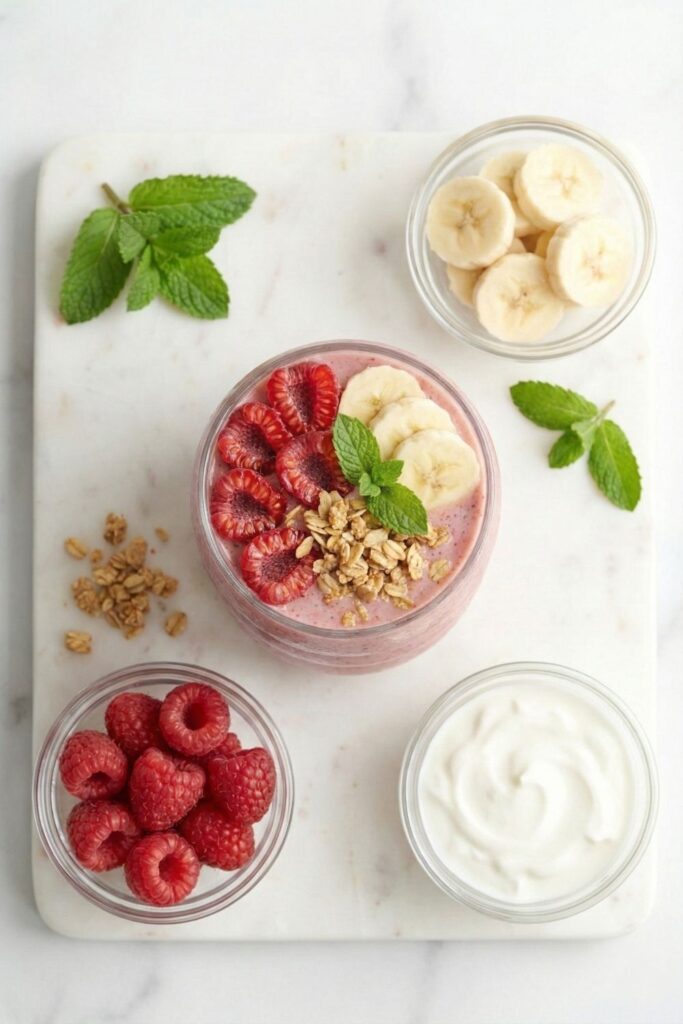
- Verify your raspberries are matte (frozen), not shiny (thawing).
- Place your 130g Frozen Raspberries and 1/2 Frozen Banana in clear vessels.
- Ensure your Greek Yogurt (190g) is cold (4°C).
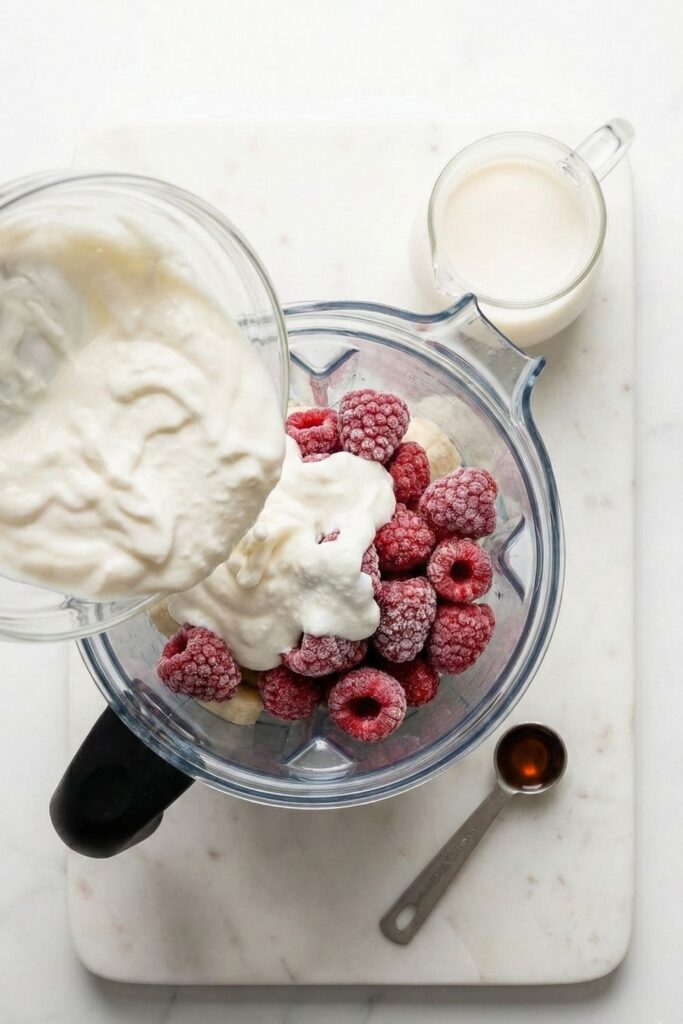
- Load the frozen solids into the blender canister first.
- pour in your Greek yogurt
- We want the weight of the fruit to press down on the blades initially.
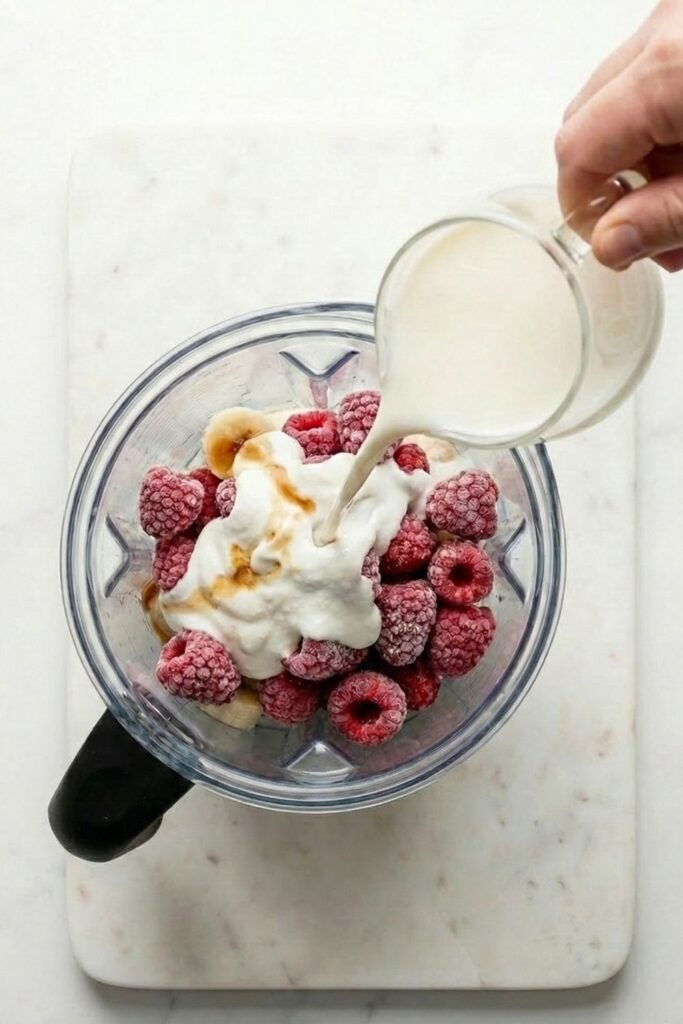
- Pour the 1/4 cup (60ml) Milk and 1/2 tsp Vanilla Extract.
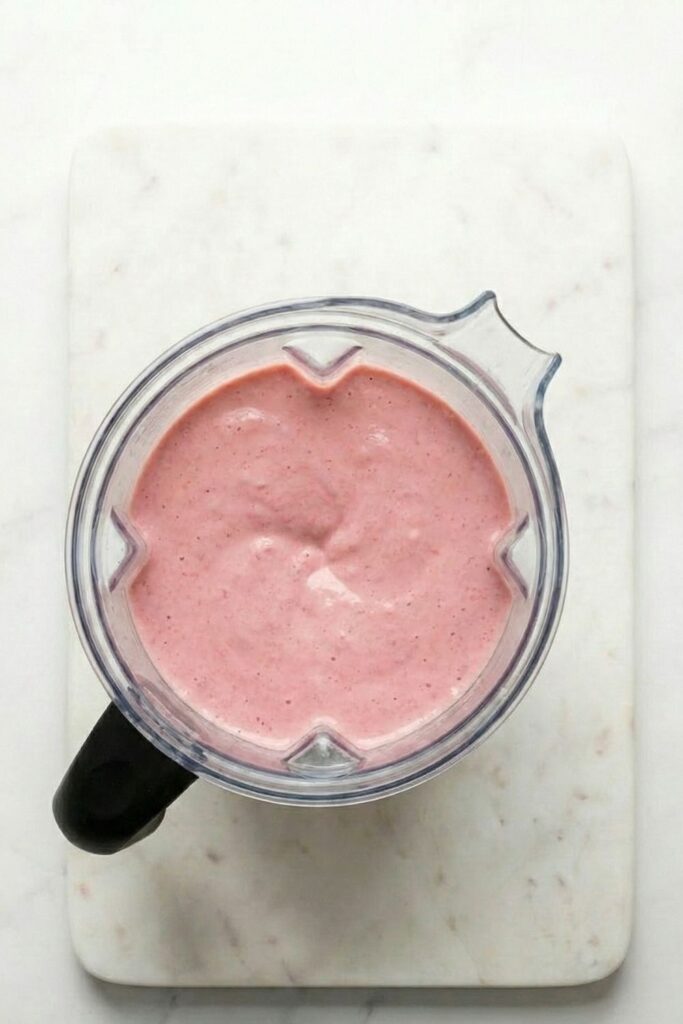
- Blend on HIGH. Use the tamper if available.
- Listen for the “growl.” High pitch means the blades are spinning freely (bad). Low pitch means the blades are engaging with the solids (good).
- 45 seconds maximum.
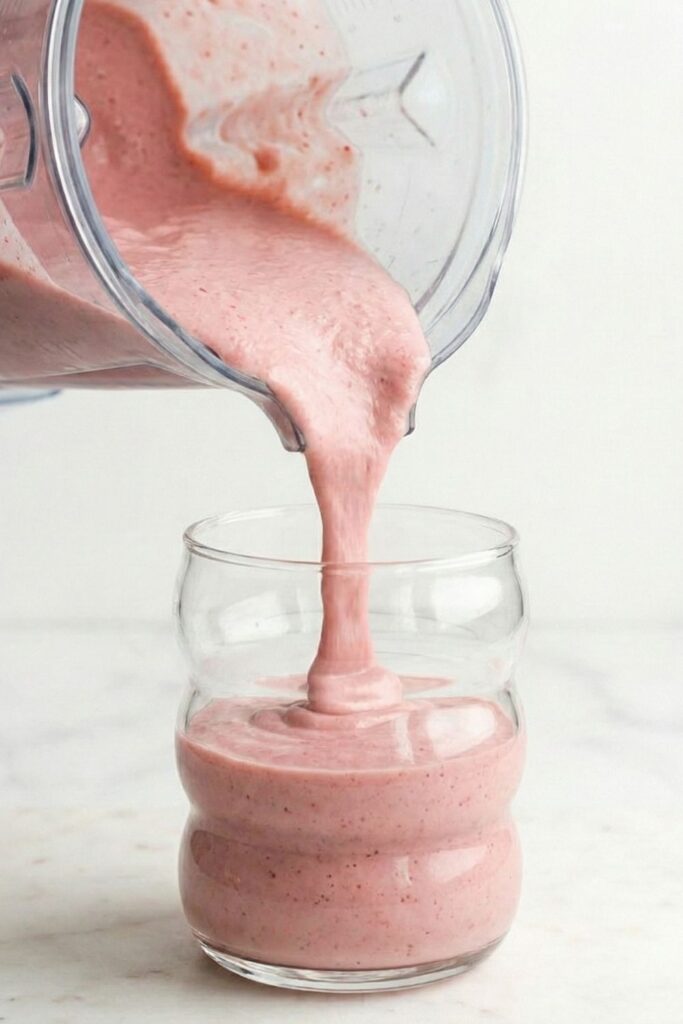
- Pour into your Nordic Bubble Glass.
- The smoothie must fold over itself like a ribbon. It should pile up above the rim.
- If it pours smooth like water, the fruit was not cold enough.
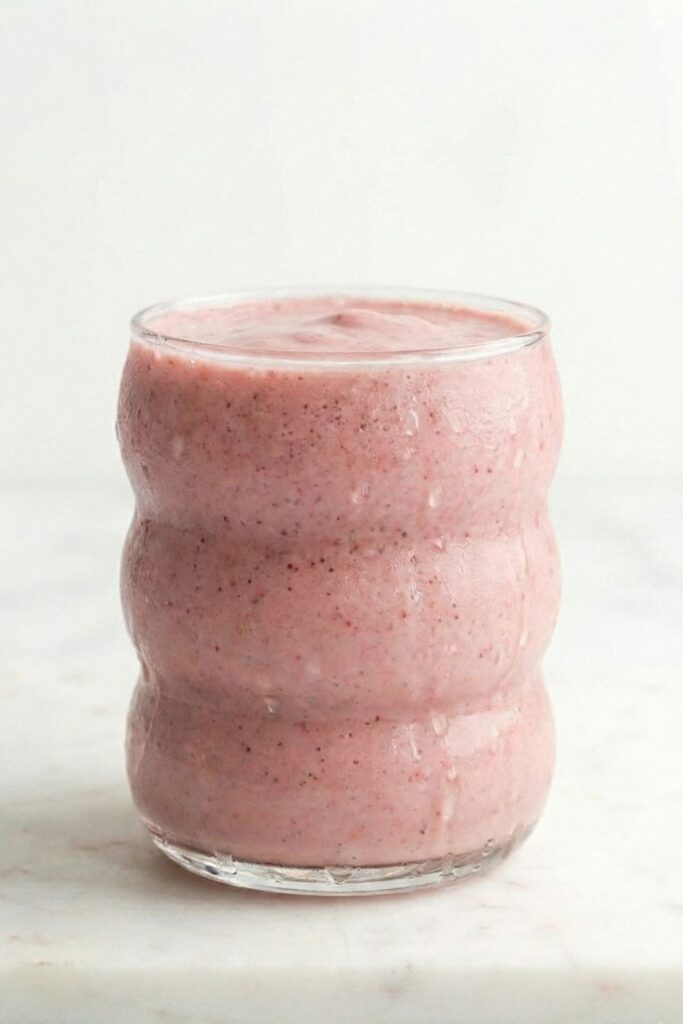
- Serve immediately.
Troubleshooting Guide: Failure Analysis
Even with a protocol, variables change. Here is how to correct errors.
Error 1: The “Air Pocket” (Cavitation)
- Symptom: The motor is running fast/loud, but the food isn’t moving.
- Cause: An air bubble has formed around the blades.
- Fix: Stop the motor. Remove the lid. Use a silicone spatula to push the air bubble out. Add 1 tablespoon of liquid only if absolutely necessary.
Error 2: The “Soup” (Low Viscosity)
- Symptom: The texture is runny.
- Cause: Over-blending (friction heat) or fruit was partially thawed.
- Fix: You cannot “refreeze” it successfully (it turns into an ice block). You must add more frozen fruit immediately and blend for 10 seconds.
Error 3: The “Chalky” Taste
- Symptom: A dry mouthfeel.
- Cause: Using a Greek yogurt with high added whey powder or low quality.
- Fix: Switch to a brand that uses “strained” milk only. Alternatively, increase the fat content (use 2% milk instead of almond milk) to lubricate the palate.
Error 4: Too Sour
- Symptom: Sharp acidity hitting the back of the jaw.
- Cause: The raspberries were under-ripe.
- Fix: Do not add sugar. Add 1/4 teaspoon of salt. Salt suppresses bitterness and enhances the natural sweetness of the banana.
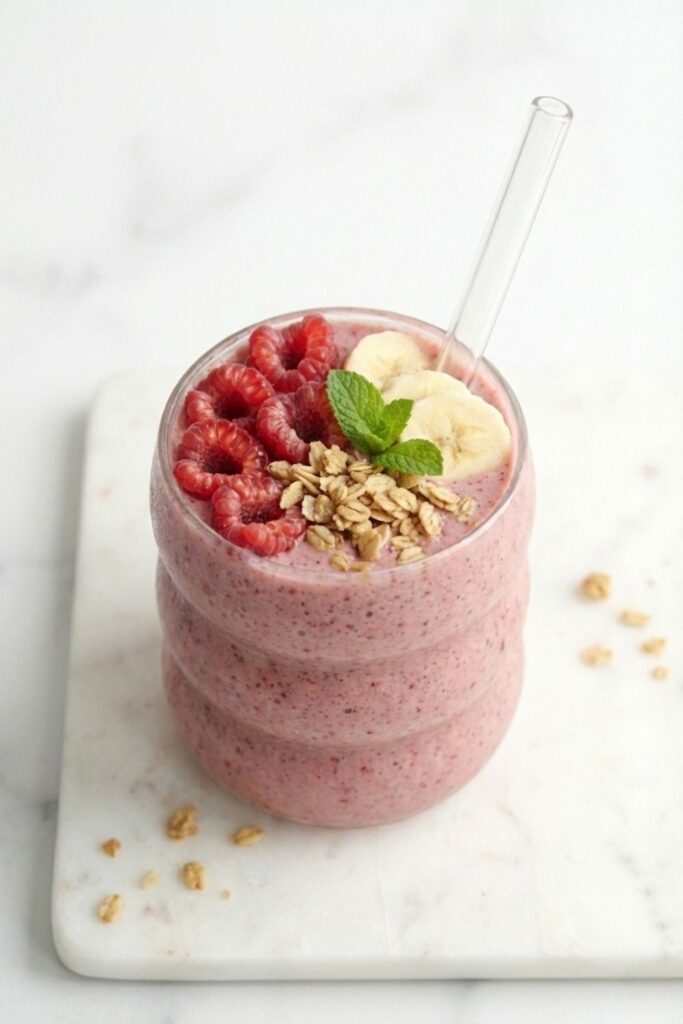
Serving & Storage: Thermal Decay
Serving Window
You have exactly 8 minutes before the texture degrades.
This is a fresh emulsion. It relies on suspended ice crystals.
Once they melt, the protein structure relaxes, and the drink separates.
Storage (Not Recommended)
If you must store it:
- Pour into a jar.
- Fill to the very top (remove air).
- Seal tight.
- Freeze.
Note: You will need to thaw it for 20 minutes before eating.
If loved this recipe and would love to try something high protein but no bake check out my High-Protein Strawberry Glaze Cheesecake Bars
Frequently Asked Questions (FAQ)
No. Ice shatters into inconsistent shards. Frozen cellular fruit creates a creamy matrix. Ice creates a slushy.
This is the average weight of 1 US Cup of frozen berries. It ensures the water-to-protein ratio remains correct for the “soft-serve” texture.
Yes, but check the protein label. Coconut yogurt has 0g protein. You must use a Soy or Pea protein-based yogurt to maintain the “High Protein” claim.
Yes. Casein protein is anti-catabolic. Taking it before bed provides a slow release of amino acids during sleep cycles, aiding recovery.
5-Ingredient Oxidative Defense Smoothie (25g Protein)

Ingredients
The Solid Base
- 1 cup Frozen Raspberries 130g – Must be frozen solid for texture.
- 1/2 large Frozen Banana sliced – Acts as the emulsifier.
The Protein Scaffold
- 3/4 cup High-Protein Greek Yogurt 190g – Use 0% or 2% fat, strained variety.
The Liquid Catalyst
- 1/4 cup Milk 60ml – Dairy or Unsweetened Soy for max protein.
- 1/2 tsp Vanilla Extract High quality pure extract.
Instructions
Step 1: Thermal Check (Mise-en-place)
- Inspect raspberries. They must have a “matte” finish (frozen). If shiny/wet, refreeze immediately or texture will fail.
Step 2: Solid Load
- Place the 130g frozen raspberries and 1/2 frozen banana into the blender canister first. Technical Note: Placing solids at the bottom ensures they engage the blades immediately.
Step 3: Protein Addition
- Add the 190g Greek Yogurt on top of the fruit.
Step 4: Liquid Catalyst
- Pour the 1/4 cup milk and 1/2 tsp vanilla specifically over the center of the mixture. This lubricates the blades to prevent cavitation.
Step 5: High-Shear Emulsion
- Blend on LOW for 10 seconds to break large chunks. Increase to HIGH for 30–45 seconds. Visual Cue: Look for a consistent “Vortex” and a pale pink color shift. If blades spin freely (high pitch noise), stop and tamp down.
Step 6: The Ribbon Pour
- Pour immediately into a Nordic Bubble Glass. The texture should fold over itself like soft-serve. Serve within 8 minutes for peak thermal stability.
Notes
- Anti-Cavitation Protocol: If your blender blades spin but the food doesn’t move, you have an air pocket. Stop the motor, remove the lid, and use a silicone spatula to press the frozen fruit down toward the blades. Do not add more liquid.
- Protein Science: This recipe relies on Casein Protein (found in Greek Yogurt). Casein is slow-digesting, forming a gel in the stomach that provides satiety for 5-7 hours, unlike Whey which absorbs in 30 minutes.
- Texture Warning: Do not use ice. Ice crystals shatter into inconsistent shards and water down the flavor profile. The “creamy” mouthfeel comes strictly from the pectin in the fruit and the density of the yogurt.
- Sweetness Adjustment: If your raspberries are early-season (tart), add a pinch of salt rather than sugar. Salt suppresses bitterness and amplifies the banana’s natural fructose.
Equipment Tab
- High-Speed Blender (Minimum 1000 Watt)
- Digital Food Scale (Gram Accuracy)
- Nordic Bubble Glass (Borosilicate)
- Silicone Spatula (For scraping sides)
Nutrition Tab
- Serving Size: 1 Smoothie
- Calories: 265 kcal
- Carbohydrates: 38g
- Protein: 26g
- Fat: 2g
- Saturated Fat: 0.5g
- Fiber: 11g
- Sugar: 22g (Natural Fructose)
- Sodium: 65mg
- Calcium: 250mg
- Iron: 1.2mg