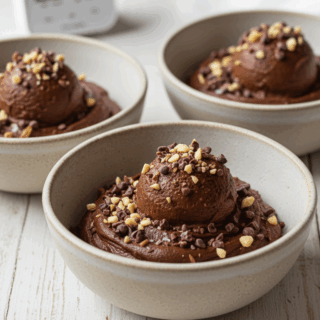
Velvety Smooth Low-Sugar Date-Sweetened Dark Chocolate Mousse

A highly emulsified, dairy-free, and refined sugar-free dark chocolate mousse utilizing the natural hydrocolloids of Medjool dates and the fat structure of coconut cream for a stable, aerated set.
Ingredients
- 1 cup Pitted Medjool Dates packed, approximately 10-12 dates
- 1 cup Boiling Water for hydration
- 1 can 13.5 oz Full-Fat Coconut Milk (refrigerated overnight; yield will be ~1/2 cup of solid coconut cream)
- 4 oz High-Quality Dark Chocolate 70-85% cocoa solids, chopped
- ¼ cup Unsweetened Cocoa Powder Dutch-processed for lower acidity and deeper color
- 1 tsp Vanilla Extract
- ⅛ tsp Sea Salt
Instructions
- Date Hydration. Submerge the packed Medjool dates in boiling water. Soak for 15 minutes to break down the fibrous tissues. The physical texture must shift from sticky and firm to highly pliable and easily mashable. Drain completely. Crucial: Discard the soaking liquid to prevent a watery final emulsion.
- Lipid Melting. Using a double boiler, gently melt the 4 oz of dark chocolate. Remove from heat and allow it to cool slightly to around 90°F–98°F (body temperature). Chemical Cue: If the chocolate is too hot, it will break the emulsion in the next step; if too cold, the cocoa butter will seize prematurely, causing a grainy texture.
- Base Assembly. Transfer the fully softened dates into the high-speed blender. Open the refrigerated can of coconut milk and scoop out only the solidified fat layer (coconut cream) at the top. Leave the aqueous liquid at the bottom of the can. Add the coconut cream, cocoa powder, vanilla extract, and sea salt to the blender.
- High-Shear Emulsification. Engage the blender on high speed. The mechanical friction and high-shear action will pulverize the dates and emulsify the fats with the cocoa solids. Sensory Cue: Look for a glossy, uniform, thick paste with zero visual or tactile graininess.
- Final Lipid Incorporation. Pour the temperature-controlled melted dark chocolate into the blender. Pulse minimally—just until the chocolate is uniformly distributed. Troubleshooting: Do not over-blend at this stage. Excess mechanical heat will cause fat separation and a dense, greasy mouthfeel.
- Thermal Chilling & Structural Set. Divide the liquid mixture into 4 serving ramekins or airtight containers. Refrigerate for a minimum of 4 hours. The Science: During this thermal cooling phase, the saturated fats in the coconut cream and cocoa butter will crystallize, transitioning the matrix from a thick liquid to a firm, scoopable, aerated mousse structure.
Notes
- Storage Protocol: Maintain airtight conditions in the refrigerator to prevent moisture loss and odor absorption. The mousse holds structural integrity for 4-5 days.
- Freezing: Can be frozen for up to 1 month. Thaw in the refrigerator for several hours to safely reverse the crystallization without breaking the emulsion.
- Sensory Enhancements (Optional Toppings): Flaky sea salt, cacao nibs, chopped nuts, or fresh raspberries for a contrasting tactile crunch and acidic flavor interrupt.