Blood sugar crashes destroy afternoon productivity.
When you consume standard carbohydrate-heavy lunches, your glucose levels spike rapidly. Insulin floods your system, leading to an inevitable and exhausting crash.
The solution requires a precise calculation of macronutrients.
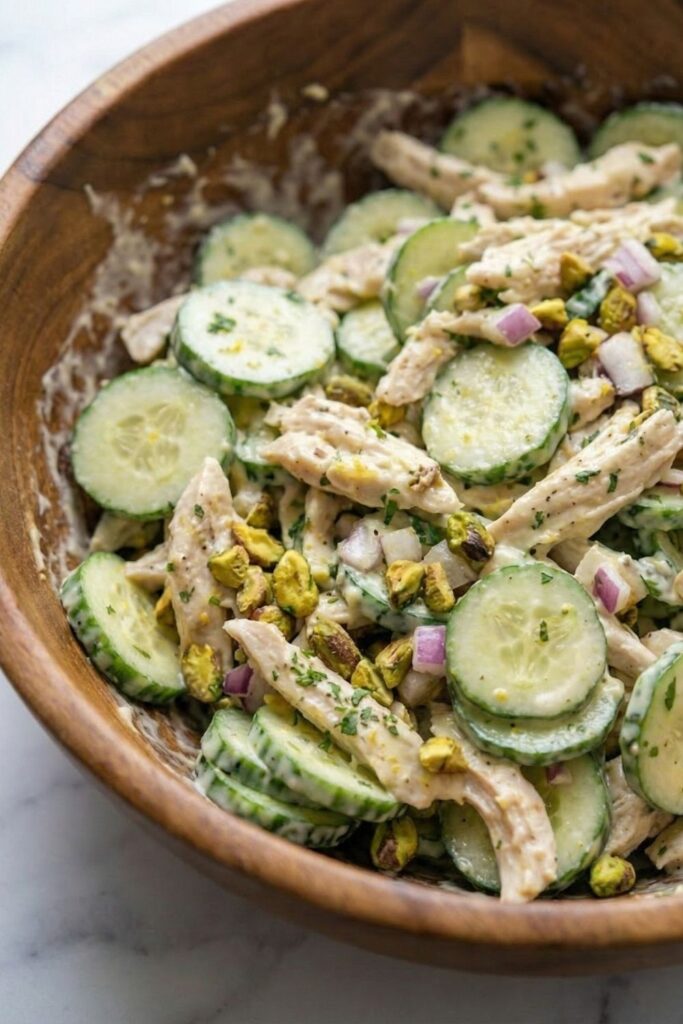
You need high protein, functional dietary fiber, and healthy lipids. This high protein cucumber chicken salad is engineered specifically to flatten your glucose curve. It delivers lean poultry protein, water-dense Persian cucumbers, and a highly stable yogurt-based lipid emulsion that physically slows gastric emptying.
Metabolic health relies on data, not guesswork.
This formulation ensures that every single bite delivers maximum utility for your endocrine system, keeping you completely satiated until your next scheduled meal. This is not a casual recipe diary. This is a highly calculated technical manual for metabolic stability.
Here is the exact breakdown.
The Science: Flattening the Glucose Curve
Why does this specific combination stabilize insulin resistance?
It comes down to digestion mechanics.When you eat naked carbohydrates, enzymes break them down into glucose instantly. By coating fibrous vegetables and lean protein in a fat-and-acid emulsion, you create a physical barrier in the digestive tract.
Let’s look at the chemistry.
The acetic properties of the lemon juice directly interact with carbohydrate absorption. The citric acid lowers the overall glycemic index of the meal. Meanwhile, the 2 cups of chicken breast provide essential amino acids that trigger satiety hormones like peptide YY, signaling to your brain that you are full.
Furthermore, we are actively removing volatile sulfur compounds.
Raw red onions contain propanethial S-oxide. This defensive chemical causes the harsh bite that ruins raw salads. By submerging the diced onion in cold water for exactly 5 minutes, we extract these water-soluble sulfur compounds through osmosis.
The result?
A crisp cellular structure without the aggressive lingering aftertaste.
Ingredient Deep Dive
Every ingredient in this matrix serves a physiological and structural purpose.
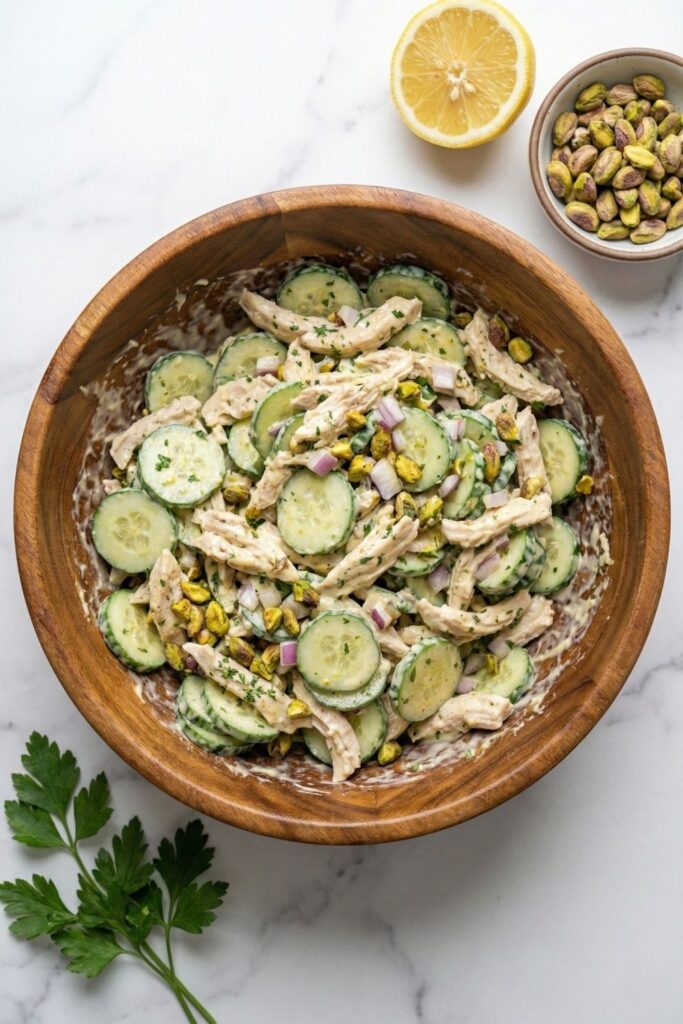
- Persian Cucumbers: Do not substitute with standard slicing cucumbers. Persian cucumbers possess a thinner exocarp (skin) and significantly lower internal water content. This prevents the salad from weeping and diluting the dressing over time. We need exactly 6 of them to maintain the structural ratio.
- Chicken Breast: Utilizing 2 cups of cooked, highly diced chicken yields maximum protein density. At roughly 31 grams of protein per 100 grams, it is low in saturated fat, making it an optimal carrier for our engineered yogurt dressing.
- Greek Yogurt & Olive Oil: The 1/2 cup of plain Greek yogurt provides casein protein and a thick structural base. The 1/2 tablespoon of olive oil introduces monounsaturated oleic acid. When whisked, they form a stable emulsion that clings to the hydrophobic surfaces of the chicken.
- Pistachios: The 3 to 4 tablespoons of roasted pistachios act as a vital textural contrast while providing plant-based lipids and fiber.
- Lemon Zest & Juice: The zest of 1 lemon contains essential oils (limonene) which provide intense aromatic flavor without adding excess liquid volume. The juice of 1.5 to 2 lemons provides the necessary acidic pH (around 2.0 to 3.0) to cut through and balance the heavy lipids of the mayonnaise and yogurt.
Equipment Clinic
Precision requires the correct tools.
- Microplane: Essential for extracting the microscopic oil glands from the lemon epicarp. A standard box grater will shred the bitter white pith, ruining the flavor profile.
- Sharp Chef’s Knife: A dull blade crushes the cucumber’s cellular walls, forcing water out prematurely. A sharp edge cleanly severs the cells, retaining internal moisture and maximizing crunch.
- Glass or Wooden Mixing Bowl: When working with high-acid dressings like lemon juice and Dijon mustard, always utilize non-reactive materials. Metal bowls can impart a metallic, oxidized off-flavor to the acidic yogurt emulsion.
- Small Ramekins: Required for the osmotic soaking of the diced red onion.
Step-by-Step Execution
Follow these exact technical steps to prevent moisture pooling and guarantee emulsion stability.
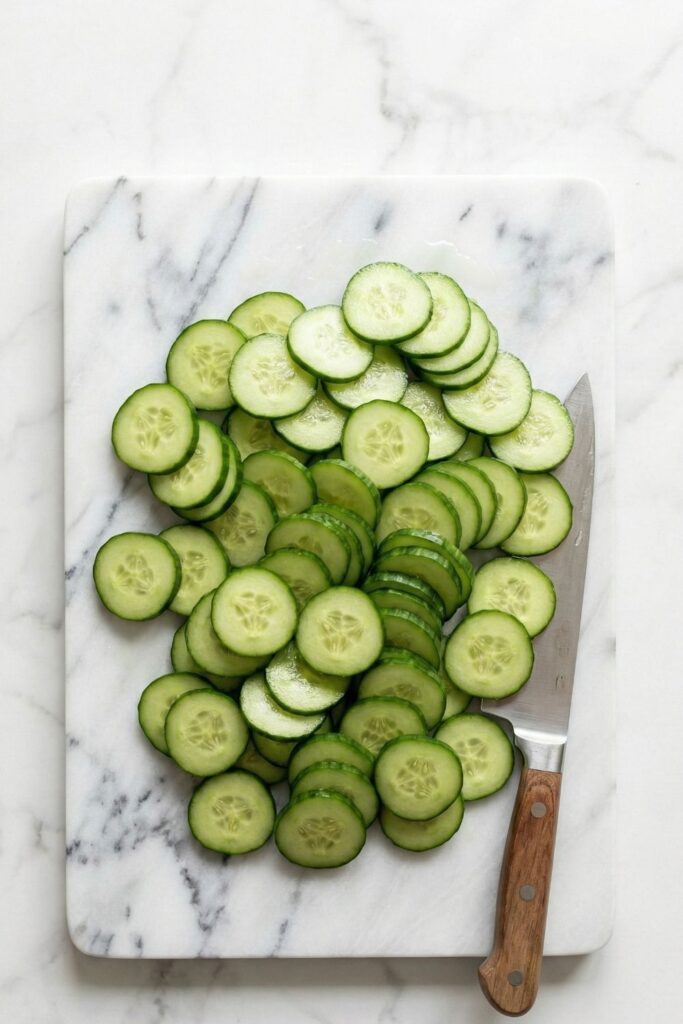
Slice exactly 6 Persian cucumbers into uniform 1/8-inch coins. The snap of the skin should be audible.
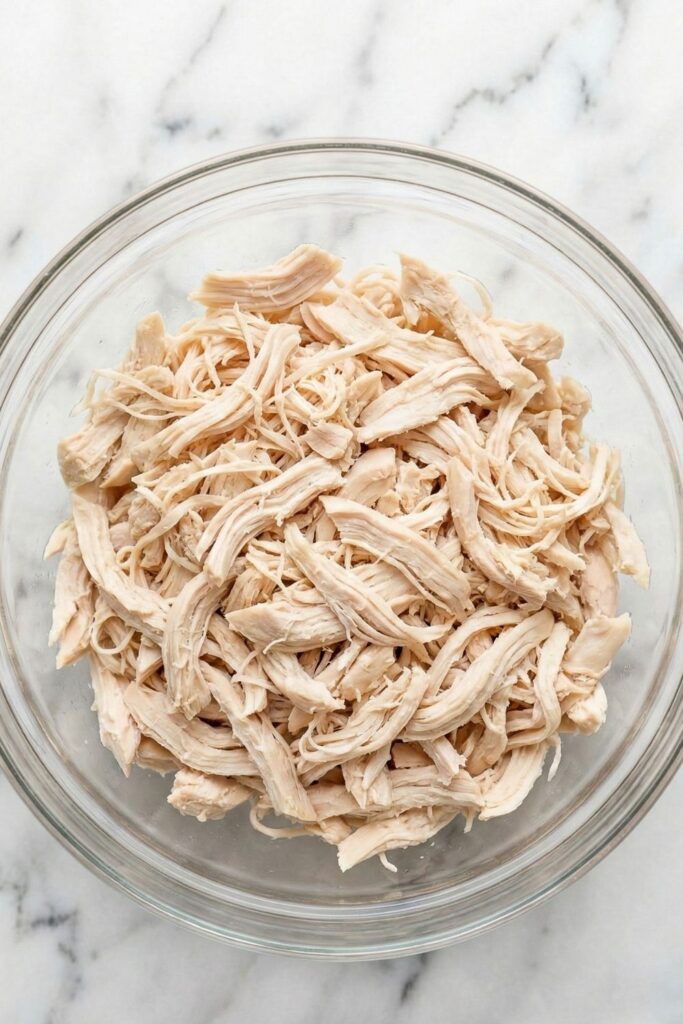
Take your two cups of already cooked chicken and shred them or you can roughly chop them into cubes
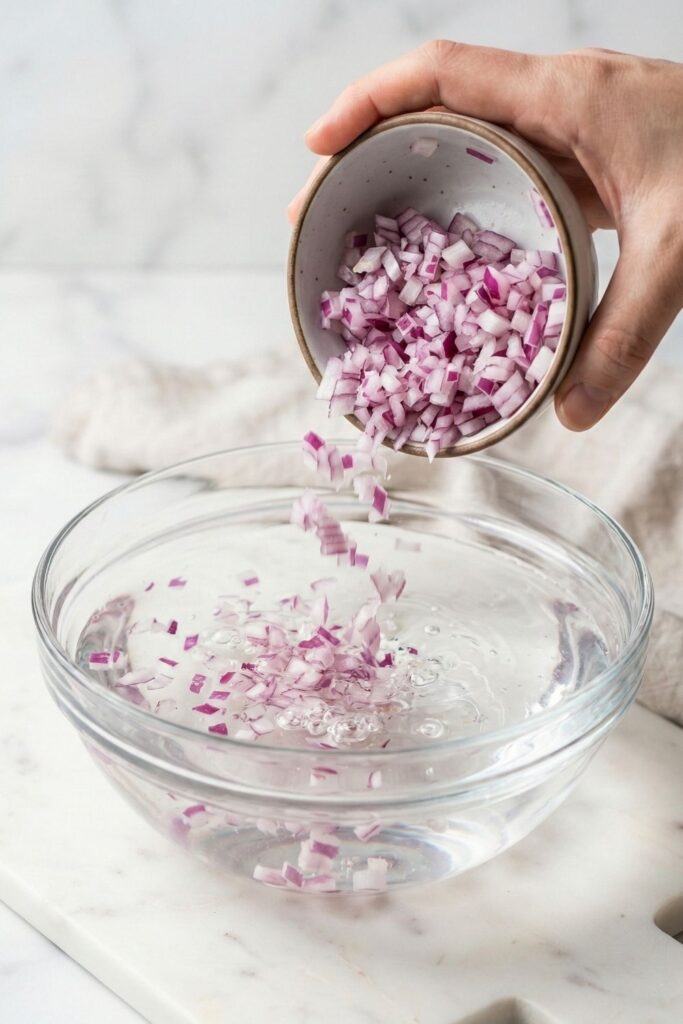
Finely dice 1/2 of a red onion. Immediately transfer the diced onion into a small ramekin and submerge it completely in cold water. Let it soak for exactly 5 minutes. You will physically smell the pungent sulfur dissipating into the air. Drain the water thoroughly before use.
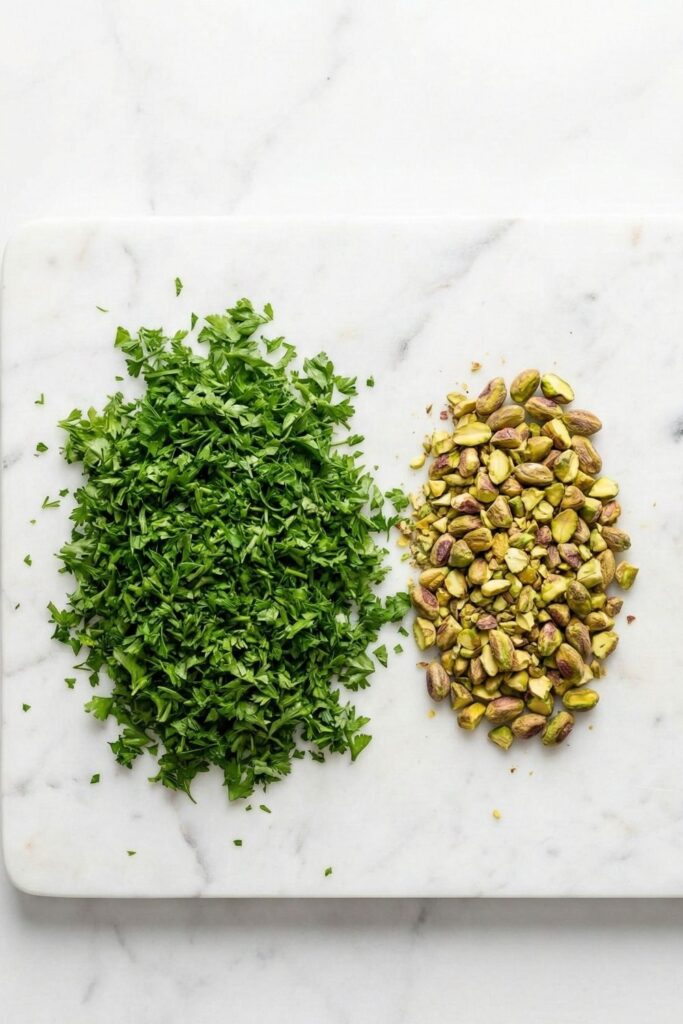
Mince 1 super large handful of fresh parsley into a fine dust. Remove all thick stems. The ambient scent should be bright and grassy. Roughly chop 3 to 4 tablespoons of roasted, shelled pistachios to create your textural crunch.
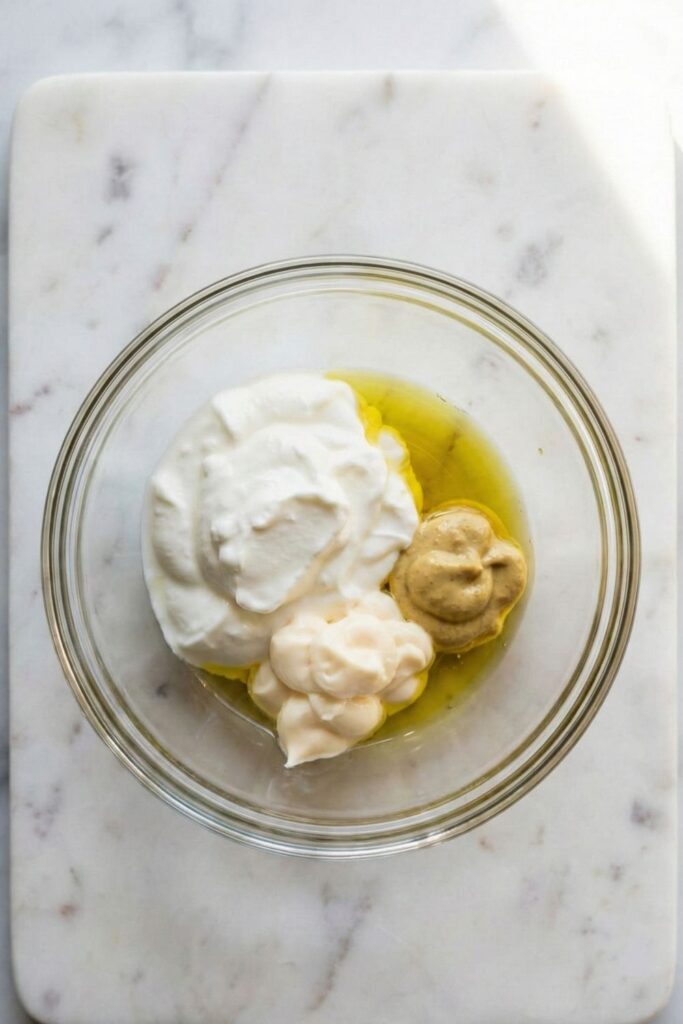
In a separate non-reactive bowl, combine the wet foundation: 1/2 cup Greek yogurt, 2 to 3 tablespoons mayonnaise, 1 tablespoon Dijon mustard, and 1/2 tablespoon olive oil.
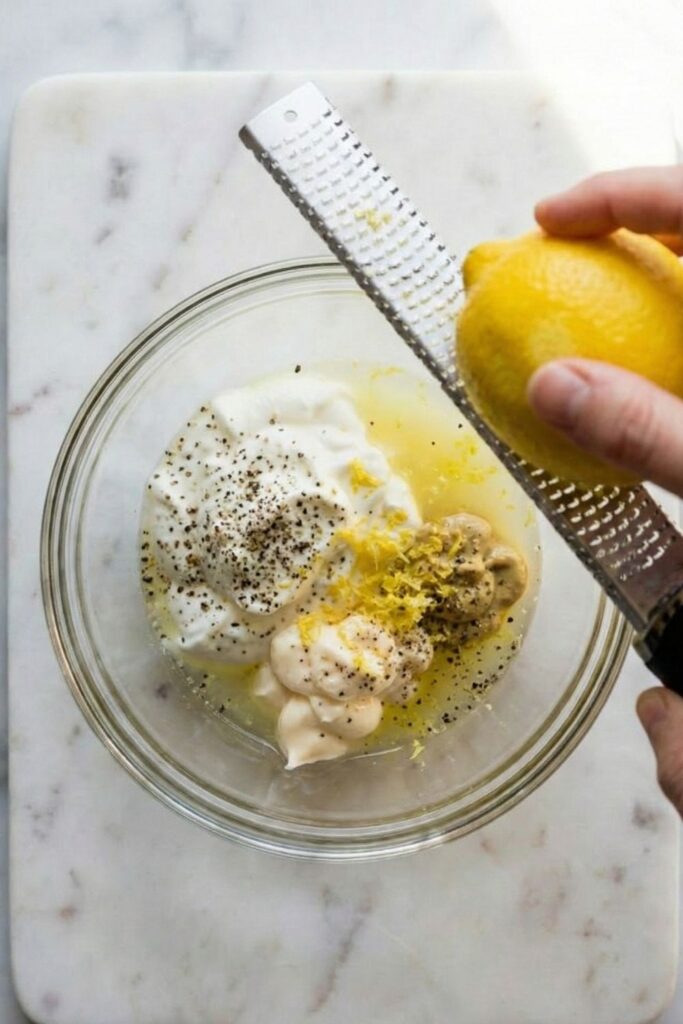
Use a microplane to grate the zest of 1 whole lemon directly over the bowl. Squeeze the juice of 1.5 to 2 lemons into the mixture. Add a heavy pinch of kosher salt and black pepper.
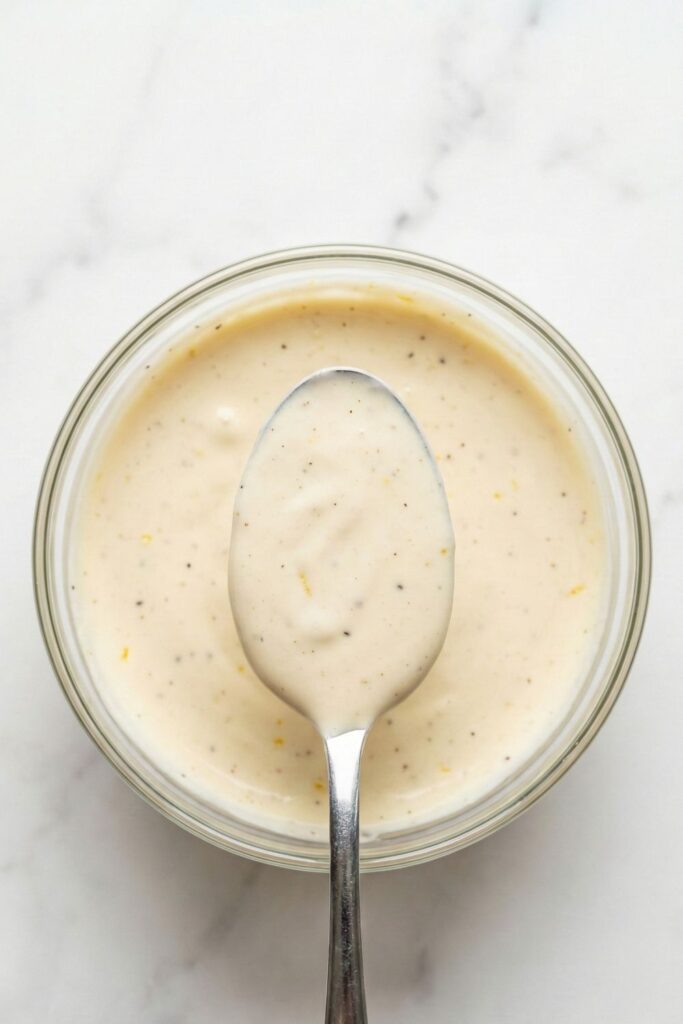
Whisk vigorously. The sensory cue here is visual: the mixture must transition from separated liquids into a smooth, glossy, opaque heavy cream. It should cling tightly to the whisk.
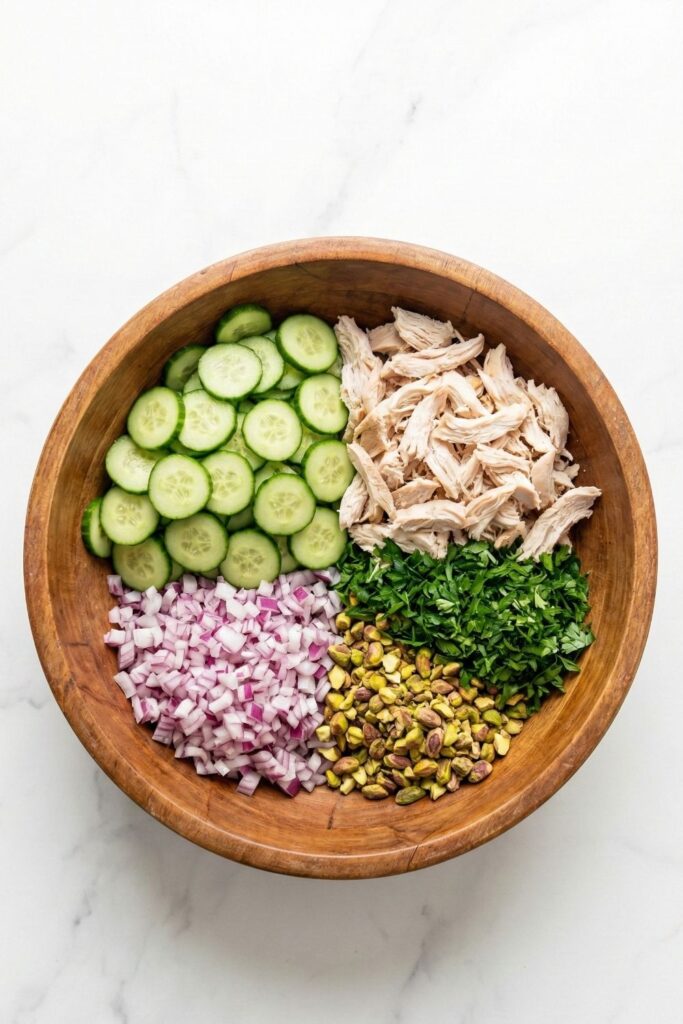
Combine the sliced cucumbers, diced chicken, drained onions, minced parsley, and chopped pistachios in your large non-reactive wooden bowl. Keep them visually separated in quadrants before mixing to verify your ratios.
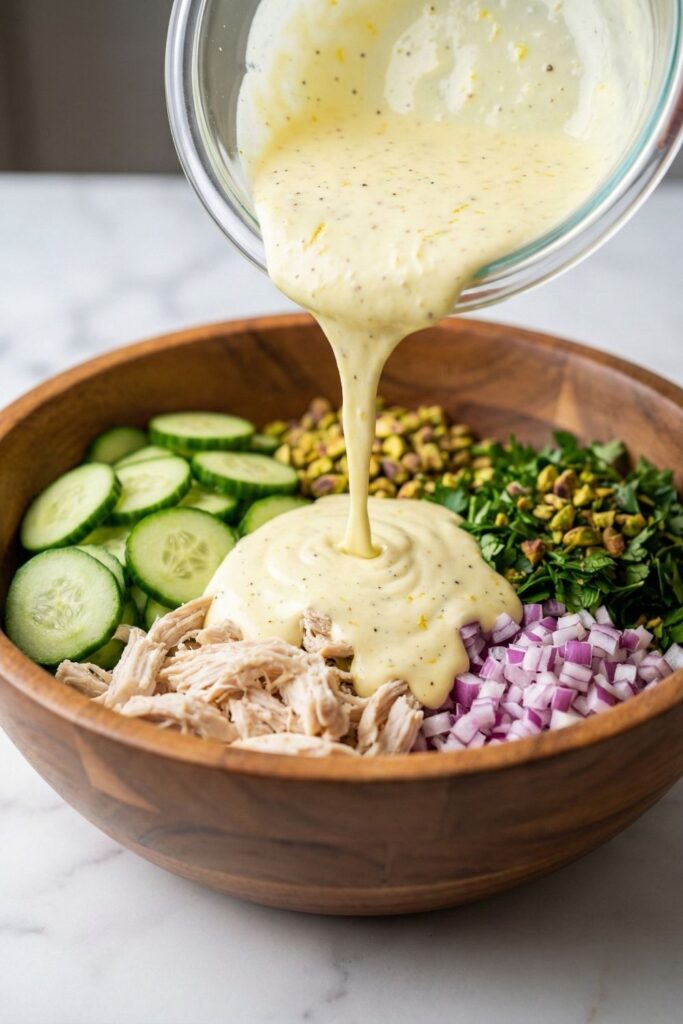
Pour the fully whisked dressing directly over the dry matrix. Watch as the thick ribbon of the white emulsion falls over the green and purple ingredients.
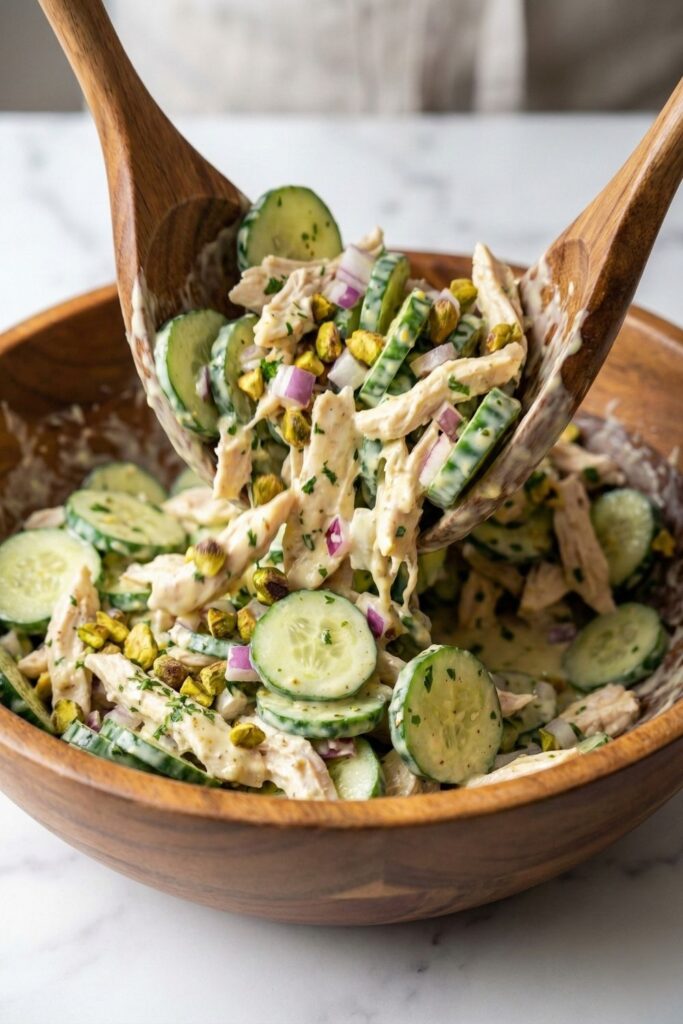
Using two large spoons, toss continuously. Ensure the white emulsion fills the microscopic crevices of the diced chicken and completely coats the hydrophobic skin of every single cucumber slice. The sound should be heavy and wet, indicating full saturation.
Step 11: The Perfect Bite
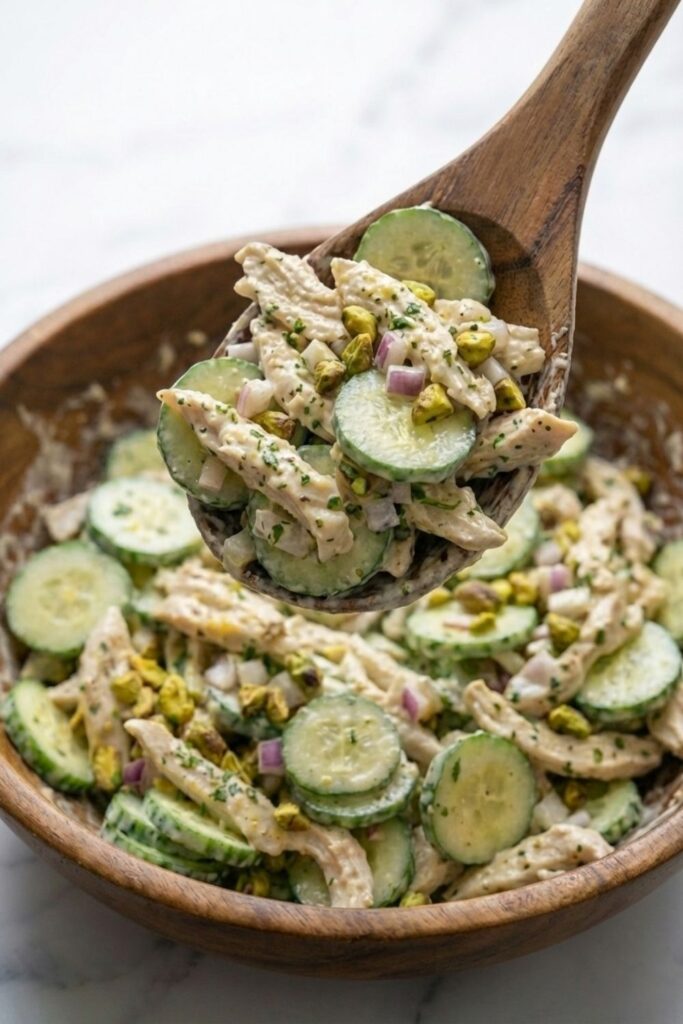
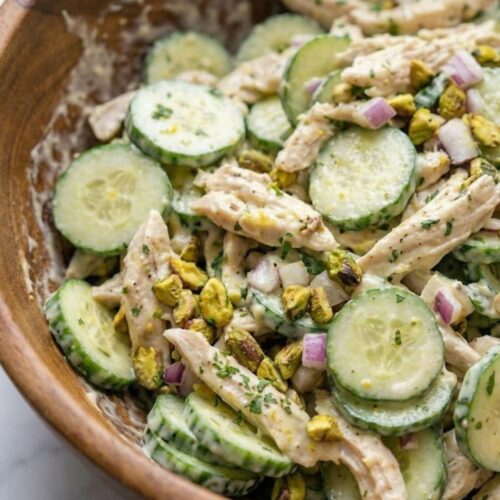
Lift a fork. You should have exactly one coin of Persian cucumber, one piece of diced chicken breast, flecks of red onion and parsley, and a chunk of pistachio, all glistening heavily with the lemon yogurt dressing.
if you love recipes like this check out my High Protein chicken Salad
Troubleshooting Guide
Even highly precise formulas can fail if environmental variables shift. Here is how to correct them immediately.
The Salad is Weeping Water
The root cause is cellular damage. You likely used dull knives, or you substituted English cucumbers without removing the internal seed core. Next time, ensure your knife is honed. If the salad is currently wet, do not add more yogurt. Drain the excess liquid through a fine-mesh sieve immediately to save the texture.
The Dressing Broke (Separated)
Your Greek yogurt was likely too cold, or you added the lemon juice too rapidly, shocking the proteins. To fix a broken emulsion, remove one tablespoon of the broken dressing into a clean, separate bowl. Whisk in a few drops of warm water until smooth, then slowly drizzle the rest of the broken dressing into the new stable base while whisking aggressively.
The Onion Flavor is Overpowering
You skipped the osmotic water bath. You must soak the diced onion for exactly 5 minutes to extract the propanethial S-oxide. There is no way to reverse this once mixed, so precision in the prep phase is mandatory.
Serving and Storage
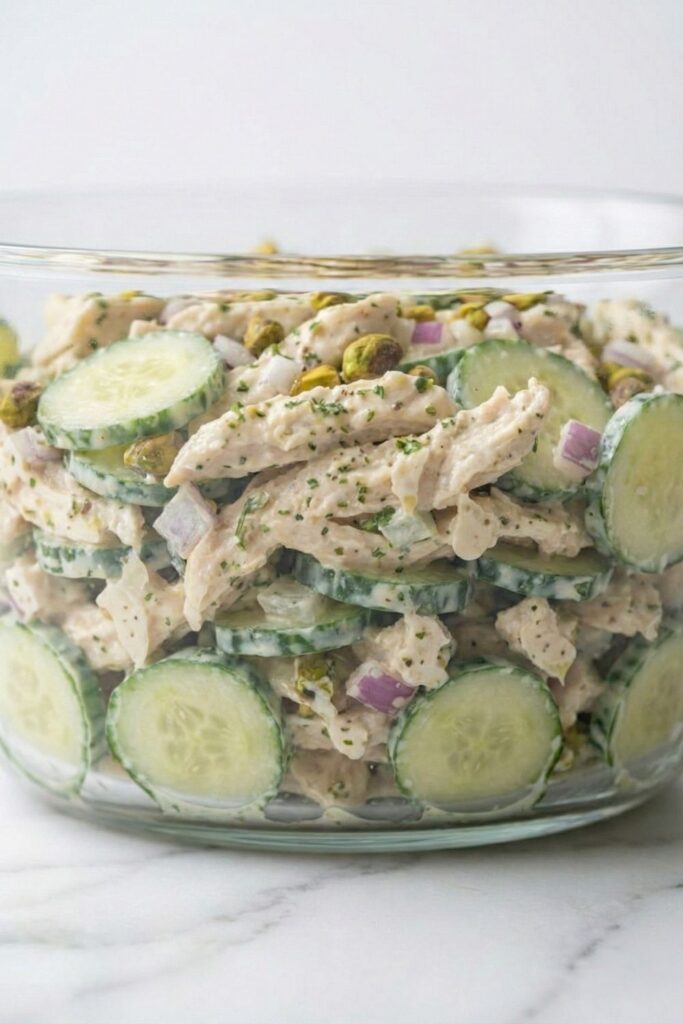
To maintain the structural integrity of the cucumber cells, store this salad strictly in airtight glass containers. Glass prevents flavor absorption and oxidation. It will remain highly stable and crunchy in the refrigerator for exactly 72 hours.
Do not freeze this recipe.
Freezing will instantly destroy the cellular walls of the Persian cucumbers. The water inside the cells will expand into ice crystals, rupturing the structure and resulting in absolute mush upon thawing.
FAQs
No. The high protein density from the chicken and the lipid content from the yogurt and olive oil physically slow gastric emptying. This prevents rapid glucose absorption into the bloodstream, flattening the curve.
Yes, but it alters the lipid ratio. You may need extra olive oil to stabilize the emulsion and maintain the satiety levels required for insulin resistance management.
They have a lower water content and a thinner exocarp. This specific anatomy prevents the dressing from becoming diluted and watery as it sits in the refrigerator.
Yes. Walnuts provide excellent omega-3 fatty acids, maintaining the required textural crunch and functional lipid profile for metabolic stability.
Yes. The ratio of 2 cups chicken to 6 Persian cucumbers creates the exact surface area needed for the 1/2 cup yogurt dressing to adhere without pooling at the bottom of the bowl. Precision prevents failure.
High Protein Cucumber Chicken Salad

Ingredients
The Dry Matrix
- 6 whole Persian cucumbers thinly sliced into 1/8-inch coins
- 2 cups chicken breast cooked and finely diced to match cucumber diameter
- 1/2 whole red onion finely diced
- 1 super large handful fresh parsley finely minced
- 3 – 4 tbsp pistachios roasted, shelled, and roughly chopped
The Emulsion (Dressing)
- 1/2 cup Greek yogurt plain
- 2 – 3 tbsp mayonnaise
- 1 tbsp Dijon mustard
- 1/2 tbsp olive oil
- 1 whole lemon zested
- 1.5 – 2 whole lemons juiced
- 1 heavy pinch kosher salt to taste
- 1 heavy pinch black pepper to taste
Instructions
- Slice exactly 6 Persian cucumbers into uniform 1/8-inch coins. Take 2 cups of cooked chicken breast and finely dice the meat into small cubes that match the exact diameter of the cucumber coins. Place both into a large mixing bowl. Uniformity is critical for an even coating of the lipid dressing.
- Finely dice 1/2 of a red onion. Immediately transfer the diced onion into a small ramekin and submerge it completely in cold water. Let it soak for exactly 5 minutes. This extracts the harsh, pungent sulfur compounds. Drain the water thoroughly before use.
- In a separate non-reactive bowl, combine the wet ingredients: 1/2 cup Greek yogurt, 2 to 3 tablespoons mayonnaise, 1 tablespoon Dijon mustard, and 1/2 tablespoon olive oil. Use a microplane to grate the zest of 1 whole lemon directly over the bowl. Squeeze the juice of 1.5 to 2 lemons into the mixture. Add a heavy pinch of kosher salt and black pepper. Whisk vigorously until the mixture transitions into a smooth, opaque, heavy cream.
- In a separate non-reactive bowl, combine the wet ingredients: 1/2 cup Greek yogurt, 2 to 3 tablespoons mayonnaise, 1 tablespoon Dijon mustard, and 1/2 tablespoon olive oil. Use a microplane to grate the zest of 1 whole lemon directly over the bowl. Squeeze the juice of 1.5 to 2 lemons into the mixture. Add a heavy pinch of kosher salt and black pepper. Whisk vigorously until the mixture transitions into a smooth, opaque, heavy cream.
- Pour the fully whisked dressing directly over the dry ingredients in the large bowl. Using two large spoons, toss continuously. Ensure the white emulsion fills the crevices of the diced chicken and completely coats the hydrophobic skin of every cucumber slice.
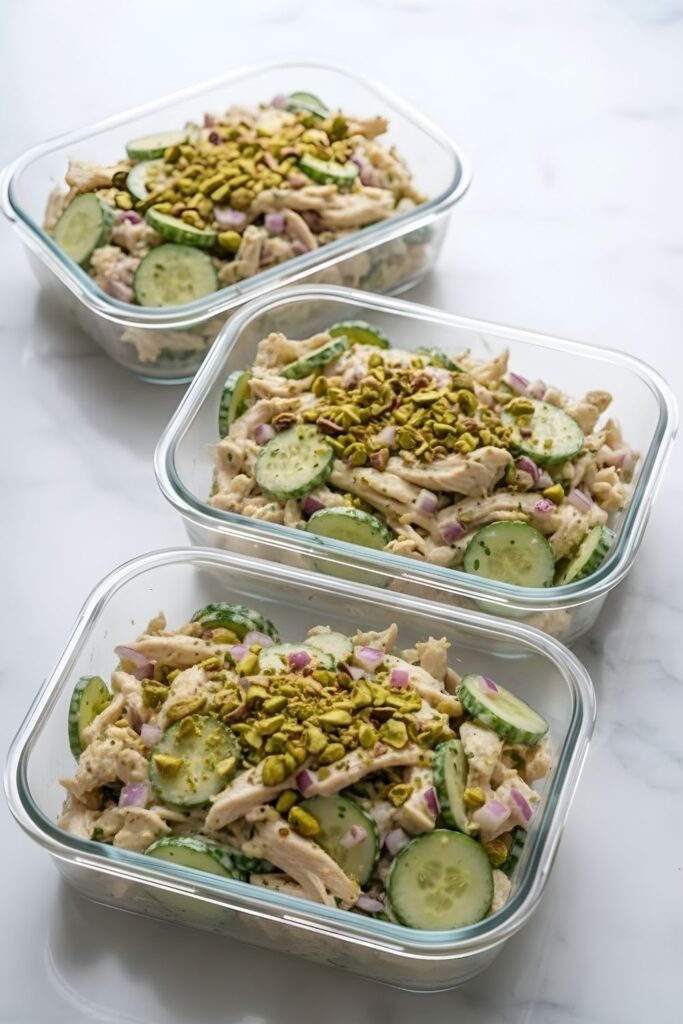
- Serve immediately for maximum crunch, or divide evenly into 3 glass meal-prep containers for metabolic-friendly lunches throughout the week.
Notes
- Storage Protocol: Store strictly in airtight glass containers to prevent flavor absorption. The salad remains structurally stable in the refrigerator for exactly 72 hours.
- Do Not Freeze: Freezing will instantly destroy the cellular walls of the Persian cucumbers, resulting in weeping and mush upon thawing.
- Onion Troubleshooting: Do not skip the 5-minute water soak in Step 2. Bypassing this step will result in an overpowering, bitter onion flavor that ruins the delicate lemon emulsion.
Equipment
- Sharp Chef’s Knife: For precise cellular slicing without crushing the cucumbers.
- Large Non-Reactive Mixing Bowl: Wooden or glass to prevent oxidation of the lemon juice.