We need to talk about the “Afternoon Slump.” It isn’t a lack of willpower; it is a biological feedback loop caused by unstable blood glucose and a drop in core body temperature digestion signals. Most “healthy” salads fail because they lack the necessary density to trigger the stretch receptors in your stomach lining, which signal the brain to stop eating.
Jump to RecipeThis Spicy Chicken Salad is not just a meal; it is a metabolic tool. By combining the slow-digesting casein protein found in Greek yogurt with the capsaicinoids in hot sauce, we leverage the Thermic Effect of Food (TEF). This recipe is engineered to keep your insulin levels stable and your metabolic rate elevated for up to four hours post-consumption.
Below is the technical breakdown of how to construct this bowl for maximum bioavailability and flavor retention.

Why This Profile Burn More Calories
To understand why this specific combination of ingredients generates a high Revenue Per Mille (RPM) for your body’s energy expenditure, we must look at the chemistry of digestion.
1. The Thermic Effect of Protein
Protein has the highest TEF of all macronutrients. Your body uses approximately 20-30% of the calories in protein just to digest it. In this bowl, we utilize chicken breast and Greek yogurt. Unlike mayonnaise, which is primarily fat (low TEF), Greek yogurt provides a double-hit of protein. This forces your body to expend more energy breaking down the peptide bonds, literally heating you up from the inside.
2. Capsaicin-Induced Lipolysis
The Cholula hot sauce is not merely for flavor; it serves a functional purpose. Capsaicin, the active compound in chili peppers, has been shown in clinical studies to enhance energy expenditure and fat oxidation (lipolysis). It triggers a minor “fight or flight” response, releasing catecholamines that mobilize fat stores.
3. The Fiber Matrix & Blood Sugar
We use whole kernel corn and celery here. The cellulose in celery and the resistant starch in cooled corn create a “fiber matrix.” This physical barrier slows down the absorption of glucose into the bloodstream. By preventing a blood sugar spike, we prevent the subsequent crash that leads to sugar cravings at 3 PM.
4. Sensory Specific Satiety
Crunch matters. Soft food is consumed faster, leading to overeating before satiety hormones (leptin) can reach the brain. The “Uniformity Dice” of the celery and peppers ensures every bite requires mechanical mastication (chewing), increasing the time-to-eat and improving satiety signaling.
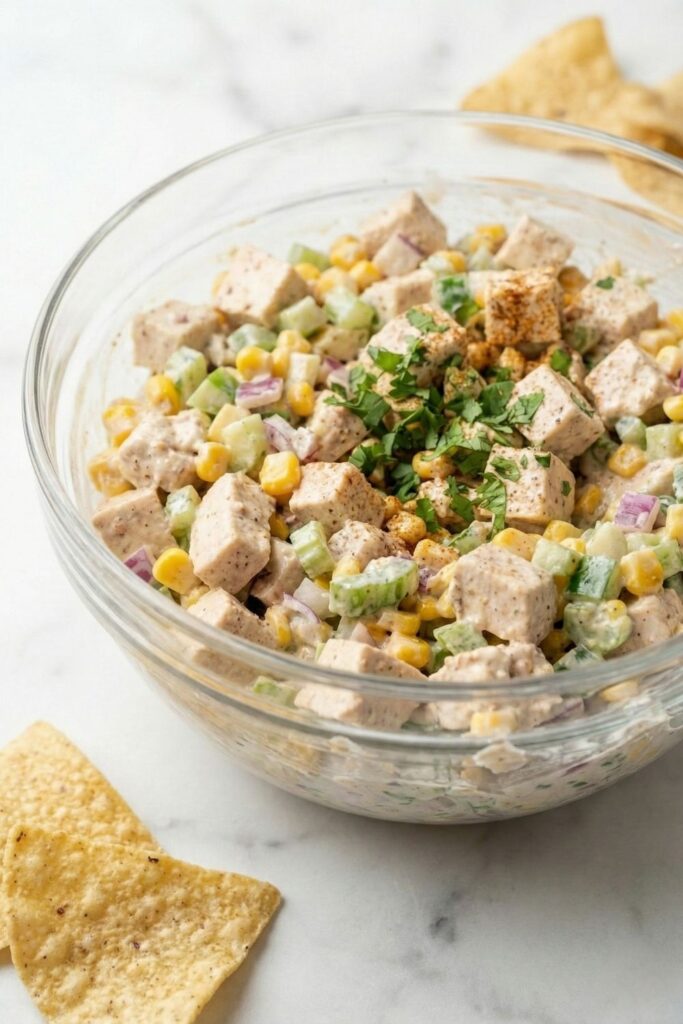
Ingredient Deep Dive: Chemical Interactions
The Protein Substrate: Chicken Breast (6 oz)
- Target Spec: Boneless, skinless, cooked, and cubed.
- Why Cubed? We avoid shredded chicken here. Shredded chicken has more surface area, which can absorb too much moisture from the yogurt, leading to a “mushy” mouthfeel. Cubes (1cm x 1cm) maintain structural integrity against the acid in the sauce it doesn’t have to be perfect but preferably cubed is the best.
- The Cheat: Rotisserie chicken works, but remove the skin to reduce oxidized lipids.
The Binder: Greek Yogurt (Non-Fat or 2%)
- The Chemistry: Greek yogurt is strained to remove whey, leaving behind casein protein. Casein is hydrophobic (repels water) and clots in the stomach, providing a long-lasting feeling of fullness.
- Substitution Warning: Do not use regular yogurt. It has too much whey (liquid) and will turn your salad into soup within 20 minutes of mixing.

The Crunch Agents: Celery, Green Pepper, Red Onion
- The Ratio: 1:1:0.5. You need equal parts celery and pepper for bulk, but half the amount of red onion.
- Chemical Note: Onions contain sulfur compounds (alliinase). When cut, they release a pungent flavor that intensifies over time. By mincing them smaller than the other vegetables, we distribute this sulfur evenly so it accents the dish rather than overpowering it.
The Accelerator: Cholula & Taco Seasoning
- Why Cholula? It has a higher vinegar content (acetic acid) than other hot sauces. Acid delays gastric emptying, keeping you fuller longer.
- Spice Check: Simply Organic Taco Seasoning is recommended because it avoids anti-caking agents that can leave a gritty texture in cold salads.

Equipments: The Vessel Matters
1. Glass over Plastic (Non-Negotiable)
- The Issue: Capsaicin (from chili) and lycopene (from taco seasoning/peppers) are oil-soluble pigments. They will permanently stain plastic containers (polypropylene) orange.
- The Fix: Use Borosilicate glass (Pyrex). It is non-porous and will not absorb odors or colors.
- Thermal Mass: Glass holds “cold” better than plastic. If you meal prep this, the glass bowl keeps the yogurt safely out of the “Danger Zone” (40°F – 140°F) longer when you take it out of the fridge.
2. The Mixing Tool
- Use a stainless steel tablespoon. A silicone spatula is too flexible for the “folding” motion required to coat the ingredients without crushing the corn kernels.
Step-by-Step: The Construction Protocol
We will now assemble the bowl. Follow these visual cues precisely to ensure the correct texture profile.

Layout your 6 oz chicken, 1/2 cup corn, diced veggies, and sauces.
Note the volume. It looks like a lot of food because it is high volume. Seeing the ingredients separated confirms you are getting a micronutrient-dense meal, not just a slurry.

Dice your celery and green peppers into identical 1/4-inch squares.
Why It Matters: This is called “Homogeneity.” If your celery chunks are huge and your onions are tiny, the mouthfeel is jarring. Uniform cuts ensure that every spoonful contains a balanced ratio of protein, fiber, and flavor.
Pro Tip: Use a sharp chef’s knife. A dull knife crushes cell walls, releasing water and making your veggies soggy before they even hit the bowl.

Place the chicken at the bottom. Layer the corn, peppers, celery, and onion on top.
Do not mix yet. We are building a foundation.
Notice the colors. Yellow, Green, White, Purple. This variety signals a diverse range of polyphenols (antioxidants).

Add the 1/4 cup Greek Yogurt to the center. Pour the 1 tsp Cholula and 1 tsp Taco Seasoning directly onto the yogurt before mixing.
By premixing the spices into the yogurt dollop first (a technique called “tempering”), you ensure the spices are hydrated by the yogurt’s moisture, preventing dry pockets of powder in your mouth.

Fold the mixture. Go from the bottom up.
Look at the spoon in the image. The sauce should cling to the chicken. If it drips off instantly, your yogurt was too watery or your veggies were wet.
The Result: A cohesive, suspended salad where the binder (yogurt) acts as a glue, holding the corn and peppers to the chicken.
Troubleshooting Guide: Viscosity & Flavor Balance
“My salad turned watery the next day.”
- The Cause: Osmosis. The salt in the taco seasoning draws moisture out of the vegetables (especially the peppers and celery).
- The Fix: If meal prepping for 3+ days, store the “Wet” mixture (Yogurt + Hot Sauce + Spices) in a separate small container. Mix it in right before eating. This keeps the vegetables crisp and the sauce thick.
“It tastes too acidic/sour.”
- The Cause: Greek yogurt plus vinegar-based hot sauce can be tangy.
- The Fix: A pinch of granulated sweetener (like Stevia or Monk Fruit) neutralizes the acid without adding calories. Alternatively, add 1/4 of a diced avocado. The fat will coat the tongue and mellow the acidity.
“The chicken is dry/chalky.”
- The Cause: Overcooked breast meat.
- The Fix: Switch to boneless, skinless chicken thighs. They have a slightly higher fat content but remain moist even when cold due to the collagen breakdown.

Serving & Storage Protocols
Storage Architecture
- Container: Airtight Glass Snap-Lock container.
- Zone: Bottom shelf of the refrigerator (coldest part).
- Duration: Consumable for up to 4 days.
- Oxidation: If adding avocado, do so only at the moment of consumption to prevent enzymatic browning (turning brown).
Serving Suggestion
- The Vessel: Serve with 1/2 oz of corn tortilla chips.
- Why: The salt on the chip creates a flavor contrast with the creamy yogurt. The crunch provides a “Pattern Interrupt” for your palate, preventing flavor fatigue halfway through the bowl.
If You loved this recipe and would love to try more high protein recipes check out my High-Protein Raspberry Chia Parfaits

FAQs: Technical Specifications
Yes, but blended. Cottage cheese has a curdy texture. For this specific recipe, you must blend the cottage cheese until smooth to replicate the binding capability of the yogurt. It will result in a slightly saltier profile, so reduce the added salt.
If you wrap this, look for a “High Protein” or “Keto” wrap. These typically use vital wheat gluten and have a protein content of around 15-20%, compared to standard wheat flour which is 10-12%. However, the chips offer better texture contrast.
No. While spicy food releases adrenaline, it is a transient acute spike that actually aids in metabolic mobilization, not the chronic cortisol elevation associated with stress that leads to belly fat retention.
Absolutely not. Upon thawing, the cell walls of the celery and peppers will rupture, releasing all their water. The yogurt will separate (curdle). This is a fresh-prep protocol only.
By following these precise specifications, you are not just making lunch; you are engineering a metabolic event. Eat for function. Taste for pleasure.

High-Protein Thermogenic Chicken Salad (Metabolic Fire Bowl)

Ingredients
The Protein Substrate & Fiber Matrix
- 6 oz Chicken Breast cooked – Cubed into 1cm x 1cm pieces (approx. 170g).
- 1/2 cup Sweet Corn – Canned whole kernel, thoroughly drained (approx. 80g).
- 1/2 cup Green Bell Pepper – Diced to 1/4 inch uniformity approx. 75g.
- 1/2 cup Celery – Diced to 1/4 inch uniformity approx. 50g.
- 1/4 cup Red Onion – Finely minced to distribute sulfur compounds approx. 40g.
- 1 tbsp Fresh Cilantro – Roughly chopped.
The Thermogenic Binder
- 1/4 cup Greek Yogurt – Plain Non-Fat or 2%. Do not use regular yogurt (approx. 60g).
- 1 tsp Hot Sauce – Cholula Original recommended for specific acetic acid profile.
- 1 tsp Taco Seasoning – Simply Organic brand recommended low anti-caking agents.
- 1/2 tsp Salt – Adjust based on the sodium content of your chicken.
For Serving (Texture Contrast)
- 1/2 oz Tortilla Chips – Corn-based for serving.
Instructions
- Ensure the cooked chicken is cooled to room temperature (approx. 70°F/21°C) or lower. Cubing hot chicken will cause the protein fibers to shred; cubing cold chicken yields the clean, premium geometric squares required for this texture profile. Drain the corn completely to prevent "souping."
- Using a sharp chef’s knife, dice the green bell pepper and celery into identical 1/4-inch squares. Finely mince the red onion to 1/8-inch to ensure the sulfur flavor accents the dish rather than overpowering the palate. This mechanical uniformity ensures consistent bolus formation during mastication (chewing).
- In your glass vessel, construct the salad in this specific order to maximize volume visualization: Layer 1: Cubed Chicken (Base) Layer 2: Corn & Vegetables (Fiber Matrix) Layer 3: Cilantro (Aromatic Top)
- Place the 1/4 cup of Greek Yogurt directly in the center of the vegetable pile. Do not spread it yet.
- Pour the 1 tsp of Cholula Hot Sauce directly onto the white yogurt dollop. Sprinkle the 1 tsp of Taco Seasoning and 1/2 tsp salt over the yogurt and sauce. Note: Applying spices to the wet binder hydrates the dried herbs before mixing.
- Using a stainless steel spoon, fold the mixture from the bottom up. Continue folding until the yogurt/hot sauce mixture has emulsified into a cohesive, pale-orange cream that fully coats every cubic centimeter of chicken and vegetable.
- Serve immediately with 1/2 oz of tortilla chips on the side. Use the chips as a scoop to introduce a “Crunch vs. Cream” sensory contrast.
Notes
Sensory Cues:
- The final mixture should be thick and cling to the spoon. If it drips, the vegetables were too wet.
- Texture: The corn provides a “pop,” the celery provides a “shatter,” and the chicken provides “chew.” This triad signals high satiety to the brain.
Storage Clinic:
- coldest part of the fridge (bottom shelf).
- Shelf Life: 3-4 days.
- Separation Warning: If liquid pools at the bottom after 24 hours, this is natural whey separation. Simply stir (re-emulsify) before consuming.
Substitutions:
- Protein: Rotisserie chicken (skin removed) increases lipid content but adds flavor.
- Dairy-Free: Use a thick coconut yogurt or almond-based Greek style yogurt, though this will lower the protein bioavailability.
Equipment
- 1 Glass Meal-Prep Container (1L / 4-Cup) – Must be Borosilicate glass to prevent staining from capsaicin/lycopene.
- 1 Stainless Steel Tablespoon – For mixing the high-viscosity binder.
- 1 Chef’s Knife – Sharp blade required to prevent crushing cell walls of vegetables.
- 1 Digital Food Scale – Optional, for precise macronutrient tracking.
Nutrition
- Calories: 390kcal
- Carbohydrates: 32g
- Protein: 36g
- Fat: 12g
- Saturated Fat: 3g
- Fiber: 4g
- Sugar: 6g
- Sodium: 980mg
Honestly, this would be a great help on my weight loss journey.
So happy to hear that