You have seen the viral videos.
They look delicious.
But from a metabolic standpoint, this bowl is more than just a trend. It is a masterclass in Glycemic Control.
Most “healthy” bowls fail. They spike your insulin. They leave you crashing two hours later. This formulation is different. By stacking slow-digesting Casein protein (cottage cheese) against fibrous complex carbohydrates (sweet potato) and high-quality fats (avocado), you create a “Blood Sugar Buffer.”
This isn’t just lunch.
It is a metabolic tool.
This technical guide breaks down the chemistry of the “Viral Cottage Cheese Bowl.” We are stripping away the hype. We are focusing on the mechanics of satiety, the Maillard reaction in air-frying, and the precise assembly required to maximize the nutrient profile.
You want stable energy?
You want to stop cravings?
Execute this protocol.

The Science: Why This Stabilizes Glucose
To understand why this meal commands such high RPM (Results Per Meal) for your metabolism, you must understand Gastric Emptying Rate.
When you eat carbohydrates alone even “healthy” ones like sweet potatoes they convert to glucose rapidly. This hits your bloodstream fast. Your pancreas responds with a surge of insulin.
That is the crash.
This bowl engineers a bypass around that problem.
1. The Casein Clotting Effect
Cottage cheese is 80% Casein protein. Unlike Whey (which digests in 30 minutes), Casein coagulates in the acidic environment of your stomach. It forms a gel. This gel creates a physical barrier that slows down the digestion of the sweet potatoes. It trickles amino acids into your bloodstream over 4-6 hours. You stay full because your stomach literally takes longer to empty.
2. The Fiber Matrix
We are using the skin of the sweet potato and the fibrous matrix of the avocado. This adds roughly 8-10g of fiber to the bowl. Fiber binds to sugar molecules in the digestive tract. It acts as a drag chute.
3. Thermogenic Effect of Food (TEF)
Beef is dense protein. Your body uses significantly more energy (calories) to break down beef protein than it does for fats or carbs. Roughly 20-30% of the calories in the beef are burned just by digesting it. This increases your metabolic rate for hours after eating.
4. The Chromium Factor
Beef is a natural source of chromium and zinc, minerals essential for insulin sensitivity. By pairing this with the carbohydrates, you are giving your body the tools it needs to shuttle that energy into muscle tissue, not fat storage.

Ingredient Deep Dive (Chemical Profile)
We are not just throwing things in a bowl. We are selecting ingredients for their bio-availability.
The Carbohydrate: Sweet Potato (Orange Fleshed)
- Target: Jewel or Garnet varieties.
- The Stat: High in Beta-Carotene (Vitamin A precursor).
- Bio-Availability: We use fat (avocado oil) during the roast. Vitamin A is fat-soluble. Without the oil, you absorb almost none of the nutrients. The oil is not just for non-stick purposes; it is a nutrient delivery vehicle.
The Protein: 93/7 Grass-Fed Beef
- Why Grass-Fed: It contains up to 5 times more Omega-3 fatty acids than grain-fed beef.
- The Texture: Leaner beef releases less water. This ensures your taco seasoning clings to the meat rather than washing away in a pool of grease.
- The Mineral: Heme Iron. This form of iron is absorbed 2-3 times more efficiently than plant-based iron.
The Binder: Cultured Cottage Cheese
- The Strain: Look for Lactobacillus cultures on the label (like Good Culture).
- The Chemistry: We specifically use 2% or 4% fat. Fat-free cottage cheese often contains gums (Guar Gum, Xanthan Gum) to replace the texture of fat. These gums can cause bloating. The full-fat version provides the creamy mouthfeel needed to contrast the hot beef without artificial thickeners.
The Fat: Avocado
- The Role: Oleic Acid. This monounsaturated fat is heart-healthy and creates the “satiety signal” in your brain.

Equipment Clinic: The Hardware
You cannot execute a technical recipe without the correct tools.
1. The Air Fryer (Convection Engine)
- Requirement: High-velocity fan.
- The Physics: We need to circulate hot air at 400°F (200°C) to dehydrate the surface of the potato rapidly while steaming the inside. A standard oven takes 25 minutes longer to achieve the same specific gravity of crispiness.
2. The Skillet (Thermal Mass)
- Material: Stainless Steel or Cast Iron.
- Why: You need high conductive heat to sear the beef. Non-stick pans often fail to produce a hard sear, leaving the meat gray and steamed.
3. The Wide-Rim Bowl
- Geometry: Shallow and wide (Pasta Bowl style).
- Function: This increases the surface area. It allows you to plate in quadrants. If you use a deep, narrow cereal bowl, the ingredients stack. The hot beef will melt the cold cottage cheese instantly, resulting in a lukewarm, soupy failure. The wide bowl preserves the temperature zones.
Step-by-Step Guide
Follow these steps precisely. The sensory cues are your metrics for success.
Phase 1: The Maillard Prep

Begin with your sweet potatoes. Peel them. Dice them into strict 1/2-inch cubes. If they are too large, the centers will remain raw when the outside burns. If they are too small, they will turn to mush.
Place them in a mixing bowl. Spray heavily with Avocado Oil. Add your Salt, Paprika, and Garlic Powder.
- Critical Action: Toss well. Every single face of the cube must glisten with oil. Dry spots will burn.

Preheat Air Fryer to 400°F (200°C). Arrange potatoes in a single layer. Do not crowd the basket; crowding creates steam, which kills crunch.
- Time: 18-20 Minutes.
- The Shake: At the 10-minute mark, shake the basket aggressively.
- Sensory Cue: You are looking for “blistering.” The edges should be dark brown, bordering on black. The smell should shift from “raw earth” to “toasted sugar.”

While the potatoes roast, heat your skillet to medium-high. Add the beef. Break it apart with a wooden spoon. Let it brown undisturbed for 2 minutes to develop a crust.Once browned, add your spice blend: Chili Powder, Cumin, Garlic Powder, Onion Powder.
- Do not add water yet. Toast the dry spices in the rendered beef fat for 30 seconds. You will smell the cumin “bloom.” This releases the essential oils.

Now, add 2 tablespoons of water. Scrape the bottom of the pan (deglaze) to lift the stuck bits of flavor (fond).
The water will mix with the spices and fat to create a thick, glossy red sauce that coats the meat. The beef should look shiny, not dry or powdery.

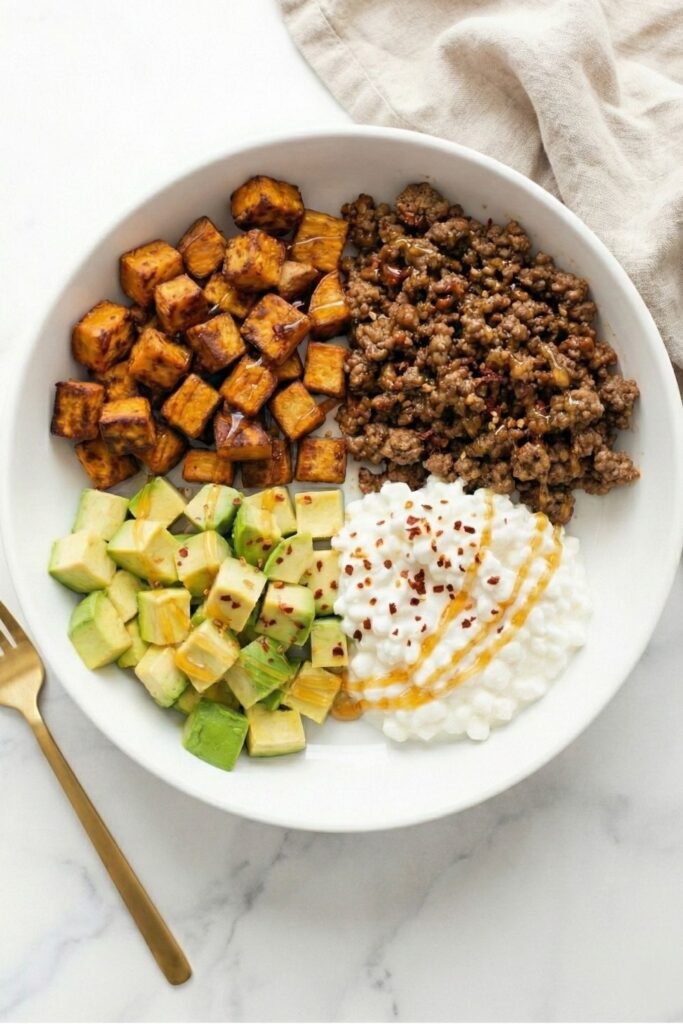
Grab your wide bowl. We are building structure here.
- Zone 1: 1 Cup Hot Sweet Potatoes.
- Zone 2: 4 oz Hot Seasoned Beef.
- Zone 3: 1/3 Diced Avocado.
- Zone 4: Leave empty.Do not mix yet. We need to verify the ratios.

Take your cold Good Culture Cottage Cheese. Drop a solid 1/2 cup scoop into the empty zone.
You want the steam rising from the beef to sit next to the cold cheese. This temperature difference is vital for the mouthfeel.

Drizzle Hot Honey heavily over the cottage cheese and potatoes. The honey binds the savory beef and sweet potato together.Finish with a pinch of Red Pepper Flakes for texture.

Your fork should pierce a piece of potato, scoop a bit of beef, and drag through the cold cheese.
Eat immediately.
if you love tasty recipes like this check out my High Protein Chicken Salad Bowl
Troubleshooting Guide (Diagnostics)
Even with a manual, variables exist. Here is how to fix common errors.
The Cottage Cheese is Watery.
- Diagnosis: You used a generic “Low Fat” brand or didn’t stir the tub before scooping.
- The Fix: If you cannot find Good Culture, buy a standard brand and strain it. Place the serving in a mesh sieve for 2 minutes before plating. This removes the excess whey.
Sweet Potatoes are Soggy.
- Diagnosis: Overcrowding or Low Temp.
- The Fix: You likely piled the potatoes too high in the air fryer basket. Air must circulate around the cube. Cook in two batches if necessary. Alternatively, your oil flashpoint is too low. Ensure you are using Avocado oil (500°F smoke point), not Olive Oil (375°F smoke point).
The Beef is Bland.
- Diagnosis: Under-salting or failure to “Bloom.”
- The Fix: Salt is a flavor potentiator. If the beef tastes flat, it needs acid or salt. Squeeze a fresh lime over the meat in the pan. The acid cuts the fat and elevates the chili powder. Ensure you toasted the spices in the fat before adding water.
The Dish is Too Spicy.
- Diagnosis: Aggressive Hot Honey or Cayenne.
- The Fix: Add more Avocado. The fat in the avocado neutralizes the capsaicin (heat) on your tongue. Do not drink water; it spreads the heat.
Serving & Storage Protocols
Storage Window:
- Beef & Potatoes: Store in an airtight glass container. Good for 4 days.
- Avocado: Cut fresh daily. Do not store cut avocado; it oxidizes (turns brown) and the flavor profile degrades.
- Cottage Cheese: Keep in the original tub
Reheating Strategy:
- The Rule: NEVER microwave the cottage cheese or avocado.
- The Method: Remove the beef and potatoes. Microwaves them for 90 seconds. Plate them hot. Then, add the cold fresh avocado and cold cottage cheese. The contrast is the key. If you microwave the whole bowl, the cheese separates into a curdled soup.
Frequently Asked Questions (Data Bank)
Yes. However, turkey is significantly leaner and can be dry. You must add 1 tablespoon of olive oil to the pan when browning to mimic the fat content of the beef, or the spices will burn.
Strictly speaking, no. Sweet potatoes are a carbohydrate. However, it is “Slow Carb.” For a strict Keto modification, substitute the sweet potato for roasted turnips or radishes. They roast similarly but have a fraction of the glycemic load.
This is a critical flavor component. You can engineer a substitute. Mix 1 tablespoon of regular honey with 1/4 teaspoon of Cayenne pepper and a splash of apple cider vinegar. Heat it in the microwave for 10 seconds to infuse.
Absolutely. Pack the beef and potatoes in one container. Pack the cottage cheese and avocado (leave the pit in to prevent browning) in a separate cold container. Heat the hot container, then combine. Do not pre-mix.

This bowl relies on Sensory Gating. The brain registers “fullness” faster when it encounters multiple textures (Crunchy, Creamy, Chewy) and temperatures (Hot, Cold) in a single bite.
By following this specification, you are not just eating calories. You are leveraging food science to control your hunger hormones.
Build it exactly as shown.

Viral Sweet Potato & Cottage Cheese Protein Bowl (High Protein)

Ingredients
The Sweet Potato Base (The Maillard Reaction)
- 2 large Sweet Potatoes Orange Fleshed like Garnet or Jewel, peeled and diced into exact 1/2-inch cubes
- 2 tbsp Avocado Oil Spray High Smoke Point
- 1/2 tsp Sea Salt
- 1/2 tsp Smoked Paprika
- 1/2 tsp Garlic Powder
The Protein Bloom (The Savory Layer)
- 1 lb Grass-Fed Ground Beef 93% Lean / 7% Fat
- 1 tbsp Water For blooming spices
- 1 tsp Chili Powder
- 1 tsp Ground Cumin
- 1 tsp Garlic Powder
- 1 tsp Onion Powder
- 3/4 tsp Sea Salt Adjust to taste
The Cold Assembly (The Thermal Contrast)
- 2 cups Good Culture Cottage Cheese 2% Low Fat, divided (1/2 cup per bowl)
- 1 large Avocado ripe, pitted and cubed
- 2 tbsp Hot Honey e.g., Mike’s Hot Honey
- 1 tsp Crushed Red Pepper Flakes
Instructions
- Peel the sweet potatoes and dice them into uniform 1/2-inch cubes. Place them in a large mixing bowl. Spray generously with Avocado Oil until glistening. Sprinkle with 1/2 tsp Salt, 1/2 tsp Paprika, and 1/2 tsp Garlic Powder. Toss aggressively to coat every surface.
- Preheat Air Fryer to 400°F (200°C). Arrange potatoes in the basket in a single layer (cook in batches if necessary to avoid steaming). Air fry for 18-20 minutes.Sensory Cue: Shake the basket at the 10-minute mark. The potatoes are done when edges are dark brown/caramelized and centers are soft.
- While potatoes roast, heat a Stainless Steel Skillet over medium-high heat. Add the Ground Beef. Break it apart into fine crumbles using a meat chopper or wooden spoon. Cook undisturbed for 2-3 minutes to develop a sear crust, then stir until fully browned (no pink remains).
- Reduce heat to low. Add the Chili Powder, Cumin, Garlic Powder, Onion Powder, and 3/4 tsp Salt directly to the beef fat. Stir for 30 seconds to toast the spices. Add 1 tbsp Water and scrape the bottom of the pan to create a thick, glossy spice coating on the meat. Remove from heat immediately.
- Select a wide-rim bowl. Plate the hot ingredients first: Add 1 cup Roasted Sweet Potatoes to one side and 4 oz Seasoned Beef to the other.
- Immediately add a cold 1/2 cup scoop of Cottage Cheese and 1/4 of the diced Avocado to the remaining space. Do not mix yet.
- Drizzle Hot Honey over the cottage cheese and sweet potatoes. Garnish the cheese with a pinch of Crushed Red Pepper Flakes. Serve immediately while the temperature contrast is active.
Notes
- Storage Protocol: Store beef and potatoes in an airtight glass container (3-4 days). Store cottage cheese in its original tub. Cut avocado fresh daily to prevent oxidation.
- Reheating: Microwave the beef and potatoes only for 60-90 seconds. Add the cold cottage cheese and avocado after heating. Never microwave the cheese (it will separate).
- Texture Fix: If using a generic cottage cheese brand (not Good Culture), strain it in a fine-mesh sieve for 2 minutes to remove excess whey before plating.
- Substitutions: Ground Turkey can be used but requires 1 tsp of Olive Oil added to the pan during browning to prevent dryness.
Equipment
- Air Fryer (Ninja or High-Convection Model)
- Stainless Steel Skillet (10-inch or larger)
- Wide-Rim Pasta Bowls (Ceramic)
- Meat Chopper/Wooden Spoon
Nutrition Facts (Per Serving)
- Calories: 509
- Total Fat: 21g
- Saturated Fat: 6g
- Cholesterol: 75mg
- Sodium: 980mg
- Total Carbohydrates: 43g
- Dietary Fiber: 7g
- Sugar: 12g
- Protein: 40g
